Category: Bible Related Short Stories

  • A Essay on Miracles

    A Essay on Miracles

    This is a work of fiction. Any resemblance of any character to anyone past or present in the story to anyone in real life is purely coincidental. Copyright © 2025, Henry E. Neufeld

    “Mom,” said Jimmy. “Do we believe in miracles?”

    “Well,” said his mother sl,owly. “I certainly do. Why?”

    “I have to write a short essay for English class, expressing what I believe about a controversial subject. I’m going to write about miracles.”

    “OK. So are you going to say that your mother believes in miracles?”

    “I’m not sure. Tell me about a miracle you believe in.”

    “Well, when the Israelites were slaves in Egypt, God sent plagues on the Egyptians so that they would let the Israelites go.”

    “How long ago was that?”

    “Well, I think maybe 3000 years or so,” said the mother slowly. She wasn’t sure.

    “So before there was a United States. Before even Grandpa was born.”

    “Well, yes. Long before that.”

    “So have you ever seen a miracle?”

    His mother thought for a moment. “Well, you are a miracle,” she announced triumphantly. She thought this would end the discussion.

    “I don’t think that’s what the word means. How am I different from all my classmates?”

    “You’re unique, just you!”

    “But I came into the world in the same way that they did. I pretty much do similar things to what they do. If everything’s a miracle, there’s nothing to talk about. I’m looking for something impossible that you know happened in your lifetime. You said you believe in miracles. What miracles have happened to you, or to people you know?”

    “Well, I can’t really think of anything. I’ve lived a rather ordinary life, well except for you.” She still hoped that talking about how important Jimmy was would divert him.

    “I don’t count,” Jimmy said, startling his mother. “Not for this.”

    “Has dad seen any miracles? Can he tell me a story of a miracle that he knows happened because he saw it?”

    “I don’t know. I’ve never heard him tell about any.”

    “What about Grandma and Grandpa? Have they told any stories of miracles?”

    “I can’t really remember anything,” said his mother. She was really hoping this topic would go away. “Maybe you should try some other topic, like whether we should plant flowers along the street. People are arguing about that.”

    “I want to write about miracles. It’s obvious we should plant flowers.” He paused. “So are there a lot of miracles that happen to other people?”

    “Well, there are miracles in the Bible. There’s one about the sun standing still so people could win a battle. Then there’s the story of Jesus rising from the dead. We celebrate that every Easter.”

    “OK, but none that happen to people like me, right?”

    “I can’t really think of any right now. Miracles happen to people who are especially close to God. That’s why we have Bible stories about them. They were closer to God than other people. They were his special servants and worked hard for him and faced persecution.” She paused. “Write about something else. I don’t think you’re going to get very far with this one.”

    “OK,” said Jimmy, and headed back toward his room.

    The next day Jimmy’s mom found the copy of his essay. He had written about miracles.

    Miracles are impossible things that still happen sometimes. Nobody alive has actually seen one happen, but we still believe that they happened a long time ago.

    In old times, there were people who would work and work all their lives and get very close to God. They would learn all about God and do many important things for him. They were special people. These special people could do totally impossible things, because if you work hard and get close to God you will be able to do impossible things.

    But you have to be really, really old too, because God doesn’t let people who aren’t old do miracles. They can’t do impossible things because they aren’t close enough to God yet and they haven’t worked hard enough. You also get miracles points if people try to kill you. God likes that a lot.

    But you won’t see miracles now. They haven’t happened for years and years, at least since before my grandpa was born.

    I wonder where he got all that, thought Jimmy’s mom.


    Give ear, O my people, to my teaching;
    incline your ears to the words of my mouth.
    I will open my mouth in a parable;
    I will utter dark sayings from of old,
    things that we have heard and known,
    that our ancestors have told us.
    We will not hide them from their children;
    we will tell to the coming generation
    the glorious deeds of the LORD, and his might,
    and the wonders that he has done.

    Psalm 78:1-4 (NRSV)

  • The Influence of Modern Decadent Culture

    The Influence of Modern Decadent Culture

    It all started rather innocently. Or so it would have seemed to those involved. Nobody intended to hurt anyone else. It started during the special collection for the needy taken up early in Advent in order to buy needed supplies to distribute just before Christmas

    This is a work of fiction. Any resemblance to any person, place, or event to anything in the real world is purely coincidental. Copyright © 2023, Henry E. Neufeld

    Fred Lewis, senior saint and fixture in the small town and its largest church, was putting a $50 bill into the offering plate. He pitied those who couldn’t get what they needed at Christmas. Unfortunately, he was getting slower as he aged, and a little less precise with his fingers, and he pulled a receipt out of his wallet along with the bill. He didn’t notice until he had dropped both the money and the receipt into the offering plate.

    Now he might have just suffered the embarrassment of having to look for the receipt later, but it was an important one. He intended to return a tool that he felt had not lived up to its advertised quality to the hardware store, and he knew the owner and the manager would insist on a receipt. It wasn’t a lot of money, but it was the principle that mattered. They would give him his money back!

    So he reached back into the offering plate and grabbed the receipt. Fortune again did not favor him, as he grabbed not only the receipt, but his $50 bill, and a couple of others as well. He fumbled to get the money back into the offering plate and to keep the receipt, and finally, having accomplished his goal, passed the plate along with a self-deprecating apology.

    It might have stopped at that, but …

    At dinner that evening, Elfrieda, who was a widow, and a center of social activity for the church, and who had been sitting just down the row from these events told the story at the church social to gales of laughter. She did not intend to imply that any money had been actually taken from the plate, much less that such a pillar of the community as Fred Lewis might have taken it. But it so enhanced to story to end it with: “Who knows where all the money ended up?”

    In the normal course of small-town gossip, the whole thing might have ended right there, but Elfrieda had told the story so well, and so many people whose fingers were not nearly as old managed to repeat the story. As stories will, it got edited. By the middle of the week the town barber was heard telling the man whose hair he was trimming that he (the barber) had heard that Fred Lewis had taken $50 from the offering plate. He assured the man that this couldn’t possibly be true and that he had just heard it, but wasn’t it funny how such things got around.

    Wednesday night, Fred Lewis didn’t show up for the study in the church. Fred always attended that study. People wondered if he was not feeling well. Nobody thought of the story going around because, of course, nobody believed the story. Or nobody admitted they did.

    Joyce, head of Caring Ministries for the church, started to go check on Fred, but as she was heading that way she recalled hearing that he might have taken money from the offering plate. If he was in great need, she could forgive him, she thought, but she wasn’t ready for the conversation. So she skipped that visit and headed on out to visit some shut-ins.

    What had actually happened was that Fred had found himself in difficulty sorting out his medication, and after several tries and repeated checking had finally taken the pills he thought he should. He ended up with an overdose of one medication and none at all of some others. It might not have been fatal, but his heart was giving him some trouble, and those were precisely the wrong medications.

    As Joyce walked by on the other side of the street, Fed Lewis was unconscious in his living room recliner. Of course, nobody suspected that.

    It was Friday afternoon when the new doctor in town, notified by his office nurse that Fred was not there for the appointment he’d asked for on Wednesday, decided to go check. You might think it odd that a doctor went to check on a patient personally, but this young doctor had come to the small town to practice old-fashioned medicine. He’d been burned out in his residency. He’d almost given up medicine altogether but had been attracted to the idea of the simplicity of being a small-town doctor. So he checked on his patient and found him dead.

    The young doctor did everything right. He called the police. He suggested the possibility of the mixup with the medications. The county coroner ruled it (correctly) as death due to an accidental overdose.

    Then somebody, nobody ever remembered who, wondered out loud whether the overdoes had, in fact, been accidental. Perhaps Fred Lewis had heard the things that were being said about him taking money from the offering plate. For a man of his character it might just have been too much. People dismissed this as ridiculous. But it was said and dismissed in furtive tones over and over again.

    Then someone mentioned that they thought they remembered that the doctor was sitting next to Fred Lewis in church. Who was more likely to be the source of the story? Perhaps the doctor, rather than being the self-sacrificing hero who had come to provide good medical care to the small town was actually the cause of Fred Lewis’s distress. It didn’t matter that there was no evidence that Fred Lewis had ever heard the rumor, but nobody thought of that.

    If it was possible that the doctor had started the rumor, then perhaps he had contrived to cover up evidence of a suicide so he wouldn’t be blamed for the vicious, even pernicious rumor that had made the fine old man decide he didn’t want to face life any more. Any number of people said that this story was also ridiculous, but that didn’t stop people from spreading it.

    When the young doctor was found dead in the woods near a hiking trail, everyone in town assumed it was suicide. “He knew he had killed Fred Lewis by the rumor he started,” said several pillars of the town’s society knowingly. Nobody took note of the coroner’s report that said the young man had hit his head on a sharp rock, knocked himself out and then bled to death.

    As the story spread through the town the consensus was that modern decadent culture just didn’t prepare people for real life. If the doctor had had any guts at all, he would have owned up to his responsibility, faced the music, and moved on.

    What a vast amount of timber can be set ablaze by the tiniest spark! 6 And the tongue is a fire …

    The Revised English Bible. (1996). (Jas 3:5–6). Cambridge; New York; Melbourne; Madrid; Cape Town; Singapore; São Paulo; Delhi; Dubai; Tokyo: Cambridge University Press.

    Image credit: Adobe Stock  pathdoc Not public domain

  • About the Jump in Safety Violations

    About the Jump in Safety Violations

    The Plant Manager (PM) was not a happy man.

    Occupying the space in front of his desk, and looking quite uncomfortable were his Safety Coordinator (SC), his Operations Manager (OM), and three shift supervisors.

    “I thought you were going to improve our safety record,” said the Plant Manager, looking at the Safety Coordinator. “Instead, safety violations have multiplied! Things are getting worse!”

    “We haven’t had any more injuries on the job over the last six months,” said the OM.

    “But look at the risk! Look at the way safety violations have increased! How do you explain it?” He was look at the SC again.

    “Well, I created a new safety code,” said the SC.

    “Is it a better safety code?” asked the PM, “Or is it creating all these errors?”

    “It’s better. We’re recognizing errors that we weren’t noticing before,” said the SC.

    “But a new safety code should make us safer!” The PM’s look said that he thought the SC might be mentally impaired, or perhaps intoxicated.

    “I beg your pardon,” said a voice, a bit timidly. It was one of the supervisors.

    “What?” snapped the PM as the OM and SC looked on in shock. Why on earth would a mere supervisor invite attention in a meeting like this.

    “I don’t think a new safety code, however good, will make people safer. It just identified issues. In fact, many of the workers don’t really know what’s in it. Some of them don’t care that much.”

    “What do you mean they don’t care? They have to care! It’s the work rules. If they don’t really care, fire them!”

    “Well,” said the supervisor, a bit more confidently. If she was about to be fired, she might as well fully earn it! “There’s no incentive to work more safely. There has been no time taken to train people to work more safely. We’re already short on manpower, so people don’t worry as much about getting fired, because they know we don’t have a drawer full of applications to take their places. They also don’t understand just how the safety code is going to make them safer.”

    “You just haven’t told them frequently enough that they need to follow the safety code,” said the PM.

    “I tell them every day. They aren’t motivated. They don’t understand it. They don’t see how it applies to them. Some of them look at it and figure it’s just too hard to follow and not worth it.” She was thinking that the sense of already being fired, suggested by the looks on all the manager’s faces, and the fact that her fellow supervisors had moved to distance themselves from her, made it easy to be courageous.

    The PM thought he would fire the supervisor, but he wasn’t going to do it in this meeting. Instead, he looked at the SC. “I want a better safety code, well-written, precise. One that the workers will follow. I want posters put up on every wall, reminding people of the safety code. This plant will, by God, have an excellent safety record.”

    “But …” started the supervisor.

    “Shut up!” said the PM.

    (Now read Romans 7. Are you, as a parent, as a teacher, as a church leader behaving like the PM? The SC? What is it that actually changes people’s behavior?)

    This is a work of fiction. Any resemblance of any character to anyone in real life is purely coincidental. Copyright © 2020, Henry E. Neufeld.

  • And after that …

    And after that …

    (This is a work of fiction. Any resemblance between any person or place and the real world is strictly accidental. Copyright © 2019, Henry E. Neufeld.)

    Fifteen years and $250,000,000 later, Steven (never Steve) Porter got a sign.

    There was a great wind

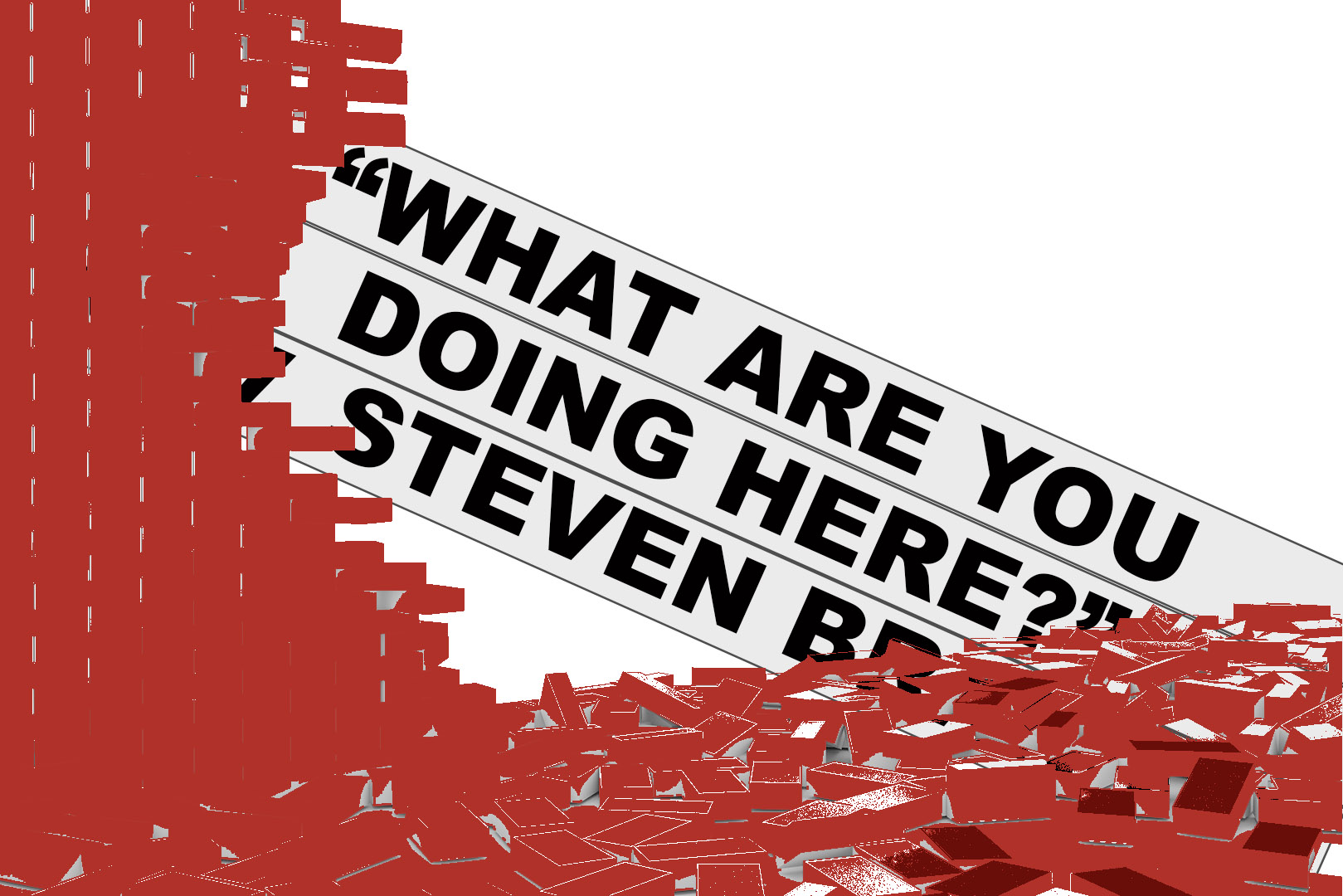
    It was a stormy day, and as he was going to work, there was a gust of wind down the street, between the rows of tall buildings on either side. Debris flew wildly. People driving in rush hour traffic thought their cars might actually be moved. An old brick wall in front of a church collapsed, and the sign fell, concealing part of the writing.

    Steven looked around after the gust of wind and saw the sign: It said:

    “What Are You Doing HERE?”
    Steven

    It was partially hidden behind the pile of bricks resulting from the wind. The second line had read “Rev. Steven Branson,” but the “Rev.” had fallen off, and the “Branson” was blocked by the bricks.

    For a minute, Steven found himself wondering if God might be behind the unusual gust of wind, but that thought was 15 years out of date in his thinking.

    “Fighting this stinking traffic,” he muttered. “That’s what I’m doing here. Like everyone else.”

    Meteorologists concluded that a very unusual combination of air pressure, movement, and heat had produced a freak wind. But only after they ran the circumstances through a super-computer a few times and tweaked the parameters.

    And after the wind an earthquake

    The earthquake as much more normal for this beautiful town in southern California. Steven was standing by the table on which he had just signed documents that would make him a few million more dollars when the building started to shake. He was on just the 12th floor of a much taller building, but still there was no escape.

    It was only minutes later, however, that the building’s safety manager called for an evacuation. Steven was able to watch the collapse from several blocks away.

    Another supercomputer worked out a scenario which would allow the earthquake resistant building to collapse in the way it did, while other damage in the city was quite trivial.

    The lawyers didn’t accept the word of the supercomputer, and spent years in court making careers out of it.

    And after the wind a fire

    He’d lost his car in the collapse, but eventually he was able to leave the area of the collapse and get a ride home. Oddly, despite the collapse of one large building, the earthquake damage had been rather mild elsewhere in the city.

    The cab drove along that same street with the row of buildings on either side. Steven thought he smelled smoke. Before he managed to frame a question for the cab driver, the inside of the cab was filling with smoke. He opened the door and jumped out, then stood beside the driver as the care went up in flames.

    The car fire didn’t require a supercomputer to explain. There was a wiring fault. It was just a natural event.

    The sound of silence

    Steven turned and found himself facing the sign again.

    “What Are You Doing HERE?”
    Steven

    It was the same one he’d seen that morning.

    He looked at the church, and saw in his mind another church yard, as a younger Steven approached the building. The church council was meeting, and the subject would be whether they wanted to keep their young pastor, and whether he should be allowed to carry out some of his plans.

    That younger Steven was to appear to explain himself. As he stood in front of the church, he decided he just didn’t want to put up with it any more. Why should he fight with the old fogies who ran the church?

    He’d felt the tug of his calling, but he decided he turned away. He called the chairman of the council on the phone and resigned. He was very good at business. Very good.

    He looked at the sign.

    “What am I doing here?” he asked.

    (With apologies to 1 Kings 19:8-18. Featured Image Credit: background from Adobe Stock, not public domain. Combination is my own.)

  • Link and Note – Korach: The Landow Case

    A couple of days ago I received an e-mail response to something I had published. It was not an agreement, but another view, well-expressed, which is more valuable than agreement. The author of that e-mail, Joseph Cox, also blogs at TorahShorts.com. It’s a fascinating site, because he uses stories set in modern times to help interpret scripture. I think this is a wonderful way to do so, and I do it from time to time on this blog as well.

    I want to call your attention in particular to the first of his posts that I read: Korach: The Landow Case.

    The question is not so much whether it is the right answer, either in the story presented or in the application of the scripture. For me this is about how to apply ancient scripture in modern times. Read it with attention to the process of thinking, and then consider applying some of that as you read scripture … any scripture.

  • The Dependable Assassin

    The Dependable Assassin

    In the history books he received just a brief mention. He was called Rutahgren (accented on the ah, though few people knew). If he was given any sort of title, it was “the Destroyer.” He was credited with assassinating Almar the Just around a century ago, following which there had been two or three decades of sheer chaos, known quite creatively as “the troubled times.” You decided how long the troubled times had lasted based on your tolerance for chaos.

    Again, according to the history books, Rutahgren (the Destroyer) had been caught by the palace guards, tortured, and eventually executed by impalement on the palace grounds. Since executions usually took place in the city square, some were surprised by this. Most, however, figured that since Rutahgren (the Destroyer) had killed the reigning king, the royal family had wanted to keep all the fun to themselves. Executions, even by impalement, were public events, parties even.

    It was said that this was the only time that an assassin had ever successfully killed the reigning monarch. If someone pointed out that several kings had died by violence in the centuries long history of the small kingdom, they would be told that those killings were accomplished by insiders. As an assassin, Rutahgren (the Destroyer) was, and would remain (never fear!), unique.

    There were two places where the story was told quite differently.

    The first of these was the Illustrious Guild of Critical Services, IGCS for short. IGCS had offices in a solid, upper class neighborhood in the royal city. Ordinary people wondered what “critical services” might be. Government officials and the police simply referred to the IGCS as the assassins’ and thieves’ guild. It was more accurate, though slightly less aesthetically pleasing.

    I suppose I must explain why IGCS was allowed to exist, right in the middle of the capital city of a (generally) law abiding country. There were two reasons for this. First, because no matter how many times the police searched the building, they were unable to find any evidence of illegal activity. It was hard to get judges to imprison or execute people because “everybody knew” that they were assassins or thieves. Even thoroughly bribed judges wanted some specific victim and target!

    Further, and as the second reason, too many government officials had made use of IGCS services at one time or another. These services rarely involved killing anyone. Usually, the goal was to produce filing errors. You know, the type that result in documents missing from well-marked folders, or perhaps showing up somewhere they had no business being. That sort of thing. It was hard to get the prosecutor to work very hard to put someone in jail, when that someone knew precisely what had happened to that contract he had wanted to get out of.

    Thus it was convenient for everyone that IGCS just sat there behind its sign.

    Now where was I? Oh, yes. Inside the guild building, when instructors talked to trainees, they told a rather different story about Rutahgren. In their stories he was dubbed “the Faithful.” Now some may have problems with an organization of thieves and assassins advocating faithfulness, but so they did. It was said that once they accepted a task, they carried it out. It was also said that they never, ever revealed who hired them.

    In their story, Rutahgren was indeed an assassin. He had been hired by a member of the government to get rid of Almar the Just, because, in the way of government officials, he felt that justice was much overrated, and that Almar was just too just! They never said the name of the official who had hired Rutahgren, because, of course, they never told such a thing. It amused the instructors to pretend that they actually had found out by sneaky stratagem, and were concealing this knowledge from their students. But the fact was that nobody knew, because Rutahgren, as a good guild member, had never told. Anybody.

    Over a period of years, the story went, Rutahgren had tried to get into range to assassinate Almar the Just, but had never succeeded. The royal guards were just too good. That they nonetheless never caught him during those failed attempts could be credited to the fact that Rutahgren was quite good as well. He always managed to withdraw. There were even a couple of innocent people, whose only crime was to be in the wrong place at the wrong time, who were executed for failed attempts.

    There were also many close calls. There were members of the guild who told Rutahgren (and any senior guild member who would listen), that this was a contract they should fail to keep. They could even return the money provided by the one who had hired them. But Rutahgren refused to quit. Finally, he determined that they only way to be absolutely certain he would kill the king was for him to plan it as a suicide mission. There was no way to accomplish it and get away alive.

    So he did that. He had a perfect plan to infiltrate the group of courtiers around the king. It was accomplished in a place where the royal guard was less concerned about assassins, precisely because the king was surround by courtiers and guards, and none of his other subjects. Rutahgren approached the king and killed him using a long thin dagger. He had taken the precaution of coating the dagger with poison, and having a wizard place a quiet but deadly death spell on it, and when he approached the king with a particularly flattering remark, and a particularly abject offer of obeisance and subjection, he also ran the dagger very precisely through the king’s heart. The king was dead before the poison could circulate. The spell of death ensured he stayed that way.

    Rutahgren knew he’d be tortured for information, and he didn’t want to reveal the one who had hired him, so he had made even more elaborate plans to insure that he would die as well and not be captured. His plans were unnecessary, however, as he died under a barrage of attacks from the startled guards. It was said, in the IGCS, that he died with a smile. He had accomplished his mission.

    In the IGCS, he was presented as the perfect example of a true assassin, carrying out his mission no matter what the circumstances and cost. Some instructors included a footnote about being very careful what you agreed to accomplish.

    In the second place, his story was remembered a bit differently. This was in the royal guard. The guard could forgive themselves when a prince or a government minister, granted free access to his majesty (or his or her highness, or whoever), turned traitor and killed someone they were guarding. How could the guard be expected to protect the king from someone the king invited to be there? They could search for weapons, but sometimes the king even forbade them that. They didn’t really condone missing any assassin, yet they felt differently about insiders.

    Rutahgren, however, had placed one single blemish on their record of keeping outsiders out, and they too told his story in training. They didn’t attempt to sugar-coat it. The guard had failed. The facts of the story sounded much like those told in the IGCS. But the lesson was different.

    They also called the assassin Rutahgren the Faithful. They’d conclude his story by telling their students, would-be guardsmen, that they needed to be just as faithful, just as determined, just as careful, and just as willing to sacrifice as the assassin. “Disapprove of his profession all you like,” they’d say, “but remember, and emulate, his faithfulness.”

    (Luke 16:1-8)


    (Featured image is based on Adobe Stock [#106106044] and I have licensed it for use here. It is not public domain.)

  • Thanks for the Beer

    Thanks for the Beer

    Sam (short for Samson, not Samuel), picked up the stein of beer he had just paid for, gave it an initial taste to savor the taste, and then followed with a gulp. He enjoyed his beer in the evening after a hard day of work.

    He took a quick look around the bar, searching for faces he knew. He wasn’t much of a talker, but he loved to sit with friends and just be there.

    Today, however, he saw a man he didn’t know sitting alone at one of the high tables, an empty stein in front of him. The only conclusion one could come to—and as usual, Sam came to it quickly—was that the man was wearing high quality clothes, but had been wearing the same ones for at least a couple of days. He was alone at the table, and he looked alone, absolutely alone.

    Sam walked over to the table. “Hi. I’m Sam. Can I buy you a refill?” he asked.

    The man looked back blankly, like he didn’t understand the question. Sam just stood there. He figured the man would figure it out in his own time.

    After what seemed like a couple of minutes, the man nodded and kind of pushed the stein over. It didn’t look very polite, but Sam didn’t care. Without knowing why, he sensed that was about all the man could do.

    He went to the bar, got the man’s drink refilled, paid, and went back to the table. As he sat down, he remembered what his pastor had said in church the past Sunday. He’d talked about being a witness, introducing people to Jesus. “Witness” didn’t make much sense to Sam. He understood introducing people to Jesus, but he could never figure out how you did it. If Jesus was one of his normal friends, he’d take him to one of his friends and say, “Hey Bob, meet Jesus.” Then he’d just sit there quietly and people would talk. He just couldn’t quite get to those intellectual things people kept saying about Jesus.

    Sam wasn’t stupid. In fact, the pastor reminded him regularly that he wasn’t. He’d talk about different skills, different ways minds worked, and how he, the pastor, couldn’t build a house the way Sam could. “I’d be a real fool on a building site,” he’d say. Then he’d bring up some complex topic that Sam couldn’t understand (and didn’t want to), and Sam would smile and move on. Trouble was, he thought, the pastor was never on a building site where Sam could talk studs, joists, fasteners and such-like, while Sam was in church every Sunday where he heard about long words that never meant anything to him.

    Jesus was his friend. In fact, Jesus was his best friend. Jesus didn’t talk to him and he didn’t talk to Jesus. They just sat together. Sam liked it that way.

    He sat down and shoved the beer across the table. Then he thought, I should ask a blessing or something. He couldn’t imagine why. Bless the beer (and pretzels) in a bar? He’d never heard of such a thing. Besides, he didn’t know how one said a blessing. If it was one of his friends …

    “Hey Jesus,” he said, looking slightly upward, “thanks for the beer!” He paused a moment as he grabbed a pretzel. “And for the pretzels too,” he added. For some reason, Sam handed the pretzel to the man across the table. Neither of them offered another word.

    “May I join you?” said someone.

    Both men looked to the side. Between them was a man, probably a construction worker, they thought. His hands were calloused. His clothes were the sort you wore on a building site, and they showed signs of wear and the dirt and dust of a work site.

    “Sure,” said Sam. The other man just nodded at the newcomer.

    “Get you a beer?” asked Sam.

    “Sure, thanks,” he responded. His voice was the voice of the construction site as well.

    With the beer delivered, they all three sat in silence for several minutes, nursing their beers slowly.

    Finally, the newcomer looked at the man across from Sam and spoke. “It’s OK to run away from evil,” he said. “Sometimes that’s the only thing to do.”

    The man jerked, startled. Then he just stared.

    “When you ran, you should have taken your family.”

    His stare got more intense, as though he was in a state of shock.

    “You need to go get them.”

    “I can’t.” The man spoke for the first time. “I used my last money on my first beer. I only have this one because Sam here bought it for me. I have nothing left.” His tone indicated that by “nothing” he was talking about more than money.

    “If you try, I think you’ll find you have the resources,” said the stranger. Then he got up.

    As he left he turned to Sam and said, “Hey, Sam. Thanks for the beer.”

    For no reason he could imagine, Sam reached into his wallet and pulled out a twenty. He put it on the table in front of his new friend. Almost as if by magic several other bills joined it as people from around the room stepped up to contribute.

    None of them knew why they did it either. They just knew that Sam was solid. If he thought the man needed the money, the man needed the money.

    Matthew 18:20, Matthew 10:42


  • The Atheist and the Missionary

    “The grandfather’s in there,” said the nurse quietly. “He’s a retired missionary.”

    “Thanks,” said the pediatric oncologist, but he didn’t hesitate. He stepped into the room.

    In the bed he saw the girl, not yet in her teens. She didn’t look all that good. He hadn’t expected her to. She had just been referred to him. Rising from the chair was an elderly man, thin, with graying black hair. He was dressed neatly, but not stylishly, in clothing that looked inexpensive and chosen for practical reasons.

    This is a work of fiction. Any resemblance between the characters and anything in real life is purely coincidental. Copyright © 2015
    Henry E. Neufeld

    “Hello!” he said, addressing the girl, and not quite ignoring the man. His tone was crisp and competent.

    “Hello, doctor,” said the girl.

    From there it was all symptoms, treatments, results, even expectations. She was a good patient, brave, hopeful, but not unrealistic. Aware of her treatment. Her grandfather hadn’t answered any of the questions. He just stood there. If the doctor glanced his way after a question, he’d give a quick nod of confirmation, but nothing more.

    Then he outlined what would come next for both of them, still addressing the girl, but watching the grandfather out of the corner of his eye. He was wondering why it was the grandfather who was here and not the parents, especially considering how little the man was contributing to the conversation. By now most parents would have been grilling him about many things, relevant and irrelevant.

    “Is your grandfather the one who usually comes with you to appointments?” he asked. Family dynamics could be as important as medical details in these cases. The course of cancer treatment was so unpredictable. He knew a lot, and was proud of that knowledge, but he also knew the limits.

    “Not always,” she said, bestowing a smile on her grandfather. “Just to the really important ones.”

    “And why is that? I take it he’s special.” He smiled.

    So did she. “Yes, he’s special,” she said, “but he’s also a doctor. He knows what to say and what not to say. Mom and Dad get stressed.”

    When he heard the word “doctor,” the oncologist tensed. He wished he had known that. Now he put “missionary” and “doctor” together, and the sum of the two made him stressed. As he used the girl’s word “stressed” on himself, he had to suppress a smile.

    “So do you have anything you want to add? Does the plan sound good to you?” he asked, turning to the grandfather.

    “You’re the expert. We’re in your hands.”

    “Most doctors would have a hard time staying out of it like you are.”

    “That’s why I’m here. My son and daughter-in-law think that I give the doctors great ideas when I come with her. I just know how little I’d like to have someone interfere with my work. So, as I said, we’re in your hands.”

    “Not in the hands of God?” He hated himself the moment it came out. He never discussed religion with his patients or their parents. Never! But the words couldn’t be called back.

    “Yes. God’s hands too.”

    “So I take it you’ll be praying.”

    “Yes, absolutely.”

    “And if your daughter lives, God gets the credit.” This was not going the way he intended. Words were coming out of his mouth that he would never say. It wasn’t professional, and he exemplified the word “professional.”

    “God doesn’t really need a lot of credit,” said the missionary. Missionary doctor, thought the oncologist.

    “But if the treatment fails, the doctors get the blame.”

    There was a moment’s pause. The two men looked at one another. There could have been tension flashing between them, but the missionary was too relaxed for that.

    “Yes,” said the grandfather, “all too often a doctor is blamed for something quite outside of her control. I know that very well. But God is there just as much no matter what the outcome.”

    “I see. Well, I’m an atheist,” said the oncologist. It was another of those things he never said in a patient’s room. He wondered if he was going to be able to walk this back.

    “I know.”

    “You know?”

    “I’m a grandfather,” said the missionary. “That’s my favorite granddaughter in that bed.”

    “Grandpa!” interrupted the girl. “You say that to all of us!”

    “Believe me, I know,” the grandfather resumed. “I read every one of your papers, every case study I could find. I know how you work. I made the choice to come here as opposed to more famous facilities because I think you know what we’re fighting. You know this disease. You know the fear. You know how to fight them. I won’t interfere with you, but don’t ever imagine I didn’t use every facility available to me to make sure you were the right person to treat my granddaughter. Your hands, if you’ll pardon the expression, are God’s hands in this case. At least to me.”

    “But you know I don’t believe. You know what I’ve said about Christians, especially missionaries.”

    “Yes, I do.” The missionary remained calm, unruffled.

    The oncologist paused, then chuckled. “You know I’ve gone way past the bounds of propriety in this conversation.”

    “I seem to have that effect on people.”

    “So that’s it.” Now he allowed himself a genuine smile. “I thought you’d say it was God again.”

    “I don’t always know the difference.”

    “But how do you relate prayer and medicine? Surely if you’ve read my papers, you know I’m strictly scientific about it all. Wouldn’t you want God to lead you to the right oncologist, I mean, if you do believe God does that sort of thing?”

    “I do believe God does that sort of thing. In fact, I believe God did that sort of thing. I asked God for wisdom, and God said, ‘Go find the very best pediatric oncologist you can, not the most famous, but the best.’ I did what God said. I confess I was going to do that anyhow, but it was nice to have God’s word on it as well.”

    “And now I’m wondering if, after having this conversation, I’m actually the best. You and I know we shouldn’t be doing this, especially not in front of your granddaughter. I apologize.”

    “Don’t apologize,” said the missionary. On the bed, the girl shook her head, negating any apology. “You’re a better man than you think you are. Do you think we could have gone through the sorts of things all three of us know we’re going to without the fact that I’m a Christian missionary doctor coming between us? I’ll refer you to your article in …”

    “Yes, I know the one,” the oncologist interrupted.

    “You see, we could have spent days and weeks trying to work around this. If you hadn’t brought it up, I would have. I know about the lawsuit. I read the public papers from the court. It’s unfortunate that such a thing happened. Somebody did blame you for the results when they should have been talking to God. We needed to clear the air.”

    “So you knew about the lawsuit too,” the oncologist said, turning to the girl.

    “Yes. I read the whole thing too. I’m really quite smart.”

    Both men laughed.

    “So when do you try to convert me?” asked the oncologist, a grin taking the sting out of the comment.

    “I’m not going to. Thirty years as a missionary and I never converted anyone that I know of.”

    “Really? The folks who sued me invited me to church several times and wanted me to pray with them.”

    “You’re always welcome at my church if you want to visit, but I certainly don’t want you to do anything you don’t believe is the right thing. One of the things I like about you is your integrity.”

    “Integrity? I believe I have integrity, but I never expected to be told that by a Christian. ‘The fool has said in his heart’ and all that.”

    “Well, I’m guessing there are some atheist fools and there are some atheists who aren’t. There are some Christian fools and some Christians who aren’t. If we were practicing medicine together, our only disagreements would be scientific. I know that you’d never do less than your best because some shortcut was easier. That’s all I need to know.”

    “So in your Christianity is there room for miracles? You seem to be all about the science.”

    “I am all about the science. The science is a miracle. I live in a miracle. Everything is miracle. Everything is natural. I see no point in dividing them up. When I pray, I take not one moment from medical science that I would otherwise spend.”

    “You really aren’t doing very well convincing me that there’s a God, you know.”

    “I’m glad to hear that. I wasn’t trying to convince you.”

    “You’re a very strange missionary.”

    “Actually I think I’m rather ordinary. I could say you’re a very strange atheist. But I think instead that there are plenty of atheists who, like you, could be God’s hands. Speaking from my perspective, not yours, of course!” The missionary smiled again.

    “That,” said the oncologist, “I can live with!”


  • It Got Very Quiet up in the Mountains

    It got very quiet up in the mountains.

    He was trying to pray, but it wasn’t easy. He’d climbed for hours into the mountains. He didn’t really believe that climbing a mountain would bring him closer to God. At least not consciously. But he wanted to get through. He had a complaint. God needed to hear him and he needed to know God had heard him.

    He sat down on a rock. He didn’t know how high up he was. He thought maybe the air was thinner. Had he climbed high enough to notice such a thing? He didn’t know.

    He looked up at the sky and started his complaint. He’d worked it out in his mind. It was a complaint, but a very polite one.

    This is a work of fiction. Any resemblance of people, places, and events to the real world is purely coincidental.
    Copyright © 2014
    Henry E. Neufeld

    “Oh Lord, Creator of the Universe, Bringer of all good things, I do thank You for all Your many blessings. I believe Your Word, I trust You.”

    “Who are you talking to?” said a voice. It might have been the wind. It might have been in his head. But it was real enough that he looked around. Must be my imagination, he thought.

    “I believe that You reward those who do Your will, and punish those who do evil.”

    “No you don’t,” said the voice. “And I still wonder who you’re talking to. I hear all those capital letters, ‘You’ and ‘Your’.”

    How can one hear capital letters? he thought.

    “It’s the way you say them. I can tell you’d capitalize them if you wrote them. You’d see it as a sign of respect. But I notice you didn’t respond to my most important comment.”

    He was startled that he got an answer when he just thought. “But I do believe God rewards good and punishes evil!”

    “It’s interesting that you speak so courteously, and yet you’re not afraid to lie to me.”

    “I’m not lying!” He hesitated. “Are you claiming to be God?”

    “Who’s claiming anything? Do you see anyone around here other than yourself? You left the sane people behind several miles back!”

    He looked around. Indeed, he saw nobody but himself. Even the trees were sparse and stunted. He must have walked further than he had planned. “But you said I was lying!” His voice hardened with anger.

    “Aha! Honest words! Honest emotion! I said you were lying because you were. You do not believe that I reward good and punish evil. In fact, that’s why you’re up in this God-forsaken (you should pardon the expression, but you were thinking it!) place. You think you have been treated unfairly.”

    He forgot to argue about who the voice was. “But I have been treated unfairly!” he exclaimed. “All my life I have done what was right. I have submitted to the authority of your ministers. I have lived a good life. I have caused no trouble. Yet I have next to nothing. No reward. I’ve been a good man. I should be rewarded!”

    “Well, that’s more honest. Not actually honest, but better. It might seem that with a wife, four children, a dozen grandchildren, a successful business, and the acceptance of your neighbors you would be satisfied.”

    “How do you know all those things?”

    “I’m just a voice in your head, after all.”

    “I didn’t say that!”

    “You were thinking it.”

    There was a pause. He wasn’t going to win that one. He had been thinking it was just a voice in his head. “And my neighbors don’t just accept me. They respect me.”

    “No, actually they don’t. I would say you’re lying, but in this case you’ve lied to yourself so often that you think you’re telling the truth. Your neighbors just think you’re safe. That you won’t do anything unexpected. That you won’t rock the boat.”

    “Well, doesn’t that make me a good neighbor?”

    “Sometimes the boat needs rocking. Sometimes it needs to be turned over.”

    “That sounds dangerous.”

    “Actually living is dangerous.”

    He was thinking this conversation was dangerous, and he didn’t like dangerous things. He had a habit with conversations like this. He’d direct them to what he called “the subject at hand,” which was always something safe. “In any case,” he said out loud, “I came here to pray and I was trying to pray.”

    “What do you think you’re doing?”

    “Holding a conversation with a voice,” he said testily, then went on. “But Lord, you rule the heavens, and I need you to look at my enemy, my nemesis, Jason. He’s a troublemaker, yet he has a major following. He has a good job and lots of money, and people follow him. In fact, he’s trying to change my church …”

    “My church,” said the voice.

    “Yes, my church.”

    “No,” said the voice. “It’s My church. Hear the capital letter in my voice. My church. Mine. All Mine! Not yours.” Somehow the voice didn’t sound petulant saying it. Just calm and factual.

    “I’m trying to pray here,” he said.

    “And I’m trying to answer a prayer,” said the voice. “Like I said, look around. Who’s making claims?”

    “Are you God?” There was a pause. “Speaking to me?”

    “What do you think?”

    “I think I’m crazy.”

    “You could go talk to a counselor. Get the voice suppressed or removed.”

    “What? Go to a counselor and say, ‘A voice told me to come to you so I wouldn’t hear it any more?’ Wouldn’t that be crazier than average?”

    “You’re the guy who’s climbed a mountain for hours and brought himself close to a heart attack—you ought to exercise more—in order to get closer to God. And you don’t even really believe in God.”

    “What? I’m a believer. I’ve believed all my life!”

    “In God?”

    “Of course, in God.”

    “And what have I done, according to you, up to now.”

    There was silence for several minutes.

    “Can’t really think of anything, can you?”

    “Well, you’re the creator of the universe, right?”

    “I am. Do you really believe it? Or is it just a default that you know you’re supposed to believe.”

    “I never really thought about it. The pastor preached it, I believed it.”

    “The pastor preached it, you ignored it.”

    “What was I supposed to do about it?”

    “What about when the creation care folks came to the church. What did you do?”

    “Are you on the side of the creation care people?”

    “I’m not really on anybody’s side. I ask people to be on mine. Answer the question! What did you do?”

    “I proposed the compromise vote by which the church agreed to pass a resolution saying that we should take care of God’s world.”

    “But your resolution didn’t involve doing anything, right?”

    “Well, no. That was the point. Anything we did would cause a fight in the church. So I made peace. ‘Blessed are the peacemakers’, right?”

    “‘I came not to bring peace, but a sword’.”

    “You wanted a church fight?”

    “I’m asking the questions. Most of them, at least. So what about when your church voted on the new building project? What did you do then?”

    “I suggested that we wait until we had the funds.”

    “And did the funds ever come in?”

    “No.”

    “So you killed that one too.”

    “Did you want the church to add on a building?”

    “No, not particularly. I can answer that one. But you didn’t pay any attention. Now Jason. He led the fight for the extension.”

    “Yes, and people loved him for it. They wanted that building and he was their leader.”

    “People respected him, loved him.”

    “Yes! That’s the problem, Lord. I believe in you. I do good things. Yet Jason gets the rewards.”

    “What do you believe about me? What good things have you done?”

    There was another pause. He was trying to think of what to say. Obviously, keeping the peace in the church didn’t work.

    “What you have,” said the voice, “is the natural result of the way you lived your life.”

    “Isn’t it your blessing or curse?”

    “Only in the sense that I created everything, and quite often, you reap what you sow.”

    “But what about Job? Did he reap what he sowed?”

    “No. Sometimes it doesn’t work that way. Sometimes you reap what others sow. Sometimes you don’t know what’s going on in the background. But you’re not Job. You’re not suffering.”

    “Yes I am! Just look at what you’re doing for that Jason character, and he’s  even been in prison before. He gets the respect, the money, the easy life, and I don’t. He’s a sinner, a troublemaker, and you keep blessing him!”

    “So your problem is not what I do for you, it’s that you think I’m doing better things for someone else?”

    “Yes! No! I mean I’ve been a better person than Jason, and he gets the better blessings.”

    “So, let’s say that Jason falls on hard times, would that make you happy?”

    There was another pause.

    “You don’t want to say it, but I can hear it in your mind. You’d deny it, but you’d gloat if Jason fell on hard times.”

    “But he’s a troublemaker.”

    “Jason is a man of action. He’s often wrong, but never quiet, never apathetic.”

    Another pause. “And me?” He almost said “Lord” after that.

    “You? You’re boring. You avoid trouble even when trouble is needed. Then you complain about the people who are making a difference.”

    “So you think Jason is right more often than I am.”

    “Quite the contrary. You’re often right but never active.”

    “So right and wrong doesn’t matter?”

    “Oh, it matters. But what matters first is caring and acting. If you’re right but inactive it’s not much good. Oh, and people don’t always get what they deserve. Remember that. It’s just that in your case, you’ve pretty much gotten what you deserve, just proving that humans will complain about fairness too.”

    “So I really did hear from God up on this mountain?”

    “You don’t need to believe that,” said the voice. “Maybe you just got too high up and the air is thin. Why don’t you hike down a ways. But slowly. Your heart isn’t really up to all this.”

    It got very quiet up in the mountains.

  • Can We Trust Him?

    The old woodsman held out his hand. The village chief looked at it, looked at the river. Looked at his wife, his children, and the villagers behind him.

    It was raining. It had been raining for days. The waters were rising. Not even the oldest villager could remember when the river had been this high. And it was dark. He couldn’t see the other shore. In fact, he could barely see the woodman himself. If he let himself, he could imagine that arm attached to nothing as the man himself faded.

    On the other hand, the village was on a small island in the river.  Its people lived off the river. The island was rocky. Perhaps if they went to the highest rock in the center, they would be able to stay above the water level as the river continued to rise. It had worked in previous floods.

    This is a work of fiction. Any resemblance to people, places, or events in the real world is strictly coincidental. Well, except for the scripture on which it is based!
    Copyright © 2014
    Henry E. Neufeld

    And who was this woodsman anyhow? They all had seen him. They knew of him. He lived out with the animals in the woods. He had no family. Nobody knew who his parents were. He was dirty and rough. The villagers weren’t rich, but they were respectable. The river provided a good living fishing for them. They sold the fish downstream. They were businessmen. Respectable. Anchored. How could they trust this nobody?

    And that rope the woodsman was standing on. The one he held. Were they well attached? It was all well and good for an unattached woodsman. If he went into the river, there’d be nobody to mourn. So what did it matter? Could he be trusted?

    The chief wanted to send someone else, to claim that, like the captain of a ship, he should be the  last off the island. On the other hand, he wanted to send his children first, so that they’d have the best chance of surviving. He wasn’t sure which of these thoughts was the most noble, and which the result of cowardice. Should he go first to show the way? Should he stay last so that others had the best chance?

    He looked at the woodsman with a question in his eyes, with all these questions together. But the woodsman only thrust out his arm. He’d already told the chief about the logjam up the river. It could break at any time. When it did, everything would be swept from the island. Anyone on his rope bridge at that point would be swept away as well.

    But the chief wondered if he could trust this nobody. Would it really happen? Would safety not be found in the same place it always had?

    The woodsman thrust his arm toward the chief again.


    What would you do? (Be honest with yourself!)

    (Though the details are somewhat distant from it, this story was suggested to me by the Lectionary reading, Proper 14A, Matthew 14:22-33. You can ask yourself some of these questions, and others,  by placing yourself in that story as well.)