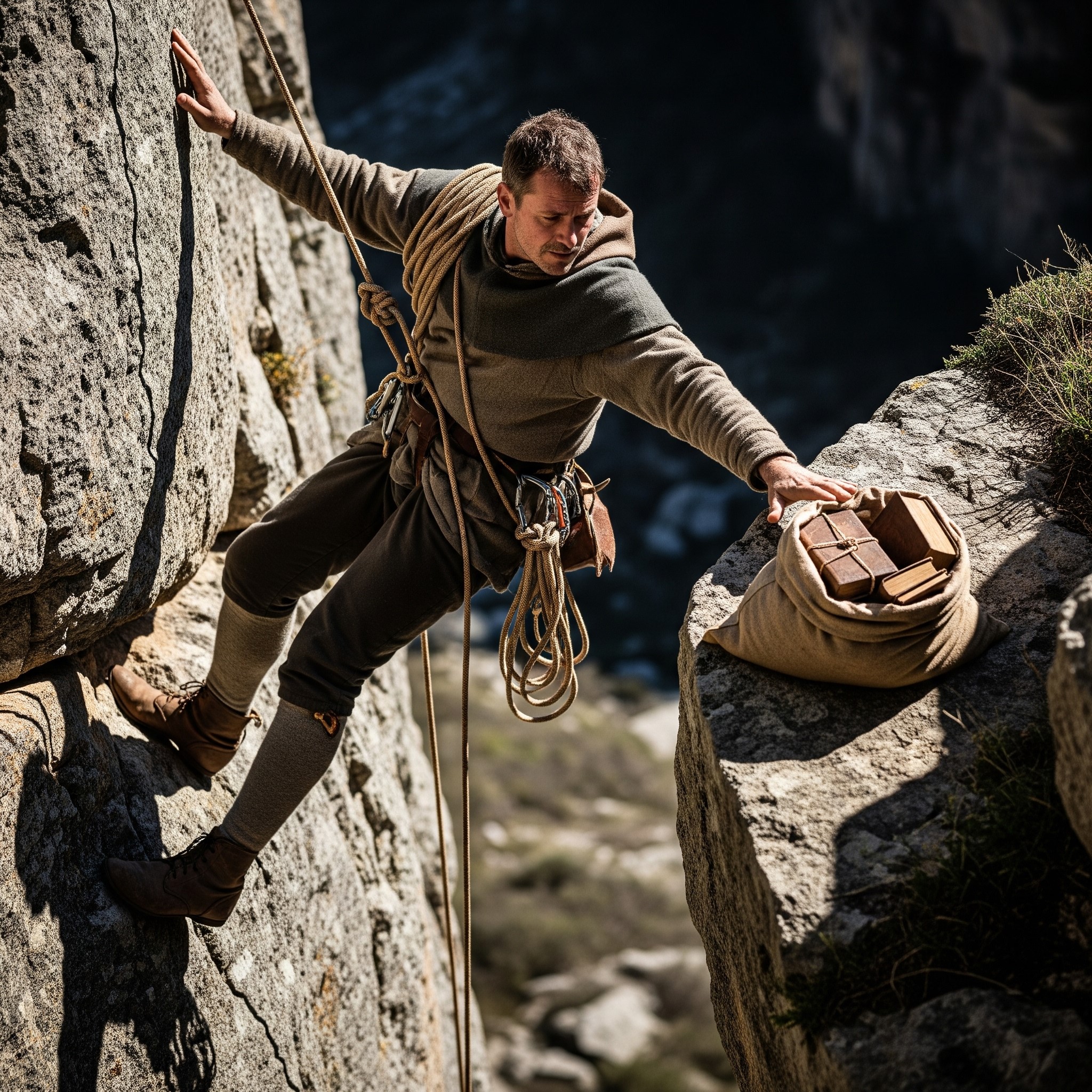
Category: Fantasy Short Stories

  • After the Fire, What?

    After the Fire, What?

    The first time that Yagac approached the shrine he was carrying a stick he had cut from a tree and sharpened.

    “What do you bring for the god?” said the aged priest. Villagers said he had been at the shrine more than a hundred years. He looked it.

    “I bring this spear,” said Yagac, his young voice trembling.

    The priest saw a thin, or better scrawny boy who might be in his teens, though he could be taken for younger. He knew the villagers had very little to eat.

    “That? That’s a stick.”

    “It’s a spear. My father says that the God accepts whatever is the best you can bring. You must let me offer it.”

    The priest thought a moment. It was true that he had told the villagers the god would accept their best. He had meant “only their best” but perhaps this was the best the boy could offer. It wouldn’t do to give the villagers the idea of withholding things.

    “Go in, offer it, and say your prayers.”

    Inside Yagac laid his spear on the altar, then prayed. “You know that the lord in the castle takes what he wants. Now he has even taken my sister. I would like you to do something about it.”

    He felt very peaceful and wanted to laugh–a joyful laugh. But he didn’t do either. He put on a sober look and walked from the shrine.

    “Did you receive peace?” asked the priest.

    “I wasn’t praying for peace,” said Yagac. Then he walked off toward the village.

    The second time Yagac came to the shrine he was carrying a knife made of flint. It was very well formed, and had a wooden handle attached to it with some twine that looked hand woven.

    This time the priest just waved him in. At the same time he got an idea. Why not benefit from the repeated returns of the boy?

    Inside Yagac laid his knife on the altar, then prayed. “You know that the lord in the castle takes what he wants. Now he has even taken my sister. I would like you to do something about it.”

    This time the peace and joy that came over him was nearly overwhelming. He was sure there was some divine presence in the shrine. But he wasn’t satisfied. He carefully straightened his face as he walked out past the priest.

    The priest stopped him. “If you come again to offer a weapon, you must bring food with it. The guards from the castle will be suspicious if they see you bringing weapons as sacrifices. Traditionally they are sacrifices to give one courage and victory in battle.”

    Yagac nodded and walked away toward the village.

    The third time Yagac came to the shrine he was carrying a basket with some vegetables in it. Amongst the vegetables was a very respectable hammer made of a hard rock carefully attached to a wooden handle.

    This time the priest decided to make use of provisions he had made to listen to the prayers of worshipers. He had ignored the boy because he figured he was praying for some childish thing and he had no interest.

    Inside Yagac laid his basket on the altar, pulled the hammer out and put it beside the basket, then prayed. “You know that the lord in the castle takes what he wants. Now he has even taken my sister. I would like you to do something about it.”

    This time the feeling of peace and joy truly was overwhelming. Yagac fell on the floor laughing hysterically. Then he got up, straightened the rags he wore for clothes, wiped any smile from his face, and left.

    The priest intercepted him. “You have been touched by the god. I can see it on you. You should be satisfied with what has happened. His peace and joy have come upon you.”

    “I wasn’t praying for peace and joy,” said Yagac.

    A bit of fear came over the priest. He liked the way things were in the village and at the shrine. While the village produced little, something came to him from everyone, and then he received a monthly payment from the castle lord for help in keeping the villagers quiet.

    It wasn’t that he didn’t believe in the god, though he had never seen anything that could definitely be crediting to his activity. The peace and joy? That was a secret ingredient in the incense.

    “Be very careful what you pray for, child,” he said, trying for a fatherly expression and tone. “The gods always demand much of those they aid! Be happy with his peace, lest you find the price of an answer too high.”

    He didn’t say this because he thought anything might happen. He just didn’t want word of a child with such a prayer getting back to the village. He considered reporting the child to the castle guards, but he decided there was no real threat. He’d just bring trouble on himself.

    The final time Yagac went to the shrine he was running. He was carrying a short sword in its scabbard. He could barely carry it and run. The priest could hear the sound of horses’ hoofs further in the distance. He moved to block the boy, but he was old and slow, and the boy ran directly into the shrine.

    Yagac slammed the sword down on the altar and said, “You know that the lord in the castle takes what he wants. Now he has even taken my sister. I would like you to do something about it.”

    But this time he continued. “I don’t want peace. I don’t want joy. I want revenge. I want things changed. I don’t care what it costs.”

    The guards were already outside the door, and the priest turned away so as not to see the boy killed. The priest didn’t really believe anything might happen.

    Suddenly the ground shook. Something emerged from the temple, but it wasn’t anything that could be recognized as Yagac. As it took steps the ground shook. Fire surrounded it. The guards fled in terror.


    Yagac felt no different. He was still just Yagac just a boy. But as he returned from the castle, riding into the village on a horse he had appropriated the villagers bowed down in the street, hailing him as a conquering hero.

    He was no hero! He was Yagac, who could plow the straightest furrow. Yagac, who loved his family and missed his sister. He’d found her dead in the castle. It wasn’t fair! These people wanted food. They wanted protection.

    Yagac spurred his horse and rode down the trail away from the village. But even as he did it he knew he would be returning. The god demanded it.

    He was also Yagac the responsible, and he would pay the price.

    3Our God comes
    but he doesn’t keep silent.
    Fire devours before him,
    A furious windstorm surrounds him. — Psalm 50:3

    (See my devotional on this verse.)

  • Tlisli and the Tlazil – I

    Tlisli* struggled to wake up. It felt a little like when she had been a small child and had almost drowned in the river. She had wanted to breathe, but couldn’t. She had struggled toward the surface, but it never seemed be there.

    As she struggled, images passed through her mind. She was struggling through the jungle, following the river. She was trying to fish with a rough, hand made spear. She was starving to death, thirsty, realizing the difference between being a young girl trying the things that the men did, and actually living in the wild as a hunter or fisherman. She remembered thinking she was going to die, and wondered if she was dead. Perhaps she was about to enter the afterlife.

    With that she awoke fully and found herself staring a nightmare in the face. It started with the long, sharp, pointed teeth which were almost directly in front of her eyes, maybe half a meter away. Her eyes flicked back and forth, taking in the reptilian red skin, the rounded eyes with lids that closed from both sides.+ The hands with their sharp claws were reaching toward her as well. It was a Tlazil, and not only that, a red Tlazil, known mostly for their rarity and poisonous bite.

    She seemed to remember waking up to this sight before, but she couldn’t quite get hold of the thought. She couldn’t take her eyes away from the Tlazil’s eyes. She felt herself preparing again for death, with hardly a conscious thought. She completely gave up hope. Truly the world was too much for her.

    “Ah, small one,” said a voice. “It appears that you will stay awake this time.” She couldn’t imagine it was the Tlazil. Wasn’t it a known, well-confirmed fact that Tlazil couldn’t speak human languages? Yet the Tlazil’s mouth moved and the voice seemed to be coming from that direction.

    Tlisli was naturally curious—too curious, her parents had frequently told her. The fear of death faded into the background.

    “You speak my language?” she asked.

    “Yes.”

    “How did you know?”

    “I knew which human language to use because you spoke in your delirium.”

    Tlisli thought for a moment. It hadn’t occurred to her to wonder how the Tlazil knew which language to speak. She vaguely knew that there were other languages than the one spoken in her small city, but they weren’t important to her. Even the troops of the god-emperor spoke the same language, though oddly accented. “What I meant was, how is it that you know how to speak human language? I thought that was impossible.”

    “Actually, it’s quite common where I come from. Most humans regard your language as very hard to pronounce. That’s because it’s derived from a Tlazil language.”

    “I don’t believe you.”

    “Believe what you will. Facts don’t care about your beliefs. But consider the sound combination that begins both your name and the name of my species. It is not common in languages not related to Tlazil.”

    Tlisli was more relaxed than she should be. She wondered if she was drugged. She still knew she would be eaten, but it didn’t seem very important. “So when do you eat me? Am I lunch, or dinner?”

    “Actually, I don’t really like human flesh,” said the Tlazil. “And you are thin and probably stringy. I have this hog roasting. You and I will share it for lunch, and then we will see.”

    “But Tlazil eat people.”

    “Not quite accurate,” said the Tlazil. “Some Tlazil eat some people. That’s not the same thing.”

    “Oh.” Tlisli didn’t know how to respond to that. She also suddenly realized that while the Tlazil had referenced lunch, he really had not promised not to eat her for dinner.

    “So Tlisli-human,” it continued, “What are you doing out here alone in the jungle? It seems an odd place to find a young female human.”

    “What do I call you?” Tlisli wasn’t even sure if the Tlazil was male or female.

    “I doubt you could pronounce my actual name. How about you call me Azzesh? It means ‘I eat girls for dinner’ in my dialect.” Tlisli was unsure if the sounds it made afterward were laughter or if its expression was a smile.

    After a moment’s thought she realized that if her language was related to Tlazil, there was no possibility such a short word meant all that. “You’re teasing me,” she said.

    “Indeed I am.”

    “So what does it mean?”

    “Nothing. It’s an abbreviation for my name. Were you to say my whole name, that would mean ‘honorable mother finder of rare divine blessings’. But you would not pronounce it so. And if you mispronounced it, it would mean ‘daughter of mother claimed to result from divine intercourse’ and if you said that, I would have to bite your head off so as to avenge the dishonor.”

    “Oh.”

    “You use that expression a good deal. One could get the idea that your head was empty.”

    “I don’t know what to say.”

    “You could ask me who I am, where I’m from, and what I’m doing out here.”

    “But Tlazil live in the jungle! Where else would I expect to find you?”

    “And doubtless I’m out here looking for girls to eat. Do you have any idea how rare it is to find a human girl wandering about in this part of the jungle? Were you only more tasty, you would be a rare and expensive delicacy.”

    Tlisli skipped over the part about eating, which she was beginning to believe was humor anyhow, though why she believed that she could not have said. “Rare in this part of the jungle?”

    “Yes. There are other parts of this jungle that are fairly swarming with girls.”

    “I don’t understand. Surely their men wouldn’t let them.”

    There was that sound again. Was it Tlazil laughter?

    “Oh, small human girl, you have truly lived an isolated life. ‘Their men wouldn’t let them?’ I should tell that to the governor of the city where I live. She would find it quite amusing that a man would prevent her from doing what she wished.”

    “But that would be a Tlazil. Are all Tlazil ruled by their females?”

    Azzesh stared at Tlisli for a moment. “Do you know nothing of the world at all? Your city must be quite isolated.”

    “Well, I thought Tlazil were ruled by their men, just as are humans.”

    “Not at all, not at all! Tlazil may be ruled by men or women, though thankfully, more by women. But humans may be ruled by either. My queen is human. Well, not precisely. A different subspecies. But she’s so much like a human as makes no difference to me.” She paused. “But enough talking for now. You need to get some food into you. You’re beginning to be ready for it. The poison of the Tlerississ fish is very debilitating.”

    “Tlerissis?”

    “Yes. The one that is red in the middle, black around the edges and nearly clear between. The Ixstl is red and black in the same way, but between is an off-white rather than clear. Ixstl make good eating.”

    Tlisli almost forgot about the prospect of being eaten while she ate. Ever since she could remember she had understood that to be captured by a Tlazil meant one would be eaten. Yet Azzesh showed no sign of hostility, or of culinary interest at all. She roasted fish with a selection of herbs and provided some fruit to go with it. It was, in fact, a delicious meal, every bit as good as anything she had eaten at home.

    The next day, when Azzesh pronounced Tlisli ready to travel just a little, they broke camp and started to move downriver. As they traveled, Azzesh pointed out a variety of plants and animals, discussing their value as food, fuel, or building materials, and pointing out ways to hunt or harvest them as appropriate. She was not a particularly good teacher. She never stopped and took questions, and she apparently no longer thought Tisli needed rest. Tlisli, in turn, surprised herself with how quickly she was gaining in strength, despite what seemed to her excessively long days.

    Tlisli didn’t really pay attention to how much time was passing, nor did she consider running away. She was learning too much. She kept trying to imitate Azzesh’s work with her hunting bow, but all that got her was a few contemptuous hisses and no kills. She simply couldn’t manage to hit a moving target, and often she missed even those beasts that were standing still. She hit a target a couple of times only to find that she had not hit anything vital and the arrow was not fatal.

    She had practically forgotten about her sword. It was not very useful as a knife, and she had yet to find the jungle creature that would allow her to get close enough to allow her to kill it with a sword. She had kept it in her pack because it was clumsy to carry at her belt without a proper scabbard.

    As soon as she had it out and was cleaning it, Azzesh reached out and grabbed it. After a few minutes running her hand over the blade, and examining it carefully she said, “It’s bad to be lazy and stupid, and to fail to learn the simplest of lessons, but the only consequences are that you die and your body feeds the jungle creatures who are somewhat more useful than you are. But to take a fine sword and treat it with contempt—that is unforgivable.”

    “Fine sword?” asked Tlisli.

    “Ah! There is some glimmering of intelligence and discernment in you after all. Perhaps for that I will forgive you the sacrilege, even though it is unforgivable. At times Azzesh accomplishes impossible things, such as restraining herself from running you through with this sword and consuming your flesh for dinner.”

    “But the sword,” said Tlisli. “I was unable to discover anything it does.”

    “Does? Does?” Azzesh paused. Tlisli still could not read Tlazil facial features, but if she had she would have been frightened. Azzesh radiated astonishment and contempt in equal measures. “What do you suppose a sword is supposed to do?”

    Tlisli could recognize the anger in the voice, and so she remained silent, looking for the right words that might redeem her in Azzesh’s eyes.

    “A sword,” Azzesh continued in a few moments in a steady and controlled voice, “is supposed to sit there and be sharp, be balanced, be reassuring to its owner because of its characteristics. A sword is not supposed to ‘do’ things. A warrior does things with a sword.”

    “But what of magic swords?” asked Tlisli, too curious to restrain herself. “They regularly do things like flame, or put up special defenses, or even pass knowledge on to the swordsman.”

    “Pah! A sword that does things like that is really just a magic staff in the shape of a sword. It may be useful in its own way, but it is not really a sword. Now this,” she continued, picking up Tlisli’s sword, “is a sword! It has a powerful lineage. It should be treated with great respect.”

    Tlisli was now fascinated. “Did it tell you that when you performed that magical ritual?”

    “What magical ritual?” asked Azzesh, again astonished.

    “Well, when you ran your hands over the sword and mumbled some sort of magical words.”

    “That was the great magical ritual of running your hands over something so you can feel its shape and characteristics more precisely and at the same time of talking to yourself. It’s power is that sometimes you know something about the object you examined that you didn’t before. It’s weakness is that idiots believe you are performing a magical ritual, or alternatively that you are insane.”

    “So by feeling the sword you figured out that it had an important ‘lineage’–was that the word you used?”

    “No, stupid! I figured that out by reading the inscription on the sword!”

    “Oh.” Tlisli paused for a second. “What do you mean by lineage?”

    “When I use that with reference to a sword I mean who made it, and who has used it. In this case we can know who made it, because he inscribed his name on it, and we know the general category of people who used it. We also know how ancient it is.”

    “Who made it?”

    “His name would mean nothing to you.”

    “So how do you know he was great?”

    “Because he made this sword.”

    “Isn’t that circular? He’s great because he made the sword, and the sword is great because he made it?”

    “No, no, no! I know the sword is great because it is great. Because it is great, I know it’s maker must be great. I know his name from the inscription. From other factors I know that the sword is old, but not ancient. It’s somewhere between 200 and 250 years old. It probably dates to when your city gained independence from the Tlazil Empire.

    “Tlazil Empire?” asked Tlisli, amazed in turn?

    This time Azzesh was simply amused. “Of course you learned a rather different history.”

    “I learned history! The great mother led the first inhabitants of Sirixistlan to the fertile and safe land on which our city now stands and taught them the various civilized arts, thus distinguishing them from the uncivilized Tlazil. That was many, many generations ago, longer than you can imagine.”

    “I can imagine very many generations indeed, and your city is a thing of yesterday, historically.”

    Tlisli settled in to listen. She could sense a story coming, and she loved stories. She didn’t care if they were true or not.

    “A thousand years ago,” Azzesh started, “This entire continent of Porana was ruled by Tlazil. It is said that even now, on a group of islands in a great inland sea there is still an emperor of all the Tlazil, and there are those of my people who believe that the empire will return and restore Tlazil to their rightful place as rulers with humans as their slaves.

    “Five hundred years ago, more or less, nobody knows for sure, the coastal cities began to rebel against the Tlazil rulers. There were many, many humans in those cities and very few Tlazil. The Tlazil of the coast sent messengers to their provincial governors who sent them on to regional princes, who sent them on to the Imperial City, all asking for help.

    “But it could take months to travel from the Imperial City to the coast, even if one was hurrying. The imperial bureaucrats didn’t hurry. The governor would take time to discuss the issue, inevitably determining that he had too little resources to help, then he would take time discussing the message that should be added to the packet before it was sent on to the capital.

    “When the message reached the capital it was often read by officials who found fault with the message itself, and would reply with a request for more information, for clarification, or might point out that the official who signed the request was not the correct one, and would the originators please pay attention of Section R10765.4.3c of the official code (I made that number up, of course, but you get the idea) which specifies the proper persons to certify need in the case of the request for official support.

    “Of course, no imperial official would think of bypassing the chain of command, so the messages would be sent back through the regional princes, the provincial governors, and finally to the city in need. Often that city would no longer have any Tlazil administration by the time the message got back to them. The humans would be fully in charge.

    “What made things much worse was that the Tlazil bureaucrats had grown lazy. They had human slaves to read and write for them, and often they trusted the human slaves to think for them as well. As a result, human slaves were often answering messages relating to conflict with their fellow-humans elsewhere in the empire.

    “The fact is, that had the Tlazil imperial army been deployed, it would have been impossible for such a rebellion to succeed. As it is, it is quite possible that there still is an imperial army toward the interior of this continent, but in any case, it never got anywhere near the coast. We don’t have any communication or commerce with folks in those parts.

    “So, little girl, your ancestors were presumably slaves who rebelled, and you are the descendant of such rebel slaves. The other story does sound much nicer. I understand why they adopted it.”

    Tlisli just looked at Azzesh for a long time. On the one hand the idea of a Tlazil empire was preposterous. On the other hand, Azzesh herself was preposterous, and yet here she was telling wild tales. Was it possible that Azzesh’s story was the true history of her city?

    To be continued . . .

    [Previous episode]  [Next episode]

    *This is part of the continuing story of Tlisli. It is obviously a work of fiction, and anything that resembles anything in the real world is purely accidental.

    +Earth readers beware—a Tlazil has some reptilian features, but is not a reptile.

  • Tlisli: In the Forbidden Ground

    [This is a work of fiction, as should be obvious throughout. Nothing in it resembles anything else enough to be mistaken for reality, but just in case someone disagrees, if you think it represents something in real life, it doesn’t. This is the second installment in the Tlisli Series, and is continued from Tlisli’s Escape.]

    Crossing the stream was not difficult, though it had it’s own dangers, and after crawling out on the other side, Tlisli plunged into the jungle on the other side. She hoped that just crossing into the forbidden ground would discourage her pursuers. But it was not to be.

    After several minutes of pushing through jungle, she noticed the undergrowth getting thinner, and soon she came out in a clearing. The clearing was occupied by a small hill, and it looked to her like the jungle surrounded the hill, but only grass and small plants grew on the hill itself. To her left, less than 30 meters away, it looked like there had been a recent washout, a gully with mud banks cutting into the hill. What was now a small brook flowed at the bottom of it, and appeared to go toward the stream she had crossed several minutes before.

    Tlisli decided that she would be better off passing the hill in this newly opened path than by walking over. There was no cover at all at the top of the hill.

    (more…)

  • Tlisli’s Escape

    Tlisli waited tensely for the animal sounds around her to die down. It was some time before the jungle noises settled back to normal. She was pretty sure that someone else was disturbing the jungle-perhaps many someones.

    If there was one thing she could do well, however, it was being quiet. Soon her silent waiting was rewarded. She knew that at least two, and maybe three groups of people were pursuing her. And they were close, too close!

    Her choices were limited. She was about to enter the forbidden ground. It was clearly the intention of her pursuers that she have no choice–she’d either have to surrender or die in the forbidden ground.

    It wasn’t just the taboo. There were the tribesmen, carrying bows and arrows that were poison tipped. The local tribe of Tlazil was not terribly well equipped, nor were they particularly skilled, but they made up for that in numbers and ferocity. The townspeople claimed the taboo was due to some religious proclamation or another, but the tribesmen seemed to be the most effective enforcement.

    Tlisli thought for a few moments. It would be tough enough for her to evade the pursuing groups. Her father’s men might be stuffy, traditional, and otherwise annoying, but they knew their way around a jungle.

    It had been a foolish idea for her to run away. She should have known it wouldn’t work. For a moment she thought of surrendering. She was so tired. But the thought of surrender brought her back to the reason she was running.

    There had been the troops of the grand emperor, who had quickly overwhelmed the town’s defenses. Her father had long been an advocate of resistance to the Grand-Emperor. Yet when the troops entered the city, her father had gone to greet them.

    She wasn’t sure whether her father had been a traitor all along or whether he had just changed sides quickly. He had always been a bit indulgent with her. But her husband had remained cool toward the invaders. He wasn’t any sort of rebel: he just didn’t flatter them and butter them up. He had also remained indulgent with his wife.

    She, in turn, wasn’t able to hide her contempt, and had finally publicly confronted her father. It had been a minor issue, simply a matter of skirt length. Her father had told her she was not fit to appear in public dressed like that. She should have realized she needed to back down with the Grand Emperor’s governor-general watching. It was obvious now. But she had challenged her father and then called on her husband to back her up.

    She almost wished now that he had agreed to punish her for her insubordination. The Grand Empire’s laws merely required that she be whipped. But he had stood by her, still the sweet boy she had married only three months before and still in love.

    The governor decided to make an example of him. He was stripped naked, shackled just tightly enough to slow his movement adequately, and whipped through the city streets until he died.

    Her father had then whipped her like a child. But he had made a fatal mistake–he didn’t think she would defy him. She had cried pitifully and promised obedience. But she was only watching for her chance.

    It had come almost immediately. Her father put her in her own childhood room, from which she had discovered dozens of exits as a teenager. The escape had been trivial. Yet pursuit had been almost instant. Only many hunting trips with cousins and uncles prepared her to get this far.

    And now she faced the choice. Either she must surrender, or she must face certain death in the forbidden ground. Trying to run past her pursuers would be the equivalent of surrender.

    She hesitated only a moment. She ran slightly north and east, then plunged into the stream that marked the boundary.

    To be continued . . .

    [Next episode]

    From the Tlisli Series; Set in the Energion world. This particular entry was composed entirely on my Palm Centro.

  • Hell Fire and Damnation

    [This is a work of fiction.  Any resemblance to any real person is purely unintentional.]

    After 10 days, or perhaps it was a hundred, the angel returned. This time he looked like a pillar of darkness, as dark now as he had been bright before. How did I know it was the same angel? I just knew.

    “Where am I?” I asked again.

    “You are where you belong.”

    “This can’t be heaven.”

    “Why not?”

    “Well, there are no harps, no streets of gold, no sign of friends and loved ones, and I haven’t seen Jesus.”

    “Do you want to see Jesus?”

    Suddenly, I wasn’t sure. But that was impossible. All my life, I had talked about seeing Jesus. It was the most important thing to do when I got to heaven. I had preached it to congregation after congregation.

    “Everyone ends up where they belong,” intoned the angel again, looking helpful.

    “But I belong in heaven. I accepted Jesus as my personal savior. I depended totally on his grace. I should be in heaven.”

    “Well, perhaps you are.”

    (more…)

  • The New Judge

    [Note: This is one of my attempts to tell either a different part of a Bible story, to tell the story from a different perspective, or to get a similar point across in a different way. I will quote the related scripture passage at the end. Besides the general fun of setting myself the assignment and trying to write it, I hope these stories will help someone think about the scriptural passage in new and creative ways. This is a work of fiction. All places, characters, and things are products of my imagination and any resemblance to anyone or anything real is purely accidental.]

    Carl, now Sir Carl, made a bit of a stir when he arrived in the tiny village of Felidol. He rode his horse right across the small bridge across the creek (or river, as the locals would have it) and through the gate in the wooden palisade that surrounded the town. Farmers in their fields looked up and then continued to stare as he went by on his white horse. He did indeed cut quite a figure with shining armor, a quite long sword at his side, and fine cloak over it all, and expensive boots on his feet.

    The villagers stared, but they were less impressed by his fine figure and equipment than they were frightened to see anyone like that here. The citizens of Felidol and the surrounding countryside didn’t like important people all that much. Important people wanted to get things done, and it always seemed that what they needed in order to get things done was the farmer’s money, food, and sometimes even their property.

    Carl was completely oblivious to all this. He waved at the villagers in a friendly way as he rode past. He didn’t want to seem aloof or unsociable. He didn’t seem to realize that with the way he was dressed and equipped, the villagers had a hard time seeing him as anything but aloof. They hoped he would be aloof, and thus wouldn’t get them involved in anything.

    On the other hand, he knew something they didn’t. In spite of his young age, and his knightly appearance, he was actually the new circuit judge, to be based in their village. Carl knew very well that he had gotten the appointment only because his father was one of the richest merchants in the city. He was fairly sure that his father had bought him this appointment for his 20th birthday, along with a knighthood. But that was alright with him, because he knew enough about the law to do the job, and he intended to do right by these people.

    ###

    Carl’s first day in the courthouse was a disappointment. There were a couple of weddings to formalize, something that went without ceremonies in these parts. The feasting and celebration would take place elsewhere. There were some documents to formalize, ones that required the seal of a king’s officer. Carl was the only king’s officer in many, many miles. But nobody came to petition him for anything. He couldn’t imagine that none of the small farmers in this area had any complaints against the more important landowners. He imagined that the townsfolk had complaints against farmers, and farmers against townsfolk. That was how he had heard things always were.

    (more…)

  • Caravan Stop

    [Note: This story gives some idea of the imaginary Jevlir Caravansary, after which this blog was named.]

    The Jevlir Caravansary is just across the river from the small, but well-fortified town of Jevlir. Immediately to the west, the great east-west caravan route enters the pass of the mountains, variously known as the East Enzar range, Malkuthim range, or God’s Backbone. The ancient road once led from sea to sea, and theoretically still does, though nobody can recall anyone making such a journey.

    Theoretically also, Jevlir’s mayor and town council owe their allegiance to the baron (who has more variants to his title than the mountains have names), who in turn theoretically owes his allegiance to the Duke, resident in Aagerinar, far to the east. At the time of our story, the baron is only marginally aware of the name of the duke (Alexander II), and rather than giving allegiance to any hereditary noble, the various members of the town council are owned by different merchant houses, and it is rumored that some are owned by bandit chiefs. It is also rumored that some town council members are owned by more than one person.

    Caravans come to the caravansary and generally spend just one night. If they are headed east, to Aagerinar, they will leave their extra guards here, and proceed with only reasonable security. Unreasonably tense security is the rule in the mountains. If they are headed west, they will hire some of the guards that others have released. There are guards who spend their entire careers guarding caravans along this route. The pay is good for any who survive. Occasionally someone even survives long enough to retire, and the Caravan Guards Guild pays a handsome pension to any who make it, though the total pension payments form only a small part of the guild’s budget.

    Next to the caravansary, between it and the entry to the pass, there is the ruin of an Enzar temple. In this area that means the building is at least 3,000 years old, though from the outside it looks nearly whole. Those who claim to have seen the inside–a very small number–say that it is completely gutted, and it looks like the stone itself has been burned away in places. Very few bother to investigate Enzar temples unless extremely large treasure is to be expected, and none of the folks who claim to have seen the inside appear to be rich. Thus the temple is avoided by all.

    Just now, Jared, Lieutenant in the Ducal army of Alexander II, is standing outside the temple on the western side, looking at the body of his captain. The cause of his death was altogether mundane and obvious, apparently having nothing to do with taboos about the temple. A heavy crossbow bolt was stuck in his neck. All of this took less time to see than it does to describe, and Jared, along with the four soldiers who were with him dropped to the ground, presenting less of a target. It looked, however, as though the captain had been dead for at least a couple of hours. It was unlikely anyone was about to shoot them now.

    Jared got to his knees and scanned the cliffs to the west. The entrance to the mountain pass was quite rugged, and there were many places to hide–too many to allow certainty about where the shooter must have been. Sending one guard north and one south, Jared called on his sergeant and the remaining guard to look around for anything obvious. All of the captain’s equipment was still present. He had not been robbed. They found nothing else to indicate what had happened.

    “Why was he in this location?” asked the sergeant quietly. It was a logical question. There seemed to be no good reason to expose oneself in what was probably the best position in the Jevlir area to make oneself a target for a crossbow bolt. With that thought they picked up the captain’s body between them and moved him around to the northern side of the temple. It was not precisely a safe position, but at least it was a position where nobody had yet been shot today. The two guards followed.

    When they got there, Jared looked at his sergeant. “I’ll take two of the men and head downstream, staying on the northern side of the river. We’ll cross back at Peorlar and go to the camp. You go back to the village and tell Lt. Qerelir to make a show of moving out of town and heading east. And remember, I don’t want anyone who doesn’t already know to suspect the captain’s death.”

    “One change, Lieutenant.” The sergeants voice was respectful, but also determined. “You go back to town and get the company out. I will take the captain’s body.”

    Jared was silent for a moment. Was it time to assert his authority? The sergeant was right. He was the best man to go back into town, while the sergeant could easily get the body to the required place. People would hardly believe the company was leaving on routine business if the sergeant came back and then they hurried off.

    “Very well, sergeant, but be careful. Leave the crossbow bolt where it is. I want Qerelir to look at it.”

    In town Jared had to break the news to Qerelir, who was Kelaru, and thus regarded automatically as a much better woodsman. She was also older than he was and more experienced, but he still outranked her by days as a Lieutenant.

    He needn’t have worried about her reaction. As soon as he told her his plan, she went into action. The innkeeper was informed that folks who were occupying his courtyard were about to leave, that the captain had already headed out of town and the troops were obliged to follow. Soldiers started discussing what they would do when they got back to the big city. Jared was pretty certain none of them believed they were actually on their way home, but they put on a good show. He remembered this same group less than six months ago as they left on this mission, each quite skilled as warriors, but lacking teamwork. The captain had taught them to read one another and cooperate. Now it was paying off.

    In less than an hour they were on the road. Once they were out of site of Jevlir, Jared signaled Qerelir to join him. “The captain is dead,” he explained.

    She showed now sign of shock. “I was certain of it, and I’ll bet half the troops know it too. But obviously you wanted to leave without people realizing that.”

    “Yes. I need you to look at the body. We found it between the temple and the mountains with a crossbow bolt through the neck. I need some idea of how he died.”

    “Did you say ‘through the neck’ as in the point sticking out?”

    “Yes.”

    “That’s odd. When you said he was north of the temple I immediately assumed sniper. A good heavy crossbow could just do it from the cliffs, but I doubt it would go all the way through. In fact, such a shot would risk failing to kill instantly, and the captain carried an excellent healing amulet, courtesy of the pretty priestess.”

    “Well, my initial question was why he was back there. But how could anyone get near enough with a cocked crossbow? There’s no cover.”

    “Are you sure he was actually shot there?”

    “We found nothing at all, but the ground is hard. There’s no way to tell.”

    “Probably not.” Was Jared just imagining that she was thinking she would have been able to tell?

    “Do you know where the captain was going?”

    “I think he was meeting his source at the caravansary. I have no idea whether he got there or not.”

    “When we get back, I’m going to have to go there and do it alone.”

    Qerelir looked at him for a few moments. He was afraid she was going to argue and suggest that he needed to take additional people along. It was essential that he do this all without getting noticed. But after staring at him a bit she just said, “OK.”

    As expected, there was no difficulty meeting with the sergeant and his men, and then the troops prepared to return to Jevlir, this time on the southern side of the river. A little ways east of the town they settled into a hidden campsite. It was hard to be certain nobody would come across them, but they were fairly safe.

    Yaran was not the sort of person you really wanted to know. For one thing, he smelled bad. His clothes were dirty, he was generally drunk, and his speech was slurred and not terribly interesting. When anyone could manage to understand him, he was generally asking for money to buy more beer.

    Yaran lived at the Caravansary. He did not live in it, but sort of at it and around it. He regularly moved from place to place, sometimes because he was ordered to get out, and sometimes just because he didn’t want to stay in one place long enough to be noticed.

    In the Caravansary Inn, designed to provide a bed, showers, and decent food for those merchants who could afford it, four men gathered around a table by the window. One of them looked out the window and saw Yaran there on the ground just outside.

    “It’s OK,” he said to the others. “It’s just the old drunk.”

    “Here’s the deal,” said the second man. “We have 6,000 silver valors to add to the pot if you will take care of him tonight. Remember, this is as important to you guys as it is to us. We just need the timing changed.”

    “What about the commandos?” asked the third.

    “Don’t worry about them,” said the second, “I’ve arranged for them to be otherwise occupied. In fact, I believe they’ve all left town, which will make even that unnecessary. Just in case, however, I haven’t canceled my little diversion. They won’t fail to go to the aid of the pretty priestess.” He chuckled.

    “OK, go with it. He’ll be coming into town tonight to meet with the young militia officers. You can do it after he leaves town on the way home.”

    “I prefer it during the dinner,” said the second man.

    “Do it however you want,” said the first. “We can’t allow him to continue cooperating with Aagerinar. None of us can. If the Duke’s troops set up here permanently it will be bad for business.”

    Jared set out for the caravansary. He was not a foolhardy man, and he was not happy to be following the course that had probably led to his captain’s death, but he needed the information that had gotten his captain killed. At least he expected that if the captain was contacting a source and then got killed, there was probably a connection.

    It was after dark that he entered the caravansary grounds. It was impossible to approach the caravansary quietly and subtly, because one had to cross a long bridge across the river, and the bridge afforded no cover at all. Jared removed all insignia prior to crossing, and his normal clothing and armor did not distinguish him from the many caravan guards who were a common sight. Unless someone recognized him personally, he would be fine.

    He handed his horse’s reins to one of the stable boys, and headed for the bar. He uttered the appropriate insult as he passed the form of the source, and knew that once he had taken time for a drink he would find the man in the stables. He needed that drink just now.

    After a few minutes spent with some quite decent beer, Jared wandered slowly outside and sauntered over to the stable. He was still carrying his beer mug and looking rather casual. He stopped and checked on his own horse. Seeing that the fine animal was well cared for he continued down the line, finally finding an empty stall, and in the back, Yaran the drunk. Unknown to the regulars at the inn, this man was also Yaran the security agent, whose specialty was collecting information where others would be noticed. As he sniffed, Jared thought the agent played his part a bit too thoroughly

    “What news?” he asked.

    “You’re not Porivinar,” replied Yaran.

    “Indeed I’m not. He was shot earlier today. That makes anything you know doubly important.”

    “It’s a good thing I know you. If I didn’t I wouldn’t care how many passwords you claimed to have.” He ignored the fact that no password had been offered, nor were any used in this area. Personal recognition was the standard. Yaran was just trying to put him off balance, an almost instinctive activity for him.

    “Your news?” insisted Jared.

    “Who shot the captain?”

    “We don’t know. Did you see him today?”

    “No, and I was expecting to.”

    “What did you have for him.”

    “There is a plan tonight to assassinate the baron’s heir, Jerard. The folks I heard didn’t give a name, but he’s coming into town tonight, and they think he cannot be permitted to keep cooperating with Aagerinar. That eliminates the old baron himself, who doesn’t cooperate with anyone. So they’re going to kill Jerard. They’re planning a diversion at the Ecumenical Temple to distract you.”

    “That makes sense. But why kill the captain?”

    “You said he was west of the temple, toward the mountains?”

    “Yes.”

    “Did the crossbow bolt penetrate very far?”

    “No. Qerelir already noted that. She thinks he was killed elsewhere, by somebody close.”

    “Porivinar would have seen anyone that close, and would have defended himself—probably successfully.”

    “Unless he met someone he knew and trusted.”

    “Trusted? Hardly. Knew, possibly. Someone had only to offer him information and he’d make the meeting. On the other hand, he might have been surprised.”

    “Surprised? That would be a trick with Porivinar.”

    “But it could be done.” Jared looked thoughtful for a moment. “I can think of at least one thing that would work.” After another pause he said, “Keep listening, Yaran. I have some things to check out.”

    As he left, Jared was thinking about Porivinar’s movements before his death. He couldn’t figure out why Porivinar would be carried behind the temple if that was not where he was killed. He thought back through the process that had led him behind the temple. A stable boy had told him he saw the captain headed that way, so there were a limited number of places he could have been killed. From the caravansary west and north there was nothing, not even farms.

    He had immediately gone around the temple, but he had never thought to look inside. It was universally assumed that you didn’t go into old Enzar temples unless you had a specific reason to do so and a particular plan in mind. Despite the many stories of people getting killed in such places, it really wasn’t all that likely that a temple that had been sitting by the main road for 3,000 years was going to have active traps in it. It was just that the phrase “old Enzar temple” had come to be synonymous with “you’re going to die.”

    So would Porivinar have checked inside? Jared was certain that he would have done so, and that he must have done so. Without thinking to go get some help, he set out for the temple.

    There were few gaps in the wall, but one could enter from the east side in a couple of places. He kept low as he approached and carefully peeked around the corner. Inside he was shocked to see the light of a number of torches and numerous armed figures. It looked like a small army was camped inside.

    So this was why the captain had died! He had obviously heard or seen something that made him suspect that there were enemies hiding there, and he had gone to check. Unfortunately, he’d done it in daylight and someone had been waiting for him. He didn’t stop to ask why someone who had a body quite well concealed in a building nobody wanted to enter would take it outside and leave it lying around to be found.

    He heard something fly past his head, and suddenly he remembered how completely vulnerable he was. Not only could he be surprised in the darkness, he could be overwhelmed by numbers. He would die so quickly nobody at the caravansary would be likely to notice. He started to run and didn’t stop until he was almost inside the caravansary compound. Then he stopped and tried to compose himself so that he wouldn’t be so noticeable as he crossed it. He retrieved his horse and rode quickly back to the hidden encampment.

    A company of Aagerinar elite scouts was a fluid organization, usually consisting of one or two platoons of 20 or so persons each and several teams that could be any size smaller than a platoon. Jared’s company had two platoons, his own and Qerelir’s, and five 5-man security teams.

    He gathered Qerelir and the team leaders quickly and didn’t ask for discussion—he just gave out orders. Three teams were sent to add security to Jerald’s meeting, two to warn and help protect the Ecumenical Temple. If needed, they were to support the baronial heir’s security. The temple was important, being headed by a priestess loyal to the Duke, but it was not as critical as having a baron here who would truly acknowledge his duties to his lord.

    Qerelir had questions, but she came from a long tradition of Kelaru scouts, and they knew how to take orders. They were full of advice when asked, but when ordered, they obeyed. Jared might have feared she would regard herself as his superior. In fact, his few days of seniority meant everything to her. She wished she was senior, but she wasn’t, and that settled it as far as she was concerned.

    Jared elected to stay with the teams in town. Qerelir was an excellent tactician. If she couldn’t win the battle around the temple, he knew he probably wouldn’t make any difference.

    Qerelir put one platoon in a loose line designed to cover as much ground as possible and kept the second ready to respond quickly wherever an attack might come. Jared had ordered her not to try to attack the force in the temple. The scouts had the superior firepower in the open. Inside the building they could be easily trapped and destroyed. She was happy to obey those orders. But there was something that bothered her about this situation, and after a few minutes of waiting she started to mentally list her concerns.

    1. Why hide troops in the temple? Besides superstition, which would make it hard to get most troops to stay inside, there were caravan guards all over the town and caravansary. Nobody worried about another few armed men running around Jevlir.
    2. How would they get to town without being spotted and stopped? Jared wanted her to meet them before they got to the caravansary so as to keep from involving the civilians there, but there was no way to get to town except over the bridge, and one person could notice them there and report them. Qerelir agreed that they did not want the fight to be at the caravansary itself.
    3. Why had they made it so obvious? It was almost as though they wanted someone to find the captain’s body.

    With that thought she became certain. She could not abandon the watch here just because she was certain that she was guarding the town against nothing. She called her sergeant over and told him to take command. Then she slipped forward into the night and approached the temple herself. It was the work of a few minutes to get a look through the same break in the wall that Jared had used. Inside she saw the torches, but with more time to check she looked carefully at what was casting the shadows. She couldn’t get a very clear look. She took out a magical lens, a gift from her father, also a scout. It allowed her to look for the magical lines of force.

    And there it was—the magical manipulation of the light, producing shadows on the walls and the appearance of torches set around the walls. Jared had no such device, and had had little time to look, but she was now certain.

    She backed away from the wall and immediately whistled a command to her troops. They mounted quickly, and her sergeant brought her horse to her. Then they galloped for Jevlir. Qerelir hoped she wasn’t too late.

    In the meantime Jared was thinking very similar thoughts. He could feel an attack coming. The hair on the back of his neck was standing up. It was not outside near the temple, but here in town that the attack would come. His security teams were inside the building could take care of anyone there. He was watching the street.

    The team leader of the one team he’d kept outside approached him and asked him if he had noticed several armed men heading toward the Ecumenical Temple. He had. But he had to keep the teams here. The two teams at the temple would have to take care of themselves.

    He wondered if he should send a messenger and call Qerelir back, but it seemed likely that if she hadn’t figured things out by the time a messenger got there, she’d be too late, so he kept all his men with him.

    At the Ecumenical Temple dozens of followers had come to join in the defense of the temple. The gate was barred, and people were being admitted only on personal recognition. Alina, known as “the pretty priestess,” knew very well that a determined attack by as few as a couple dozen people could overrun her temple. She only had three truly trained guards along with her own magic. Her followers were brave and determined, but they had received less than two weeks of training in their spare time.

    She and the security teams were quite certain they could see people moving into position, but they could not do anything until there was an attack. It was important to the temple and to the Duke’s forces as well that they be seen as totally obedient to the law.

    It started with bottles of heating oil and flaming arrows. The temple building was quickly on fire, and there were patches of burning oil around the compound. The security teams were able to take an occasional shot, but it was hard to tell what was happening. It would not be long before they would have to abandon the compound. Clearly that was their attackers’ intent.

    Alina wondered why they were making the attack so obvious when they could have won quietly without attracting attention. But however much she might question their approach, it was definitely working. Then she heard a cavalry horn giving a signal she didn’t recognize and she saw horsemen coming up all the approach streets from every direction.

    The fight was remarkably quick, but the the cavalry didn’t stop to help them fight the fire. That turned out to be something that her local followers were good at.

    As Qerelir and her troops arrived at the Ecumenical Temple the attack started at the dinner where Jerald, baronial heir, was the guest of honor. The outside security team spotted people approaching from the outside. The main attack, however, came from the audience. Every young officer in the city militia and the baronial guard was there with their weapons.

    It was a quick draw of a sword, but one of the security team was watching closely and threw a dagger directly into the man’s sword arm. The delay and confusion allowed Jerald himself to draw his sword and step back from the table. Soon everyone was armed and had displayed their chosen sides. The attackers waited for the help that they thought would come from outside. This was to be a massacre, not just an assassination. The security teams didn’t want to kill the attackers. They wanted to question them and find out who had hired them.

    Minutes went by with everyone looking for someone else to make a false move. It almost looked like the room was frozen in time. Then Jared stepped into the door and addressed the room.

    “I don’t know if you’re aware of it,” he said, “But under Aagerinar law if you can prove that you were hired by someone for a job, such as the assassination of a nobleman, then you are not held guilty. The penalty for attempting such an assassination is death, and I have control of the area outside of this building. I’m wondering who would like to be hung tomorrow morning, and who would like to prove to me that you were hired for the job.”

    There was a clatter of swords on the ground. “How do we prove we were hired?” asked one man.

    “Well, you could have a certified hiring document.” Jared noticed their blank looks. “Or if you don’t have one of those, you could just identify the person who hired you.”

    They couldn’t wait to give him names.

    It was a sunny day two weeks later when Jared and Qerelir were both present as the flag of Aagerinar was raised over city hall in Jevlir. Also present was General Ezbah of the Aagerinar Elite Scouts. Several officers had come with her, and both Qerelir and Jared were wondering just who their new commanding officer would be.

    In her own informal way Ezbah walked over to the two of them after the ceremony and tossed them new insignia of rank. Both were now captains—equal in rank.

    “You’re probably wondering what your assignments are,” Ezbah said.

    “You could say that,” said Qerelir smiling.

    “We’re forming a new company to work the border here. Jared, you get the current one. Qerelir the new one. You’ll be working the northern side of the river,” she said, looking at Qerelir.

    Then she looked at Jared. “You’re thinking I either didn’t read or ignored your report. You’re thinking you don’t deserve promotion, and your sense of fairness doesn’t let you feel happy about it if you don’t deserve it. Well, let me tell you something. I like officers who can learn. I like officers who can evaluate a situation, including their own weaknesses. I couldn’t have evaluated your actions any more cogently, nor could I have recommended any better corrective action.”

    She started to leave, then looked over her shoulder. “Just make damn sure to take the corrective action you recommended!”

  • Guarding Books

    Guarding Books

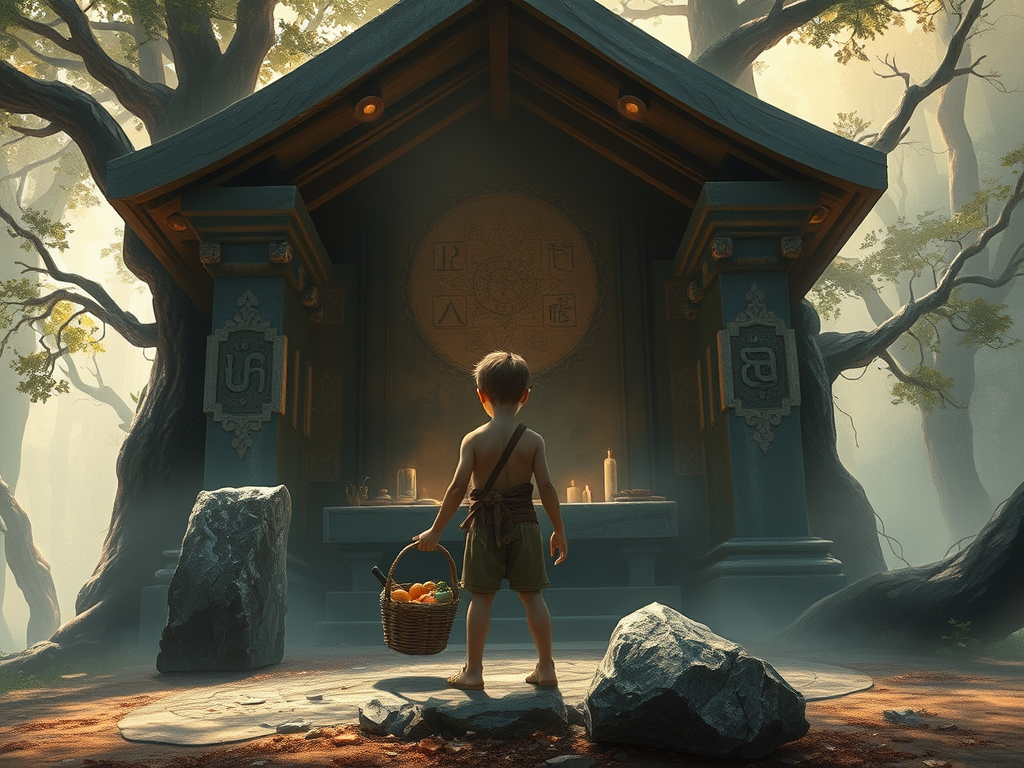
    “Books!” muttered Bryan. “I’m hanging from this rope to get books.”

    Bryan was a professional caravan guard, used to crossing these mountains with expensive cargoes. Generally, he expected substantial bonuses for ensuring the safe passage of his employer’s goods. The bonuses were guaranteed by the sale of the expensive cargo.

    But times were hard, and fewer and fewer caravans crossed the mountains, and bonuses were smaller and smaller. If it weren’t for that, he would never have taken employment with a woman. She’d said her cargo was valuable, and she’d offered good rates—exceptionally good in these poor economic times. As a result, Bryan was leading a team of half a dozen guards guarding a train of mules loaded with bags and boxes.

    Then in the worst part of the pass a mule’s load had slipped, and one of the bags came loose. It was incompetent cargo handling, or perhaps even an attempt to sabotage the train and allow a robbery. But he couldn’t convince Lady Ilra of the danger. He couldn’t convince her that her life and the rest of her possessions were more valuable than a single sack of goods.

    He had even asked her what she would have done if the bag had fallen all the way into the canyon. “Use a longer rope,” had been her quick answer.

    So here he was, most of a rope length down the cliff, desperately trying to manage the rope and grab the sack that was lying on the ledge. Then through the partially loose mouth of the sack he identified the contents. Books! Each carefully wrapped in what looked like water resistant, oiled paper.

    His first impulse was to shove the sack off the cliff and let it fall the rest of the way. But then he looked up to the point where his rope ended on the path, and she was looking down at him. She was a small woman, easy for him to defeat, he assumed, but she was up there, and he was down here, and she was holding a dagger. The message was clear. Send the sack up on the second rope, or I’ll cut the one you’re hanging from. He could only hope she meant that he’d be forced to take an additional length of rope and recover the books from the canyon floor.

    So he carefully arranged himself so that he could hang from the rope and secure the sack, then tied it to the second rope. To add insult, she pulled the sack of books all the way up first, and only then allowed his men to bring him to the top of the cliff. It was humiliating to do this at a woman’s command, but it was insufferable to do it for books.

    As they reloaded the mule, watching the cargo-master secure the load correctly, two of his men whispered in his ear.

    “We’ve figured out that we are guarding books,” they said. “We’re agreed that we shouldn’t have to risk our lives for that.”

    “We need the money,” he pointed out.

    “Well, we can kill her, dump the books, and keep the money she has already paid. We only have her word that there is any more money awaiting us at the end of this journey.”
    “Very well, I’ll demand double our pay, and when she refuses, we’ll dump her. That will provide a good story for any future caravan.”

    Ilra had watched the men very carefully, but subtly, and she fully expected what was about to happen.

    “The men are not happy to be guarding books,” said Bryan.

    :”What difference does it make to you, so long as you are paid?”

    “That’s just it. How do we know we will be paid? We assumed you had a valuable cargo, and that would assure our payment when sold at the end of the journey.”

    “I have the money ready for you at journey’s end.”

    “That’s not enough.”

    “Oh? You demand double your pay, and half of the extra now.”

    Bryan tried to hide his surprise at her accurate guess. Why hadn’t he thought of demanding half of the extra pay now?

    “For double the pay, we’ll guard your books, humiliating as it is.”

    She didn’t so much stand, as spring into a standing position, with a rapier in her hand. “You really should have thought of asking for half your extra pay immediately,” she said. “You really aren’t very bright.”

    He reached for his sword, stung by the insult, angered at the way she intimidated him. How stupid could she be thinking that a woman 5′ 2” with a rapier could fight someone 6′ 1” and more than double her weight—all of his muscle!

    There was movement, so quick he wasn’t certain what had happened. His hand stung, and in surprise he lost hold of his sword. It clattered to the ground and came to a stop, precariously perched on the edge of the path. He was disarmed. By the time he realized that, her rapier was at his throat.

    The men behind maneuvered for position, but it was simply not possible to edge by the two leaders in order to join the fight. It was between Bryan and Ilra.

    “For what I paid you,” said Ilra, “you will guard my books across the mountains. For your stupidity, you forfeit the second half of your pay, but I may, just may restore it if you do an exceptional job the rest of the way.”

    “But lady, why take all thjs risk for books?”

    “You think my books are useless, do you?”

    “You can’t eat them, you can’t sell them. I’m a practical man. I like things that work.”

    “Interesting, then, that you are standing there unarmed, while I, a woman and a bookworm have you at my mercy. One might almost think I was the more practical person!”

    “Let’s see,” she continued. “I knew what you were going to propose because I know how to read lips, a technique I learned from a book. It’s loaded on the left hand side of the fourth mule. I know where it is by a memory technique I learned in another book, this one on the right hand side of the fifth mule.”

    “You are disarmed using a technique I learned from another useless book, designed to teach people who are smaller than average techniques that give them the advantage over large boneheads such as yourself. You believe that I will be unable to sell any of my books, and most of them I don’t actually want to sell, but some of them I do. I know who will pay for them, and how much, because of information I found in another one of those useless books. One of those bags of books toward the rear is worth about 5,000 silver crowns at our destination.”

    “But I also have an arrangement with a banker there so that I have much more at my disposal than the miserable pittance I’m paying you for this passage even without selling any books.”

    “Most importantly to you right now, however, is the fact that another book back there teaches one techniques with the rapier. I could, of course, simply drive the rapier into your throat and you would fall dead. You think your men would then kill me, but because I’ve spent my time reading stupid, worthless books, I know better. Instead, I could do this—she removed a button from his shirt right over his heart with a flick of the rapier—and with a slight modification you would be bleeding to death. That weapon belt, which bears the throwing daggers you’re hoping to reach for is easily dealt with as well.” With a another flick the belt was cut through and fell to the ground.”

    “My question is this,” she said. “Would you rather die here and now, or would you rather guard this train the rest of its way to its destination and recover your pay?”

    Fighting fury and terror in equal measures Bryan grated out, “I’ll see to it that you make it.”

    “I know what you’re thinking. You’re thinking you’ll catch me asleep and kill me later. But another book back there has taught me about traps and alarms—deadly traps. Do you know that I know how to make at least 15 different poisons with materials we have with us, each of which could kill you and all your men?” It was her first lie, but it was a necessary one.

    “We’ll serve you well, lady,” said a defeated Bryan.

    And the caravan of useless books moved on through the mountains.

    Copyright © 2007 Henry E. Neufeld

  • Birth of a Religion

    Marat, priestess of Utu, adjusted her position until she had a clear shot both at the priest of Velanac, and at the drummers who stood to either side. To her left, she could see Amrar, priest of Ra, also prepared with a short bow, not all that different from hers. She stifled a laugh. It’s probably a minute or so before midnight out in the real world above, though I can’t tell in this cave, she thought. I can barely move, my magical strength is expended, all my healing items, herbs, and other mixtures are empty. I’m bandaged around the chest, on one leg, and both arms. Pulling this bow is going to be painful. It’s a fitting end to my career.

    Somewhere to her left, she knew that her colleague, no, associate Natisha was sneaking around the edge of the cavern. Just out of sight of the entrance stood the Lord Kaltros, leader of this little expedition, along with the three remaining hired guards. A few meters behind them would be Lord Mayor Zirdan, mayor of Sidroc, who was the expedition’s patron. He was lying on a stretcher after being hit by several crossbow bolts in their last encounter. It was miraculous that, without any remaining priestly healing ability in the party, he was still alive.

    With everyone injured in some way, it seemed likely that this would be the end. The only surprise was the absence of guards to stop them from getting into position to attack the high priest, but she wasn’t going to complain about that. Perhaps they could at least interrupt whatever ritual he was performing before they all died in the inevitable counterattack.

    (more…)

  • Simple Risk

    Jerin, legal advocate, could not quite believe the young woman facing him across the table. They were in the Aagerinar city jail, and he had been asked to take her on as a client.

    “Marita, heir to the Earl Northmarch, and also third in line for the Duchy of Aagerinar,” he said, reciting the known data. “How old are you, anyhow?”

    “Rumor has it I’m 15.” Her expression didn’t change. She was relaxed, even serene. There was no sign of the tension he would expect of a young woman under arrest.

    “Rumor has it? Don’t you know?”

    “My adoptive mother guessed I was eight when she adopted me. That was seven years ago. In actuality, nobody knows for sure.” Very slight amusement showed. He suspected that if this girl did know, she wouldn’t be telling. “But none of this is important right now. I need you to do some work for me.” Not “represent me” or “defend me.”

    “If I’m to represent you,” he said, “You’ll need to follow my instructions exactly and trust yourself completely to my care. You are charged with a serious crime, and it’s under the city jurisdiction, not the ducal, so you it won’t be easy.”

    “On the contrary,” said Marita, “You’ll do exactly as I say, speak when I tell you to, and be quiet when I want you to. You will merely be a voice.” It was amazing how, when you started from the original serenity, slight changes could convey a great deal of meaning. Now there was a hardness in her expression that would permit no argument.

    “Someone your age can’t do that!” he said. “The legal system can be complicated, and you can’t count on your birth to save you from this one. City judges aren’t chosen by the Duke, and aren’t susceptible to the kind of influence you’re used to using.”

    “I can get someone else. Or you can sit beside me, win this case, and get the fame that results. It’s your choice. But remember, I don’t deal well with disloyalty. You’ll agree to do things exactly as I say.” Still that hardness around the lips.

    Jerin considered for a few moments. He could end up looking like a fool, but on the other hand, Marita had the reputation for living a charmed life, she was close friends with the Ducal heir, her mother was the High Priestess and founder of the Ecumencial Temples of the Sun, and her father was the Earl Northmarch. The odds she was going to end up swinging by the neck from the end of a rope were probably small.

    (more…)