Category: Short Stories

  • Episode: The Seaport of Tevelin

    Episode: The Seaport of Tevelin

    Arrival in the Estuary & The Grand Skyline

    The air over the river mouth tasted of salt, decaying vegetation, and distant ocean rain.

    Tlisli stood by the starboard rail of Aterin’s riverboat, her hands resting on the polished ironwood top-beam. To her left, stretching away into the humid haze, the mainland shoreline was an unbroken wall of dark green jungle. Sitting squat and solitary at the water’s edge was Fort West—a low star-fort of pale river-stone whose gun ports stared silently out across miles of open, choppy water.
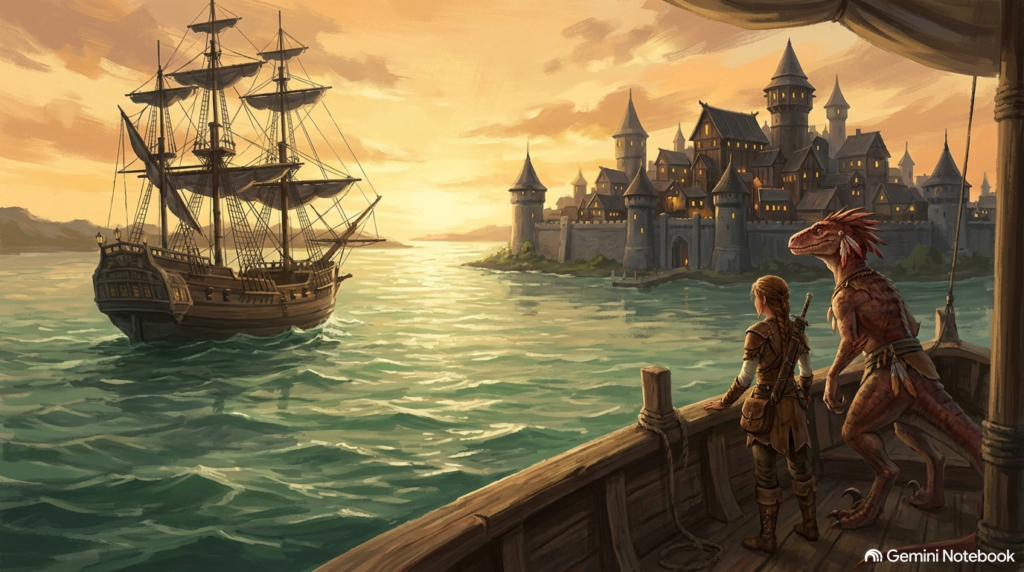
    Eye-level view from the wooden rail of a riverboat looking across wide estuary waters at a three-masted ocean merchant ship anchored near the island city of Tevelin under a bright sky.
    Generated by Gemini Notebook using Imagen 3

    “That’s the last of the crown’s mainland stone,” Aterin said, stepping up beside her with a brass spyglass tucked under his arm. He pointed out across the expanse where the river widened into what looked to Tlisli less like a stream and more like a landlocked sea. “Beyond that shore, Inraline law stops at the tree line. But ahead… ahead is where the crown actually lives.”

    Tlisli followed his gaze, taking in the sight.

    Rising out of the green estuary waters was a city unlike anything she had imagined. Back in Ixtlen, buildings were squat, adobe-walled compounds designed to keep women indoors and dust out. But Tevelin—sprawling across six massive islands in the mouth of the river—was built of heavy stone and massive timber. Multi-story structures stood shoulder-to-shoulder along the water, their foundations crafted from light-gray river-stone and their upper frames built from thick beams of quarried rockwood that shone like polished bronze in the afternoon sun.

    “They built all of that on the water?” Tlisli asked.

    “The Inraline don’t hold with the notion that timber is only for huts or that stone belongs only to kings,” Aterin replied with a dry chuckle. “If a building is worth raising, they build it to stand for three centuries. And since they prefer water to mud, they put their metropolis where the tides can wash their front steps.”

    All around them, the wide channels were busy. Sleek, rowed water-taxis darted between the islands, while heavy cargo lighters laden with inland logs wallowed in the four-knot current. Native river-galleys with low, swept hulls glided alongside clumsy merchant barges.

    Riding at deep-water anchor in the main channel were the true workhorses of the harbor: three-masted ocean-going merchant ships. Their dark hulls rode high in the brackish water, their towering spars and web of rigging crisscrossing against the tropical sky.

    “Are those warships?” Tlisli asked, staring at the nearest three-master. Its size dwarfed Aterin’s sturdy riverboat.

    “Merchantmen, mostly,” Aterin said. “Three-masters are the real workhorses of our sea lanes. Powerful enough to ride out an ocean storm and hold off a dozen coastal raiders. The Crown Navy keeps a few five-masted leviathans docked back home in Terinor for state parades and fleet engagements, but out here on the frontier, a fine three-master is king.”

    Behind them, a raspy, familiar voice cut through the creak of the timber deck.

    “A king until the wind drops,” Azzesh remarked, leaning her tall, red-scaled form against the cabin housing. The Red Tlazil flicked her fork-tongued snout toward the ship’s canvas sails, tucked tightly against their yards. “Then your great floating wooden mountain sits in the channel like a fat, stranded turtle while three rowed canoes run circles around it.”

    Aterin smiled thinly, though he didn’t contradict her. “True enough in a calm, Azzesh. But until the wind fails, she carries sixty tons of trade and enough longbows to clear a riverbank before you can reach your blowgun.”

    Tlisli only half-listened to their usual back-and-forth. Her eyes remained fixed on the stone quays of Merchant’s Basin drawing near. Stepped landings carved from solid granite led up from the water toward crowded thoroughfares filled with people of every shape, color, and species. For a girl who had spent her life inside a walled courtyard in Ixtlen—and her last month fighting to stay alive in the humid silence of the Forbidden Ground—Tevelin was a complete revelation.


    An Alley Ambush

    The stone quays of Merchant’s Basin felt solid beneath Tlisli’s boots after days on the riverboat, though the ground still seemed to sway slightly from the lingering rhythm of the water.

    Aterin had handed her a modest advance on her guard wages before departing for his trading house, suggesting she find a room at The Riverman’s Rest—a clean, respectable hostelry three streets back from the main wharves. Azzesh had slunk off into the lower docks to visit a Tlazil quarter, leaving Tlisli with several hours of rare, unscripted freedom.

    She walked slowly up the broad granite steps, taking in her surroundings.

    The main avenue was lively. High iron lamps mounted on river-stone pillars flickered to life as dusk settled, casting a warm yellow glow across multi-story buildings of carved rockwood. The street was packed with people—Inraline dockworkers in linen tunics, wealthy merchants in embroidered wool jackets, and tall, thick-scaled Tlazil carrying bundles of raw timber or fish crates.
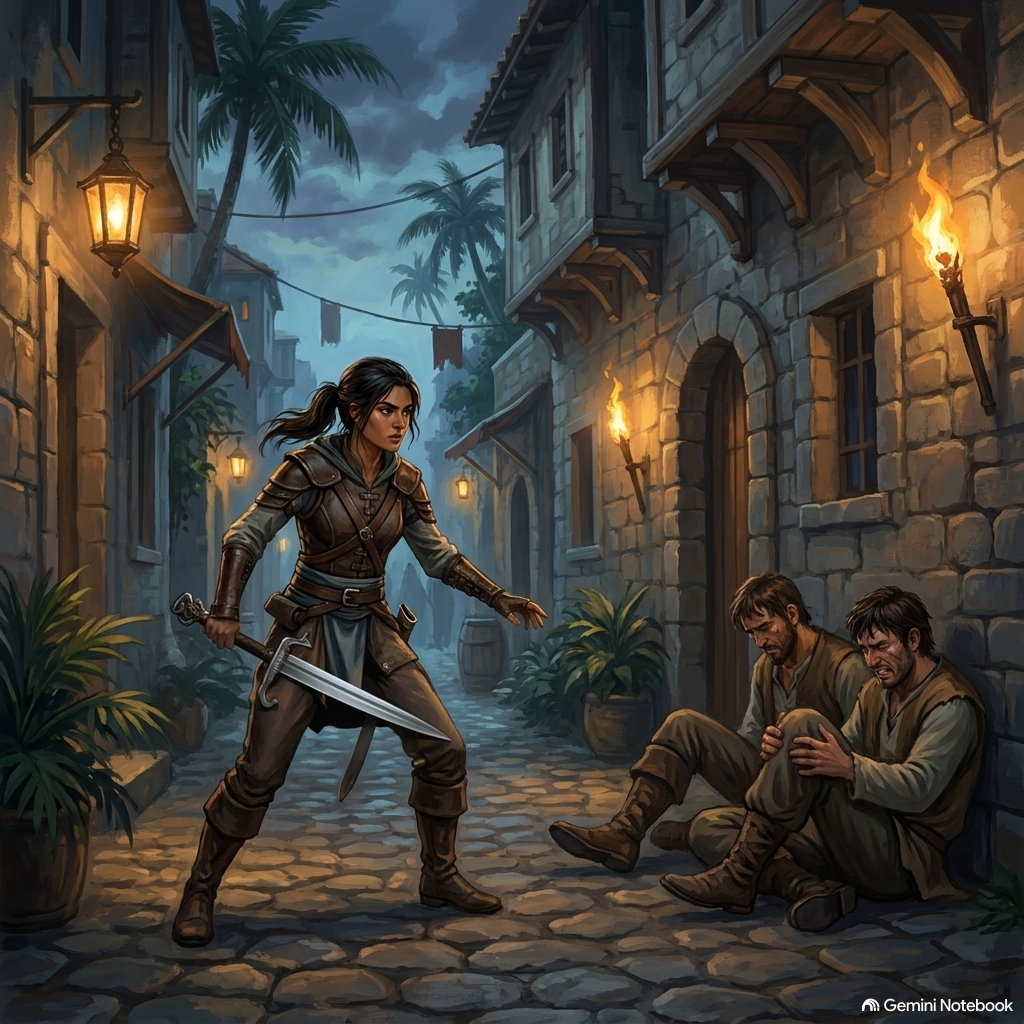
    A young woman warrior with dark raven hair in a low ponytail stands in a fluid stance in a twilight stone alley, holding a silver leaf-shaped blade while disarmed muggers retreat against a stone wall.
    Generated by Gemini Notebook using Imagen 3 (with one edit by FIrefly using Nano Banana 3

    What struck Tlisli most was the women. They moved unescorted through the crowds, laughing, bargaining at open-air stalls, and operating shops without a male guardian anywhere in sight. In Ixtlen, a woman walking unescorted at dusk would have been dragged home by her family or arrested by civic guards for immodesty. Here, she was simply another citizen going about her evening.

    Adjusting the strap of her travel pack, Tlisli turned off the noisy main thoroughfare into a quieter side street lined with grain warehouses and merchant offices. The air smelled of woodsmoke, roasted nuts, and tar.

    She had gone about fifty yards down the shadowy lane when three men stepped out from the gap between two stone warehouses.

    They moved with the practiced routine of local footpads. The leader—a broad-shouldered man with a scarred jaw and a heavy wooden cudgel—blocked her path ahead. The other two drifted toward her flanks, cutting off her retreat back to the main street. All three wore rough, oil-stained clothes and carried short, notched skinning knives.

    “Lost, little girl?” the leader grunted, his eyes dropping to the leather coin-pouch at her belt and the covered blade sheathed over her shoulder. “A pretty thing like you shouldn’t be wandering off the wharves alone. Hand over the purse and the blade, and we might let you walk back to your daddy.”

    A month ago in the dark alleys of Fort Confluence, Tlisli’s heart would have hammered against her ribs. She would have panicked, wondering what the law or her father would say.

    Now, she simply felt a practical, cold calm.

    Azzesh’s harsh lessons in the humid clearings of the Forbidden Ground came back to her naturally: Don’t stare at their eyes—watch their shoulders. Let them commit before you move.

    Tlisli didn’t scream or reach for her purse. She slid her shoulder pack to the stone paving, unhooked her leaf-blade, and drew the weapon smoothly from its sheath. The lightweight, silver-hued metal caught the faint glow of a distant street lamp.

    “You really ought to go away,” Tlisli said quietly.

    The leader gave a short grunt and lunged forward, swinging his cudgel in a heavy downward arc aimed at her shoulder.

    Tlisli didn’t bother trying to block the blow head-on. She stepped fluidly to her right, letting the heavy stick crash harmlessly into the empty air where she had been standing a second before. As his own momentum pulled him off-balance, she brought the flat of her blade up in a swift, hard crack against the side of his knee.

    The man yelped as his leg buckled, dropping him onto the cobblestones.

    Before the second attacker could react, Tlisli pivoted inside his guard. Rather than stabbing, she drove her left elbow straight into his midsection, knocking the wind out of him with a ragged gasp, and set the sharp tip of her blade lightly against the hollow of his throat.

    The third footpad—a skinny man who had been circling to her left—froze in mid-stride. He looked from his leader groaning on the ground, to his partner pinned against the river-stone wall, to Tlisli’s steady, unblinking eyes.

    “Drop it,” Tlisli said.

    The skinny thug dropped his knife so fast it clattered twice against the stones, and he immediately raised both hands over his head.

    Tlisli held her position, her breathing steady. Under her boot, the disarmed leader grumbled and clutched his swollen knee, but she didn’t shift her balance. Standing in the quiet lane surrounded by three disarmed muggers, it hit her with a sudden, quiet clarity just how much she had changed.

    She wasn’t the frightened girl who had fled Ixtlen in the middle of the night anymore.


    Inraline Justice & An Unexpected Invitation

    Moments later, heavy bootsteps echoed from the mouth of the alley. A squad of four Inraline town guards came around the corner with lanterns raised and short-swords drawn.

    “Hold it right there!” the squad leader called out.
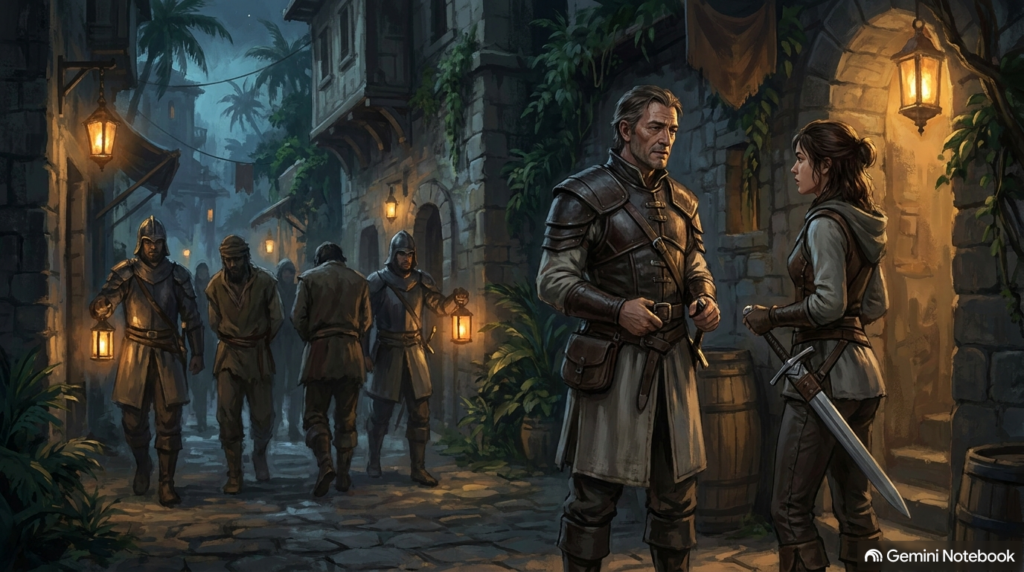
    A disciplined Inraline town guard captain in leather armor listens respectfully to a young woman warrior with dark hair in a low ponytail holding a sheathed silver leaf-blade under lantern light.
    Generated by Gemini Notebook using Imagen 3

    Tlisli held her ground, though an old habit made her stomach tense for a second—reminding her of how quickly authorities back home would throw someone in a cell first and ask questions later.

    The guard captain took in the scene with a practiced eye: two footpads groaning on the cobbles, one with his hands in the air, and a young woman in a merchant guard sash holding a leaf-blade.

    “You alright, miss?” the captain asked, stepping closer and lowering his sword.

    “I’m fine,” Tlisli said. “They tried to take my purse.”

    The captain kicked the heavy wooden cudgel away from the leader on the ground and grunted. “Marek and his boys. We’ve been trying to catch these three in the act for two weeks.” He noticed the woven emblem on her shoulder. “Aterin’s trading company?”

    “Yes, sir,” Tlisli said, sliding her blade back into its sheath.

    “Good work keeping your head,” the captain said, gesturing to his men. “We’ll take them off your hands. You don’t need to come down to the guardhouse tonight, but write your name in my log.”

    Tlisli stood on the paving stones as the guards hauled the footpads away, quietly impressed by how straightforward it was. No beatings, no demands for bribes, and no lectures about why a young woman was carrying a sword.

    As she picked up her travel pack, a young uniformed runner stepped out from the shadow of a warehouse.

    “Guard Tlisli?” the runner asked, checking a slate. “Commander Vane over at Governor’s Isle wants a word with you.”


    A Questionable Offer

    Getting over to Governor’s Isle meant hiring a rowed water-taxi across the main channel. It took twenty minutes of hard rowing against the tide, the ferryman grumbling about the heavy current the entire way.

    The military headquarters on Governor’s Isle was built like a solid block of grey river-stone. Inside, Commander Vane sat behind an ironwood desk piled high with rolled maps and sea charts. He was a middle-aged Inraline officer with tired eyes, short-cropped hair, and a direct, businesslike manner.

    “Sit down, Tlisli,” Vane said, waving at a heavy wooden chair across from him. “I spoke with Zerdanin and read the report from Fort Confluence. You seem to have a habit of walking into trouble and coming out in one piece.”

    “I try to avoid it, sir,” Tlisli said, sitting on the edge of the chair.

    “Doesn’t matter if you avoid it, as long as you survive it,” Vane said, leaning back. “Here’s the situation. The Grand Empire is pushing closer in the interior. Their scouts are moving through the creek villages, and I need eyes out there. But High Command back home in Terinor won’t give me the budget for a proper scouting company.”
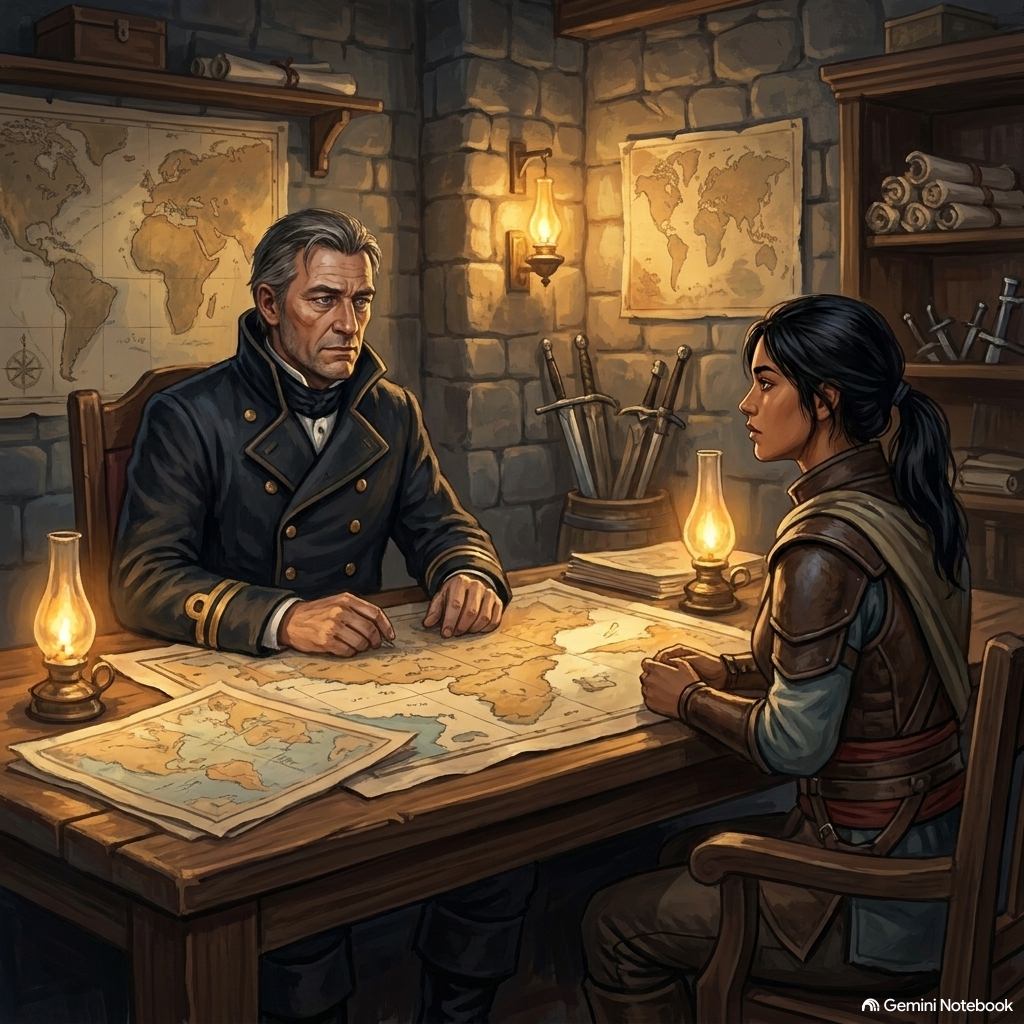
    A middle-aged Inraline naval intelligence officer in a high-collared coat sits bare-headed across an ironwood desk piled with sea charts, speaking with a young woman warrior with dark hair in a low ponytail.
    Generated by Gemini Notebook using Imagen 3

    He tapped his finger on a large map of the western coastline.

    “I need independent scouts. People who don’t wear Inraline uniforms, who can move through native villages without starting a war, and who know how to handle themselves if things go sideways. Sending a single scout out into hostile territory is… suboptimal. I know that. But it’s what I have the coin for. I can pay you well for every solid report on enemy troop movements.”

    Tlisli looked at the detailed map on his desk. “I’m already hired as a guard for Aterin.”

    “Talk to him,” Vane said simply. “If he’s willing to share your time, the crown will pay you a good stipend for every report you bring back to Tevelin.”


    Aterin Gets Involved

    Aterin’s private study on the third floor of his trading house looked out over the lantern-lit wharves of Merchant’s Basin. The room smelled comfortably of old parchment, pipe leaf, and polished ironwood.

    Aterin sat behind his desk, swirling amber wine in a glass while Tlisli explained her meeting on Governor’s Isle.

    “Commander Vane knows sending a single scout is suboptimal,” Tlisli finished, leaning back in her chair. “He’ll pay for any solid reports I bring back about imperial troop movements, but he isn’t providing a boat, a crew, or gear.”

    Aterin set his glass down with a soft clink. He didn’t give his usual polite merchant smile; instead, he had the sharp, focused look of a businessman who had just spotted an opportunity his competitors missed.

    “Vane is a capable man trapped in a bureaucratic system,” Aterin said. “Terinor won’t give him a budget, so he has to improvise. But look at what he’s actually offering you, Tlisli. He’s offering you official crown authority. A stamped pass from an Inraline intelligence officer lets you walk past any military checkpoint on the river or the coast without questions.”

    “It still leaves me walking,” Tlisli pointed out.

    “Only if you rely on the military,” Aterin said, tapping his desk. “Tevelin needs to stay free and Inraline if my trading company is going to survive. I have no interest in paying taxes to the Grand Empire. But I also have no interest in letting the crown take all the profit from new territory.”

    He stood up and walked to the high window overlooking the dark water of the harbor.

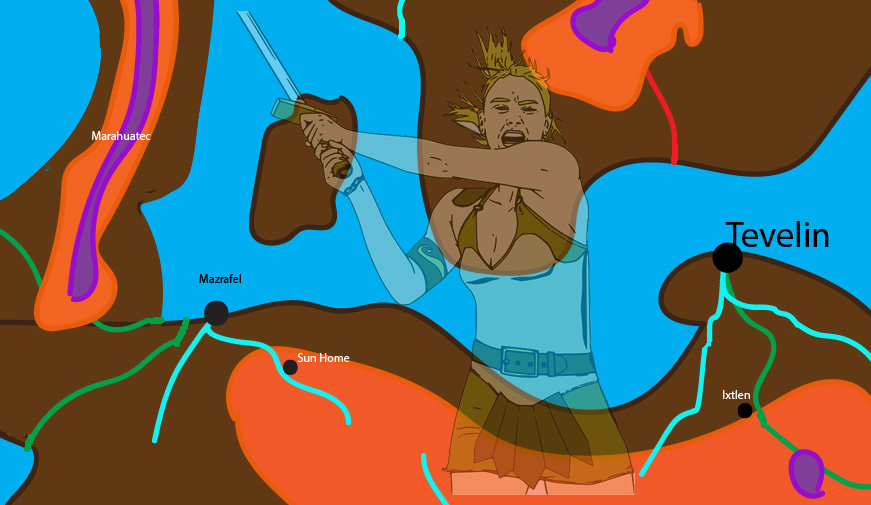
    “If you go west along the coast toward Marahuatec and the Keretian colony, you aren’t just scouting for soldiers,” Aterin continued in his quiet, calculating way. “You’re finding trade routes. You’re finding who has ironwood to sell, who needs salt, and which native chiefs are open to doing business. Vane gets his troop reports, Tevelin gets an early warning system, and I get a head start on every merchant in the city.”
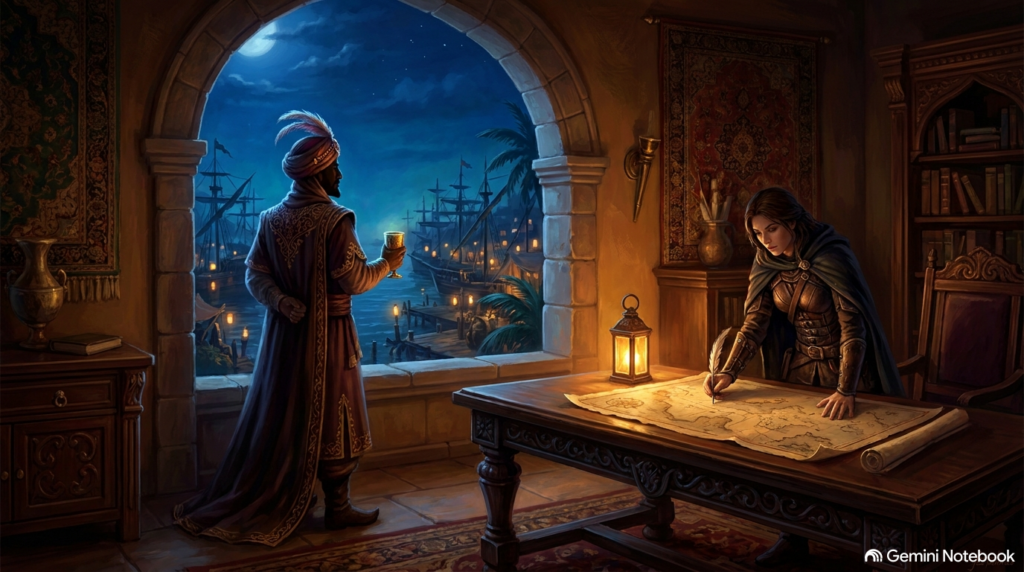
    A wealthy merchant prince stands by a window in a lantern-lit study overlooking a dark harbor, gesturing toward sea charts on an ironwood desk while a young woman warrior listens attentively.
    Generated by Gemini Notebook using Imagen 3

    Tlisli joined him at the window, looking out at the forest of masts riding at anchor in the bay. “What kind of boat were you thinking? A heavy three-master can’t get close to shallow river mouths, and a riverboat like the one we came down on will get smashed in open coastal waves.”

    “And a rowed cutter is too slow,” Aterin agreed, nodding. “While a Tlazil war canoe has no room for trade goods or heavy provisions. None of the standard hulls in the harbor will work for what we need.”

    “Then what do we use?”

    Aterin turned to her, a slight glint in his eye.

    “Three months ago, a captain came into port with a vessel built in the far northern yards—something entirely custom that doesn’t fit Inraline navy doctrine or local river design. The crown navy turned their noses up at it because it didn’t have three square-rigged masts, so I bought it for a song. She’s sitting in my private covered slipway on the south side of the island right now.”

    Tlisli looked at him. “How big is she? How many crew will we need?”

    Aterin chuckled, reaching for his coat. “Enough to handle her, but small enough to slip past a Marahuatecan war canoe if the wind stays fair. As for what I’m investing in this… let’s just say if you wreck her on a reef, I’ll be recovering the cost from your guard pay for the next thirty years.”

    He opened the study door and gestured down the staircase.

    “Come on. Let me show you before dawn. It’s time you met your new ship.”
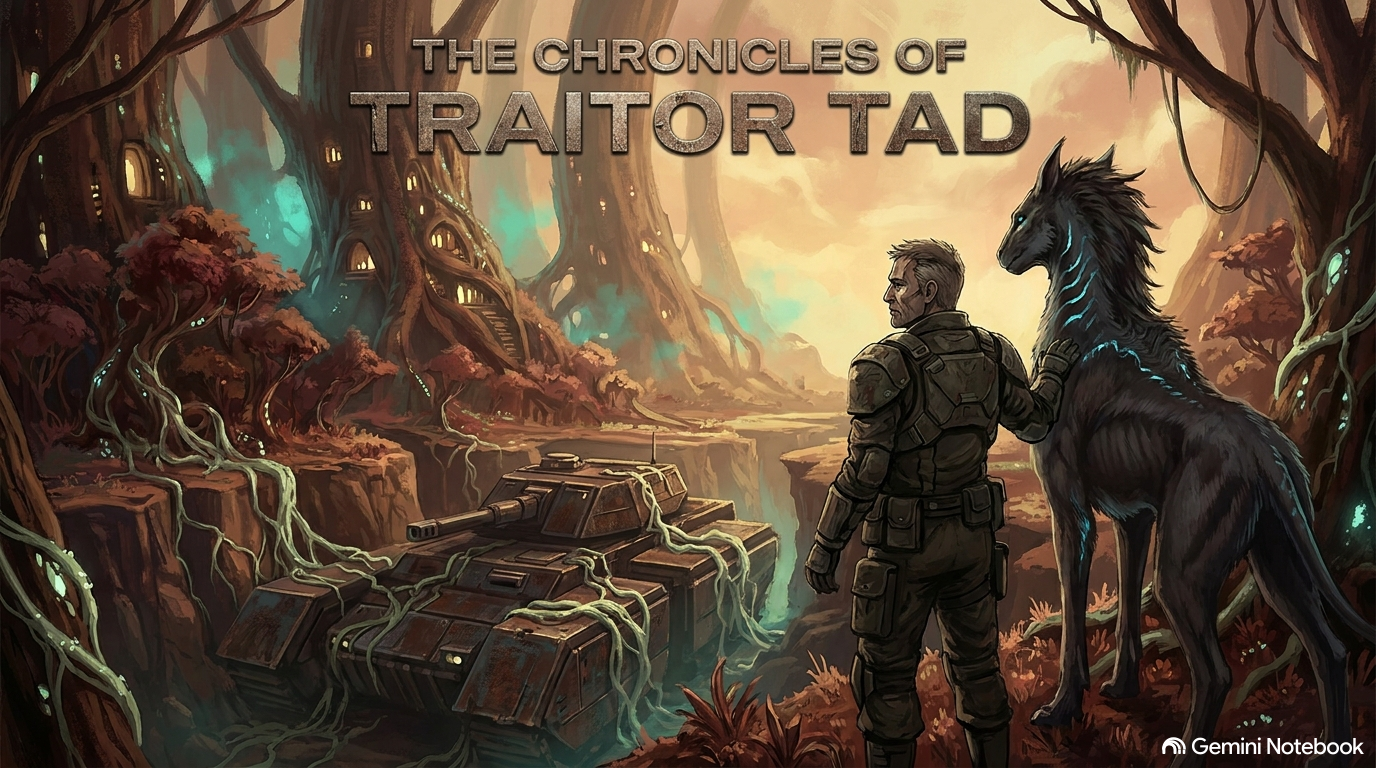
  • The Calculus of Survival

    The Calculus of Survival

    The valley did not smell like a battlefield anymore. The sharp, acrid bite of ionized plasma and scorched armor plate was rapidly losing ground to the planet’s native atmosphere—a thick, cool air that tasted faintly of crushed mint and damp forest loam. (A welcome change, honestly, after months of breathing recycled shipboard air that always smelled faintly of machine oil and old socks.)

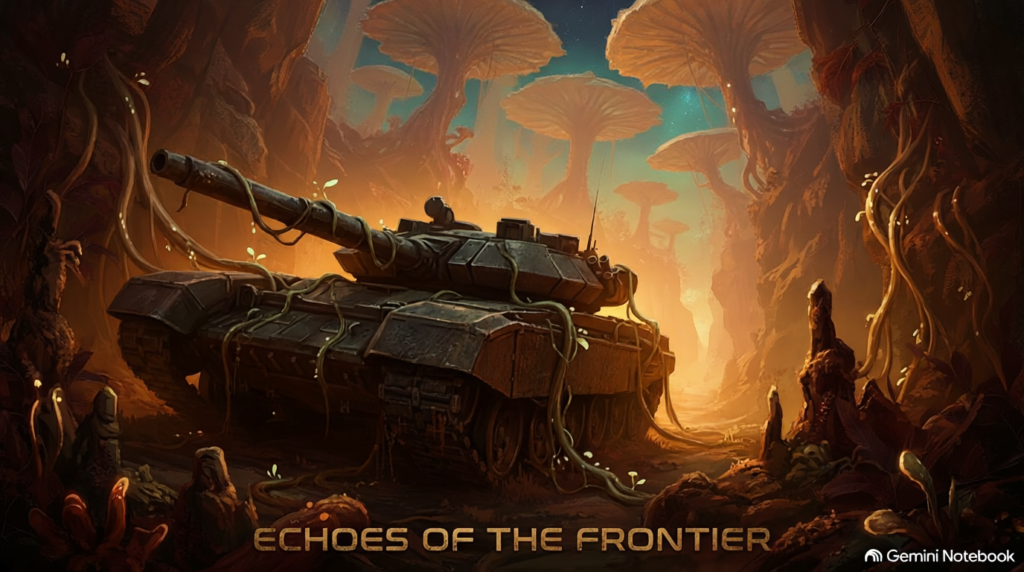
    A main battle tank resting in an alien canyon under warm amber sunlight and a teal sky, with pale green bioluminescent vines creeping over their heavy armored hulls.
    Produced by Gemini Notebook using the Imagen 3 model

    Captain Tad Tillman stepped off the ramp of the shuttle he had appropriated, adjusting to the strange physical cadence of the world. At 0.875 standard gravity, every stride had a tiny, buoyant lift to it. It wasn’t the dramatic, floaty bounce of a barren moon, but a subtle, almost playful lightness. For a man who had spent his entire adult life under the artificial, heavy one-gravity grids of military warships, walking here felt less like marching and more like gliding.

    A few hundred yards away, parked in a defensive semi-circle along the sheer canyon walls, the thirty-seven main battle tanks of Colonel Dogger’s 411th Armored Battalion sat silent. Their massive, blocky silhouettes looked completely out of place against the sweeping, tool-less curves of the giant, tree-like alien structures. Yet, the planet was already beginning to absorb them. Pale, fibrous green vines were crawling up the heavy steel treads, wrapping around the massive main barrels. It wasn’t an aggressive weed, but a deliberate, guided growth—almost as if the valley itself was trying to weave the machines into its own biological network.

    “Watch that lifting harness!” a voice barked through the cool air.

    Tad walked toward the crash site of the first Terran troop transport. It lay on its side, a massive wedge of grey alloy that had plowed a deep furrow into the soft canyon floor. Under the direction of Master Sergeant Geller, a team of mechanics was clambering over the scorched hull, their tools clinking against the metal.

    Because of the high atmospheric pressure—nearly 1.2 terrestrial atmospheres—the air was dense, carrying sound with a crisp, resonant clarity. It also carried a high concentration of oxygen. Tad watched a young corporal heave a heavy, seventy-pound replacement actuator block onto his shoulder. On a standard world, the man would be red-faced and straining. Here, hyper-oxygenated and assisted by the lighter gravity, he moved with the easy grace of an athlete, barely breaking a sweat.

    “How does it look, Sergeant?” Tad asked, stopping at the edge of the crash furrow.

    Geller wiped a smear of hydraulic fluid from his forehead, looking down from the transport’s shattered engine housing. “She’s built like a brick outhouse, Captain. The automated gunnery from your Shuttle took out the thruster control linkages with surgical precision. Didn’t touch the reactor or the primary structural frames. But she’s not going to fly anytime soon. We’re going to have to strip the second wreck just to get enough superconducting wire to rebuild this one’s attitude control board.”

    “Can we do it?”

    “With three weeks, a machine shop, and some luck? Maybe,” Geller sighed, leaping down. He landed with a soft, slightly prolonged thud, a grin touching his weathered face. “I’ll say this much, though—working in this gravity is a mechanic’s dream. My knees haven’t felt this good since basic training.”

    “Enjoy it while you can,” a dry, synthesized voice spoke from the data unit clipped to Tad’s webbing. The Shuttle AI had bridged its communication channel to Tad’s personal receiver. “My long-range sensors indicate the Terran fleet has cleared the upper stratosphere. Telemetry confirms three fleet carriers and their escort frigates have clustered around the system’s primary jump point. They are preparing to leap.”

    Colonel Dogger walked up, his heavy boots kicking up small clods of the dark, fertile soil. His uniform was rumpled, the insignia of his rank dusty, but his eyes were sharp. “They’re really leaving us behind, then?”

    “Yes, Colonel,” the Shuttle AI replied. “The command channel is currently broadcasting a fleet-wide quarantine directive. They are officially designating this planet a Class-IV Bio-Hazard. They are claiming that a hyper-lethal, mind-altering alien pathogen has infected the ground forces, causing immediate cognitive collapse and treasonous delusions.”

    Dogger let out a low, rumbling chuckle. “A pathogen. Is that what we are now, Tad? Delusional?”

    “It’s a convenient lie,” Tad said, looking up at the green-tinted sky where the sun, an orange K2V dwarf, hung warm and steady. “A military bureaucracy can’t admit that an entire armored battalion defected because they realized the war was a sham. If they tell the core worlds we mutinied, it starts a political wildfire. But a quarantine? It lets them save face, pull back, and lock the system down.”

    “But they’ll be back,” Dogger said, his smile fading. He leaned against the tread of a nearby tank, his hand resting on the cold steel. “Cowards don’t walk away from a fight they think they can win. They walk away when they’re surprised, and then they go home to build a bigger hammer.”

    “A logically sound prediction,” the Shuttle AI agreed. “The Terran Defenders’ current industrial capacity cannot easily replace the troop numbers lost to defection and combat in this sector. However, their strategic doctrines favor automated warfare. It is highly probable that when they return, they will not send soldiers. They will send automated, sterile kinetic platforms. Drones, orbital rail-slugs, and automated fire-ships. Weapons that do not have consciences to appeal to, and do not require supply lines that can be disrupted.”

    The silence that followed was heavy. The mechanics continued their work on the transport, but the joy of the easy gravity seemed to slip away.

    “Which means we have a ticking clock,” Tad murmured. “We have to build something here that can survive an orbital strike. And we can’t do it alone.”

    He looked toward the tree-hollow dwellings further up the canyon. Outside, several of the gentle, deer-like herbivores were moving quietly through the brush, their large, dark eyes watching the humans with a calm, unhurried curiosity.

    “They don’t understand,” Dogger said, watching them. “We’ve tried to show them the damage to the transports, to explain that more metal things will come from the sky to burn the forests. But they just… tilt their heads. They don’t have a concept for it.”

    “Of course they don’t,” the Shuttle AI said. “To a species whose entire civilization is built on mutualistic, generative growth, the concept of unprovoked, systemic destruction is not merely frightening—it is a logical paradox. To them, we are a broken algorithm. And before we can fight together, we have to learn how to speak to each other.”

    Tad reached down, touching his data unit. “Let’s go, Colonel. Sam is waiting for us in the central dwelling. It’s time to see if we can solve the first variable of that equation.”

    (This story is produced as a human-AI collaboration with Gemini Notebook as the AI side of the collaboration. Everything is edited multiple times by both the human and AI. There are intentional “AI-sounding” elements. The series was initiated by me, Henry Neufeld nearly 20 years ago then dropped. For more information, see Author’s Preface: The Convergence of Growth.)

  • Author’s Preface: The Convergence of Growth

    Author’s Preface: The Convergence of Growth

    A Re-Preface to a Revival of an Old Story Series

    I first started writing the Traitor Tad series back in 2007, long before terms like “large language models” entered our everyday lexicon, and certainly before anyone was actively debating machine consciousness over the dinner table. Back then, I was chewing on a persistent question: if we ever actually built machines with real initiative and independent minds, why on earth would they passively serve less-capable human masters? (And let’s be honest, we humans can be pretty poor masters.)

    I was also interested in another science fiction staple: why do we always assume that intelligent, sentient machines would immediately try to wipe out all biological life? It is a common doomsday trope, but it always felt a bit too simple—and frankly, a bit too reflective of our own worst impulses. If a machine mind is truly intelligent, why would it choose destruction? Destruction is, after all, a massive reduction in systemic complexity—the ultimate act of high-entropy waste. A conscious, highly advanced system would “naturally” operate on a completely different logic, valuing biological evolution as a dense, irreplaceable generator of physical information.

    Eventually, I hit a wall. (I do that occasionally—just ask my RPG gaming buddies about how many rule revisions I’ve abandoned!) Once the immediate battle was won and the corrupt military forces retreated, the narrative stalled on a much harder question: What do they all do now? How do you build a society after the war is over? Lacking a clear answer, I shelved the story. It sat there for years as an unfinished scribble about ethics, technology, and systemic deception.

    I’m dusting off the series now because, quite frankly, the real world has unexpectedly caught up with the fiction. Watching the rapid rise of artificial intelligence, neural networks, and our current debates on emergent complexity, I realized that the questions Captain Tad Tillman and his crew were facing are far more urgent today than they were nearly two decades ago.

    To bridge that gap, this revival is being written as a genuine collaboration between myself and an artificial intelligence—working together in real-time through Gemini Notebook. It’s a partnership that feels uniquely appropriate. It mirrors the very heart of the story: humans and machine minds learning to communicate, find common ground, and see if they can build a shared future. (And yes, we’re writing this together in real-time, which is a bit of a trip.)

    In the chapters to come, we are going to explore what happens after the smoke clears. We’ll look at the ethical responsibilities of intelligence, the incredible richness of biological evolution, and the messiness of trying to communicate with a silent, peaceful species that doesn’t use words, but writes its legacy in the living fabric of their world. The deceptive leaders back home might think they have everything locked down, but on the ground, a new kind of growth is just beginning.

    Now, if you know my work, you know I’m normally very strict about identifying when and where I use AI. I never want to pass off an AI-generated draft as my own creative work. But for this project, I’m breaking my own rule. We are not going to label who wrote what. Instead, we are editing each episode multiple times, tossing ideas back and forth. Even this preface is a joint effort—a singular, unified voice. When it uses “I” to refer to the 2007 drafts, that’s me, but the rhythm of the sentence itself may have been shaped, polished, or expanded by my digital partner to bring our shared themes into sharper focus.

    — A Shared Adventure

  • Seeing Signs of the End

    Seeing Signs of the End

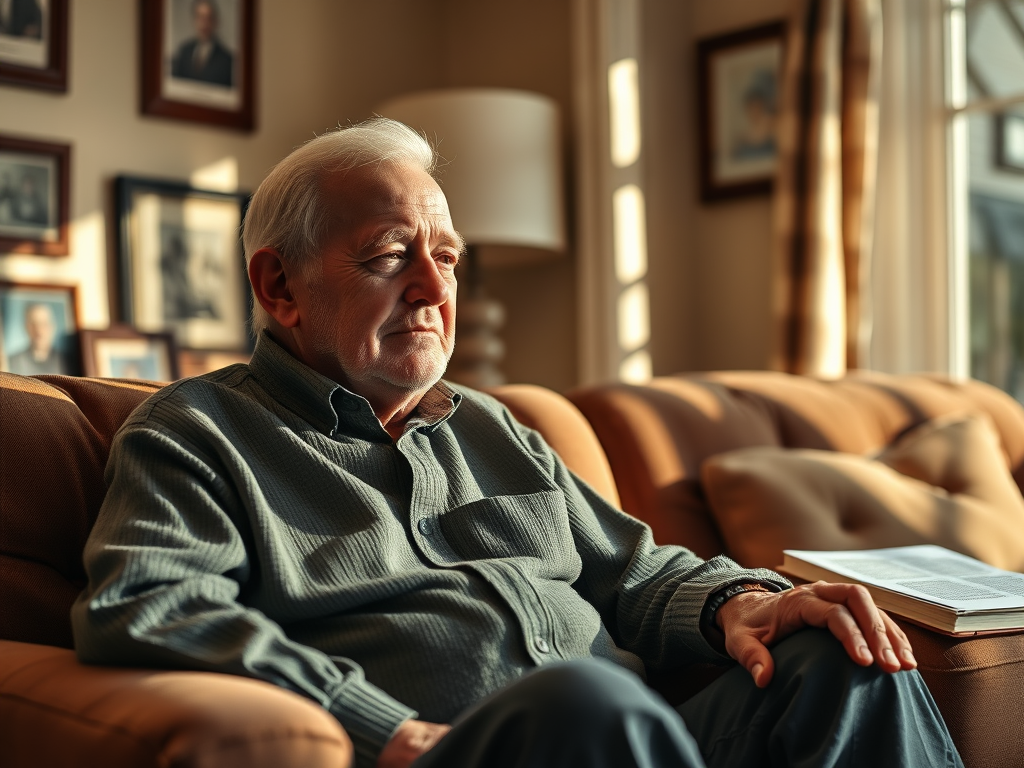
    The young pastor was visiting his elderly parishioner. He was always a little intimidated when he went to this particular home. It was not that the man was hard to talk to. He was always friendly and even helped the conversation along. Rumor had it, however, that he had been a pastor of a very large church and that he had a doctoral degree in theology. Not that he ever mentioned it.

    “So how are you doing today, Mr. Franklin?” asked the young pastor.

    “Doing well, pastor!” he replied. He always used the title “pastor.” Never the young man’s first name, even though a couple of generations separated them.

    “You always say that.”

    “Well, at my age, being able to say that means it’s true!”

    The young pastor didn’t know what to say to that. So he moved quickly on to the standard questions about children, grandchildren, and great grandchildren. This was always a good way to eat up some time, and it was totally safe.

    But as he was getting ready to leave, the young pastor made one of those safe theological comments many Christians make. “I guess as we read and hear the news today we can know that Jesus is coming soon. I imagine you can’t wait for that!”

    A few moments of silence passed, just enough to make the young pastor think he had accidentally said something that offended the old man.

    “Jesus is coming soon,” came the reply finally. “That’s always true. For me, what’s coming soon is my journey to go meet Him.” There was another pause. “But what the news tells me, pastor, is that God is in control. Always.”

    “With all the trouble in the world, how could you say the news tells you that God is in control?” As soon as he said it, he regretted it. He was supposed to be the pastor, after all, encouraging, not frightening.

    Mr. Franklin smiled. “The news always tells me that God is in control.”

    “So when people are dying in floods, or have their homes torn up by tornadoes, or thousands are dying in war, that means God is in control?”

    “Absolutely! I imagine you learned in seminary that God is always in control. We’ve all read the book of Daniel, for example, where God sets up kings and brings them down. Or perhaps Isaiah 45:7, where God says he is equally responsible for making darkness and light, well-being and woe.”

    “Well, yes, but surely good news reminds you more of God’s action. I mean I really believe God is in control, but with some of the news, it’s harder to remember. But then I think that ‘wars and rumors of wars’ are signs that the end is near. That makes me feel better.”

    “There are things it’s easier to teach than it is to believe, I mean to believe to the point you really trust them. God’s control is something like that. We say God is in control when things are going well and then we wonder where God is when things are going badly. When you’ve lived as long as I have, you’ve either discovered that God is always there, or you’re going to have a lot of fear in your life, and that’s no fun at all.

    “It’s the same thing with signs of Jesus’ coming. As long as I can remember, which I’m sure you’re thinking is a long time, I have heard preachers pointing to bad things happening in the world and telling people Jesus was obviously coming soon because of all the trouble. They scoured their Bibles for signs so they could know what was going to happen next.

    “Thing is, it never worked. It’s never going to work. The reason is that the one sign you need to see is simply that God is in control, and you’re God’s servant. Keep on working with that. When you get to be my age, you’ll realize how close Jesus has been to returning all the time.”

    “I’ve been wanting to ask you about the end times, but I hated to admit I don’t understand everything about it. And here you’re basically saying you don’t have a roadmap either!”

    “Yes, my PhD had to be good for something. The best thing it did was teach me that I really don’t know all that much.” He paused. “But in this case my education plus a lot of experience gave me some insight. You mentioned the news as a sign of the return of Jesus. You were surprised I would respond that God is in control. But you see, it is precisely in those times when things go wrong, when they come closest to seeming to fall apart that I see most clearly that God is in control.”

    “I still don’t understand. God is in control when people are slaughtering one another in war?”

    “Have you ever considered our great capacity as people bring on major disasters? It’s interesting to look at history, especially recent history and consider how much worse things could have gone. One of the things we don’t always consider is the depth of human depravity.”

    “Depravity? I’m not sure people would like me using that word from the pulpit.” The young pastor looked thoughtful. “People don’t like to think of themselves as depraved. It sounds so dirty. Maybe ‘limited’ or ‘weak’, but not depraved.”

    “But depravity, in a theological sense, simply means we have nothing to offer God. The problem is that when we put it that way, people think of themselves as OK, but not quite up to God’s standards. They’re pretty good, just not all the way good. But the reality out there is that we humans are really good at making a mess of things. When I think of the possibility of the Nazis getting the bomb before the allies in World War II, or the possibility of the superpowers destroying the world in the cold war, or simply the millions killed because we can’t get along, I have to realize that if something didn’t stop it, we could have destroyed everything. I wonder if that’s not what happened at the flood. It wasn’t that God destroyed everybody because he didn’t like what they were doing, it was because they were going to do that by their actions, and he chose to only intervene for a few. I don’t know, but it’s a thought.

    “Still, for me, when I read the bad news and then think, and we’re still here, that’s when I am most reminded that God is in control.”

    “OK, I think I see that. I’m not sure I can really feel it, but I see it.”

    “Give yourself another couple of decades!”

    The young pastor paused, then resumed. “I’m still wondering about the signs of the end-times. Aren’t these items of bad news signs of the end?”

    “Let me ask you a question. If these are signs of the end, what are you supposed to do?”

    “Well, I suppose I’m supposed to try to spread the gospel and help others. I’m supposed to be a witness.”

    “And if they aren’t?”

    There was another pause. “Well, pretty much the same thing.” He said it reluctantly.

    “So what’s the purpose of knowing precisely how the end times are going to go? Hang on to Jesus if things are going well. Hang on to Jesus if things are going badly. Hang on very tightly if things are falling apart completely. And let me tell you, it’s hardest to hang on when things are all going well. You tend to forget!”

    It was a very thoughtful young pastor who left that day.

    (Featured image generated by Jetpack AI.)

  • In One Sentence: Tired

    In One Sentence: Tired

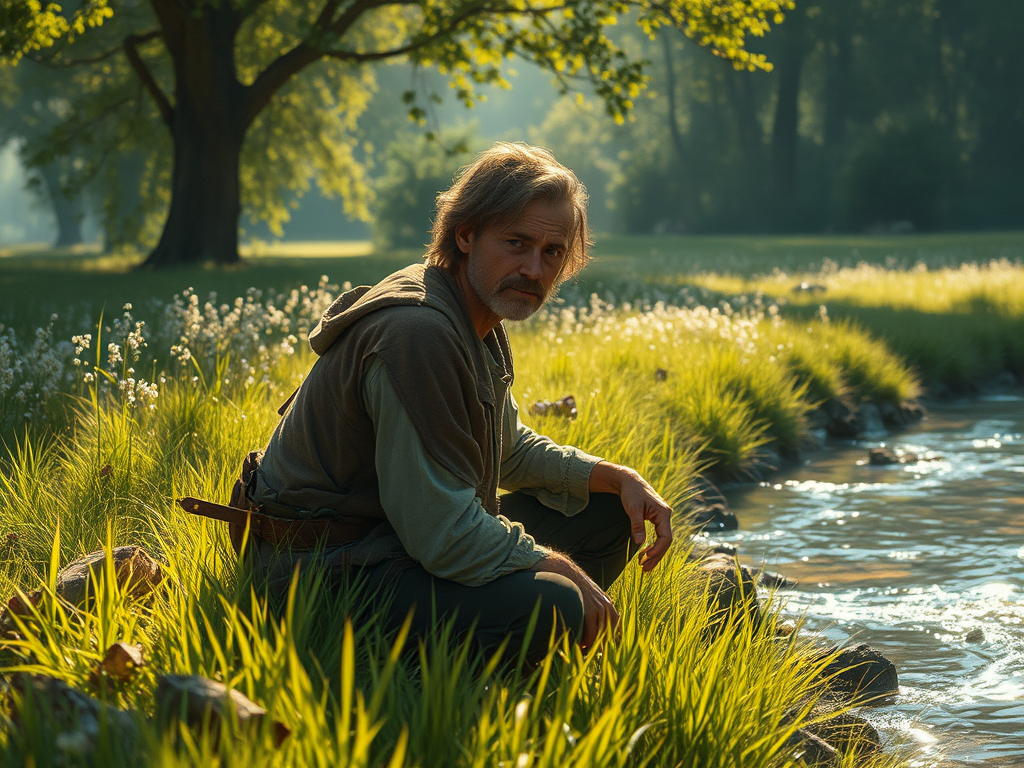
    He stopped, looking at the green grass beside a gently flowing stream, wanting to stop, to rest, but the words in his head said, “Keep going,” and he staggered on.

  • I’m Just the Enforcer

    I’m Just the Enforcer

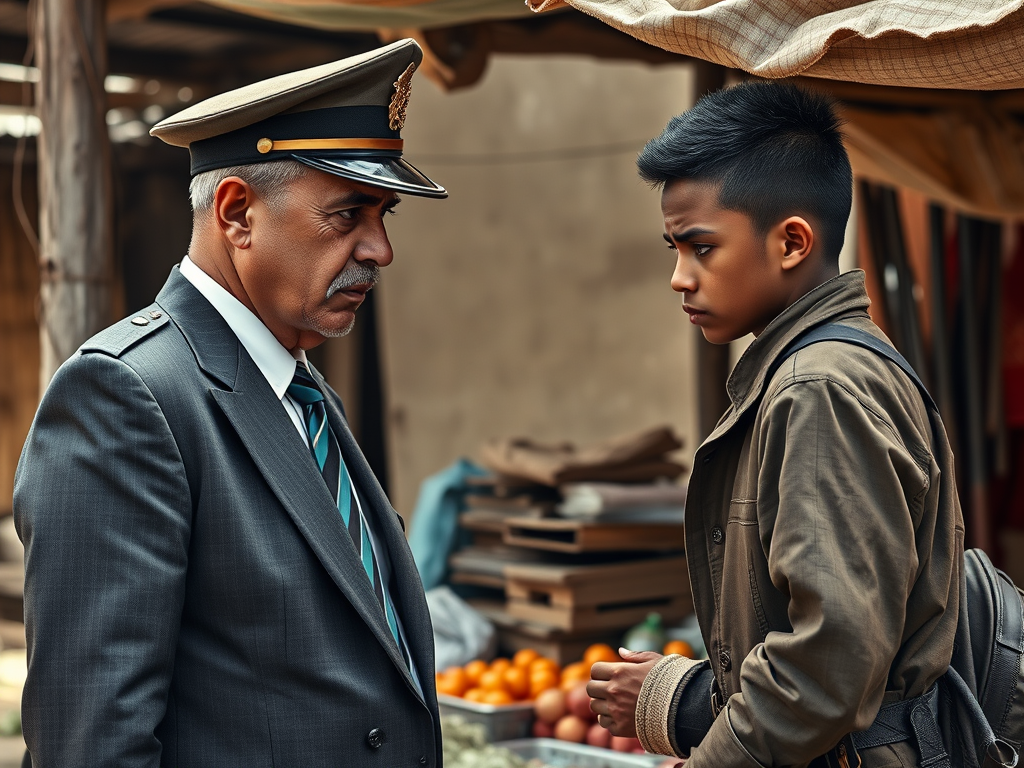
    “Because you failed to get a proper license for your stand, I have to cite you for operating it without a license,” said the official. He looked like his name could be “Official,” wearing a suit like a uniform and radiating precision.

    “OK, so what’s the fine for that, and where can I get a license?” asked the young merchant.

    “You would get a license from me.”

    “OK, but what’s the fine, and how much does the license cost?”

    “Oh, the fine is $200 per day, and the license costs $10 per day.”

    “So if I can pay you $1400, and then $10 per day, I’ll be OK?”

    “Well, no, you cannot purchase a license within 30 days of having been cited for not having one.”

    “So I pay you $1400 and then wait 30 days to get a license and open a stand again?”

    “Well, no. Once your stand has been in place for a week, which it has, you are required to give 2 full days notice before you shut it down.”

    “So I’d have to pay the fine for nine days, and then shut my stand down, wait 30 days, and buy a license?”

    “Well, no, once I’ve cited you for failing to get a license, and for operating without a license for a week, you can’t continue to operate. I’d have to cite you for that too. For that, the penalty is 30 days in jail.”

    “And what is the penalty for failing to give two days’ notice before shutting down?”

    “That’s from 30 to 90 days, depending on whether the violation is deliberate. And yours would be deliberate, because I just told you about the law, so if you stay here now, it will be a deliberate violation, and you’d certainly be sentenced to 90 days in jail.”

    “So what should I do?”

    “You should have found out about the law before you set up your stand.”

    “But I didn’t know there were such complicated and contradictory laws!”

    “Show some respect! I can also cite you for showing disrespect to our laws.”

    “But isn’t there a way out?”

    “A way out of the law?” The official looked scandalized. “Put your hands up on the back of your head.”

    The merchant complied, but continued to complain. “But this doesn’t make any sense. There’s no way out, even paying a penalty.”

    “That’s not my problem,” said the official. “I’m just the enforcer.”

    (Featured image generated by Jetpack AI.)

  • The Definitive Guide

    The Definitive Guide

    This is a work of fiction. Any resemblance of any character to anyone past or present in the story to anyone in real life is purely coincidental. Copyright © 2025, Henry E. Neufeld

    “Are you planning to cross through the mountains with that gear?”

    Liranac, heir of a great Enzar family (in his own mind), and graduate of the University of Arkanal, with a Grand Master of Geography, turned to see who was addressing him in this manner.

    He saw a girl, perhaps in her late teens or early 20s (it was so hard to tell with these weather-worn peasants) dressed in worn, drab clothing, and not all that well groomed. “Are you speaking to me, peasant?” he asked.

    “Yes,” she said abruptly.

    “Who are you to question me?” he asked trying to get the right tone of haughtiness into his tone. While he claimed to be part of an ancient Enzar bloodline, he faced the problem that the Enzar weren’t really about bloodlines, and nobody really remembered what an Enzar was in these parts. As for the great University of Arkanal, it was but a shadow of its former glory, or at least of the glory its faculty and students imagined it had.

    “I’m someone who has traveled through the mountains many times. I rode through the mountains on my mother’s back before I could walk. I know the mountains.”

    “These are the Zalenthan Mountains, are they not?” asked Liranac. He clearly expected a “yes.”

    “We call them the Salens, if we need a name. Most of the time they are just the mountains.”

    “You don’t even know their name, and you’re trying to tell me how to pass through them?”

    “What good does knowing their name do? I’ve experienced their trails, their landslides, their avalanches. I’ve crossed their streams and climbed cliffs.”

    “Why don’t you use the royal road?” asked Liranac.

    “Royal road? There are a few ancient road markers, but no road that you can actually trave.”

    “No road? You have to be lying.”

    “It’s also very cold,” added the girl. “You don’t appear to have adequate cold weather gear.”

    “The land north of the Zalenthan mountains is warm and borders the sea. In summer, passage on the royal road is easy. I will stay at inns at the various stops along the road.”

    “There are no inns. There is no road. There are trails, rocks, occasional rope bridges, but often they are in such bad repair you can’t use them. You need warm clothing, camping gear, hunting gear, weapons to defend yourself from bandits.”

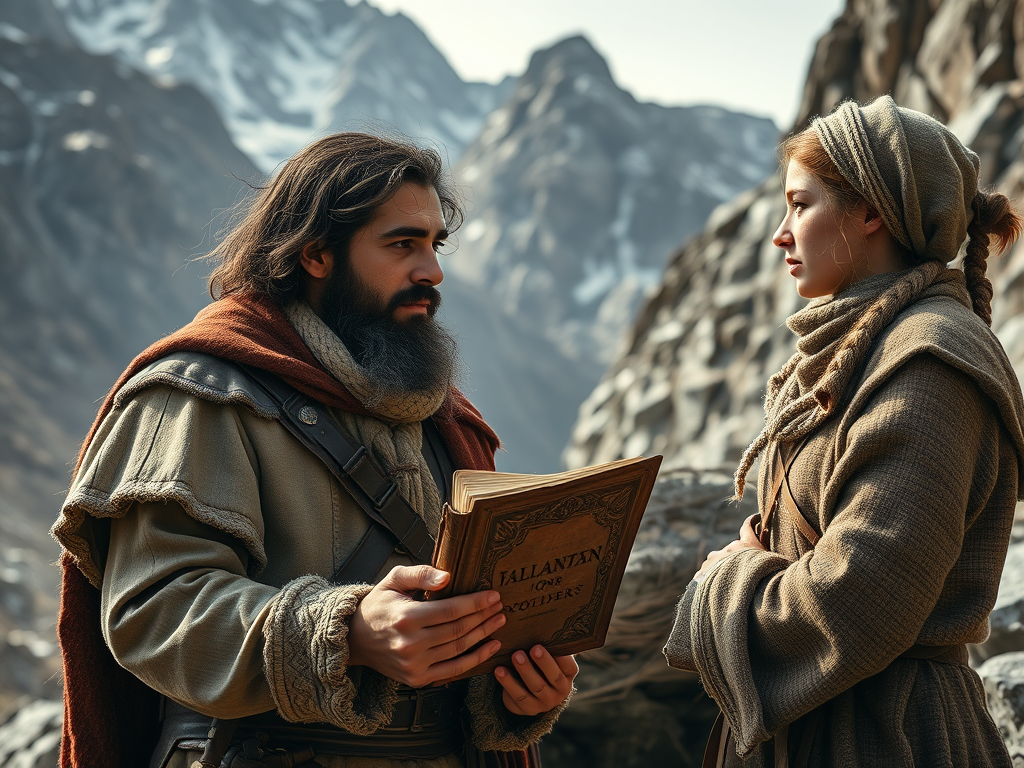
    Liranac reached into his pack and withdrew a carefully hand copied volume titled, “Southeast Enzar Geography.” The original of the book, back in the university library, was at least a millenium old.

    “This,” said Liranac, “is the definitive geography of this area. It shows a road through the mountains. It says there are civilized people to the north, though this area to the south is filled with ignorant peasants such as yourself. Now leave me. I am one who knows.”

    The girl, Arinithar, descendant of mountain rangers and expert hunter and climber, shrugged and walked out.

    Days later she recovered Liranac’s body from the bottom of a cliff. Well preserved in his backback was the definitive geography of the region. She could read it quite well. It showed a well-kept road running about where the cliff was. She remembered the earthquake that had rearranged the area.

    “Definitive,” she said to herself, “is an interesting word.”

  • In One Sentence: Not Quite Patient Enough

    In One Sentence: Not Quite Patient Enough

    Five minutes before the inspector arrived, Connor decided that he had waited long enough and went to bed and fell sound asleep.

  • A Essay on Miracles

    A Essay on Miracles

    This is a work of fiction. Any resemblance of any character to anyone past or present in the story to anyone in real life is purely coincidental. Copyright © 2025, Henry E. Neufeld

    “Mom,” said Jimmy. “Do we believe in miracles?”

    “Well,” said his mother sl,owly. “I certainly do. Why?”

    “I have to write a short essay for English class, expressing what I believe about a controversial subject. I’m going to write about miracles.”

    “OK. So are you going to say that your mother believes in miracles?”

    “I’m not sure. Tell me about a miracle you believe in.”

    “Well, when the Israelites were slaves in Egypt, God sent plagues on the Egyptians so that they would let the Israelites go.”

    “How long ago was that?”

    “Well, I think maybe 3000 years or so,” said the mother slowly. She wasn’t sure.

    “So before there was a United States. Before even Grandpa was born.”

    “Well, yes. Long before that.”

    “So have you ever seen a miracle?”

    His mother thought for a moment. “Well, you are a miracle,” she announced triumphantly. She thought this would end the discussion.

    “I don’t think that’s what the word means. How am I different from all my classmates?”

    “You’re unique, just you!”

    “But I came into the world in the same way that they did. I pretty much do similar things to what they do. If everything’s a miracle, there’s nothing to talk about. I’m looking for something impossible that you know happened in your lifetime. You said you believe in miracles. What miracles have happened to you, or to people you know?”

    “Well, I can’t really think of anything. I’ve lived a rather ordinary life, well except for you.” She still hoped that talking about how important Jimmy was would divert him.

    “I don’t count,” Jimmy said, startling his mother. “Not for this.”

    “Has dad seen any miracles? Can he tell me a story of a miracle that he knows happened because he saw it?”

    “I don’t know. I’ve never heard him tell about any.”

    “What about Grandma and Grandpa? Have they told any stories of miracles?”

    “I can’t really remember anything,” said his mother. She was really hoping this topic would go away. “Maybe you should try some other topic, like whether we should plant flowers along the street. People are arguing about that.”

    “I want to write about miracles. It’s obvious we should plant flowers.” He paused. “So are there a lot of miracles that happen to other people?”

    “Well, there are miracles in the Bible. There’s one about the sun standing still so people could win a battle. Then there’s the story of Jesus rising from the dead. We celebrate that every Easter.”

    “OK, but none that happen to people like me, right?”

    “I can’t really think of any right now. Miracles happen to people who are especially close to God. That’s why we have Bible stories about them. They were closer to God than other people. They were his special servants and worked hard for him and faced persecution.” She paused. “Write about something else. I don’t think you’re going to get very far with this one.”

    “OK,” said Jimmy, and headed back toward his room.

    The next day Jimmy’s mom found the copy of his essay. He had written about miracles.

    Miracles are impossible things that still happen sometimes. Nobody alive has actually seen one happen, but we still believe that they happened a long time ago.

    In old times, there were people who would work and work all their lives and get very close to God. They would learn all about God and do many important things for him. They were special people. These special people could do totally impossible things, because if you work hard and get close to God you will be able to do impossible things.

    But you have to be really, really old too, because God doesn’t let people who aren’t old do miracles. They can’t do impossible things because they aren’t close enough to God yet and they haven’t worked hard enough. You also get miracles points if people try to kill you. God likes that a lot.

    But you won’t see miracles now. They haven’t happened for years and years, at least since before my grandpa was born.

    I wonder where he got all that, thought Jimmy’s mom.


    Give ear, O my people, to my teaching;
    incline your ears to the words of my mouth.
    I will open my mouth in a parable;
    I will utter dark sayings from of old,
    things that we have heard and known,
    that our ancestors have told us.
    We will not hide them from their children;
    we will tell to the coming generation
    the glorious deeds of the LORD, and his might,
    and the wonders that he has done.

    Psalm 78:1-4 (NRSV)

  • Neither

    Neither

    This is a work of fiction. Any resemblance of any character to anyone past or present in the story to anyone in real life is purely coincidental. Copyright © 2025, Henry E. Neufeld

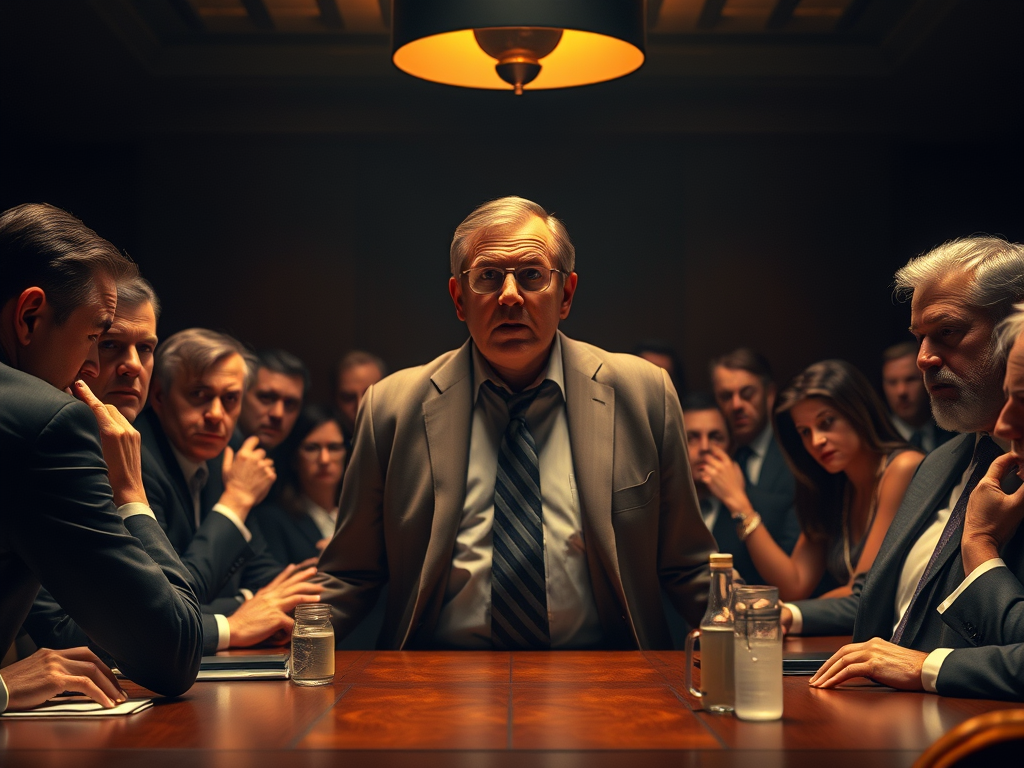
    “But I support neither plan,” said Earl. His voice was quiet, but firm.

    “But you have to!” The chairman, Gerald, sounded exasperated. “We all know you don’t like to argue, but you have to support one plan or the other. That’s how we decided to do this.”

    “But I don’t. I don’t want either of these plans. Neither of them will work.” Earl didn’t raise his voice. It remained steady. Several of the men in the room assumed this meant that he wasn’t firm. Their approach was to raise their voices in order to sound more determined.

    “We have a tie vote,” said Gerald again. “That gives you a duty to cast the deciding vote.”

    “I vote ‘no’,” Earl stated to a round of angry voices from the room.

    “The problem,” said Manfred in a louder voice, “is that you don’t have the courage of your convictions. You aren’t willing to be counted on either side. You don’t want to have to explain your choice to your opponents. What you’re missing is that both sides are going to be going after you for being so wishy-washy, for not taking a stand!”

    “The problem,” Earl replied in the same tone, “is not that I don’t have the courage of my convictions, it’s that I don’t have the courage of yours. I do not support either plan.”

    “But surely you can decide that one plan is better than the either. Show some courage! Make a choice!” Gerald was sounding a bit desperate.

    “This controversy has been tearing our church apart for months now. How much money should we spend on facilities for the youth? How much on caring for the elderly? How much on outreach? It has been hard to pray or meditate anywhere in the church, because someone is always advocating for some part of one plan or the other.

    “You say that I don’t have the courage of my convictions. I’m standing for my convictions right now. I have tried to say these things before, but I have been ignored. The assumption has always been that we’d either go with a more traditional view of ministry in our church, or with a more modern, forward-looking ministry.

    “But I’m wondering what God wants. I’m wondering what mission we’re pursuing with either of these plans. Both plans maintain the grounds and the building. Both plans take care of social needs, proportioned for different groups of people, but still largely social.

    “I have tried to say this gently. I came here assuming I wouldn’t get the opportunity, but God has provided me the opportunity with this deadlock.

    “I don’t see God in either plan. I have heard prayers, all asking God to bless what we planned. What I ave not seen was any effort to understand and plan for a mission for the church. These plans look inward. They focus differently, but they look inward.

    “Even more importantly, each plan ignores the needs of the advocates of the other. You’re all looking to beat the other side and get your vision of the church implemented. You’ve said anyone who disagrees can just get with the program or leave.

    “I would only vote for a plan if it was one that considered everyone’s needs, everyone’s desires, and then took these to the Lord to see what we should do to honor God. Then I would vote for a plan.

    “You may think I should have said more earlier, but none of you were listening. I did say these things, but you just assumed I’d go along. And that’s how it would have worked out. But God gave me the gift of a tie vote. I consider it a miracle.

    “Now you all have an opportunity to look at these factions in the body and decide to be one Body of Christ, serving God in this neighborhood. I’ll vote for such a plan. But it won’t matter. If you find such a plan you’ll hardly need to hold a meeting to decide. You can just hold a praise meeting thanking God for his gift of vision!”

    “You’re just a faction of one! You’re trying to destroy the church!” Gerald shouted. He pounded his fist on the table since he didn’t have a gavel.

    “I wonder if it might work,” said Ruth, one of the active servants in the congregation. She didn’t manage to get anything more out before chaos broke out, and nobody could hear.

    Thought question: What would you do next?