Category: Short Stories

  • Traitor Tad: We Really Don’t Know Anything

    Traitor Tad: We Really Don’t Know Anything

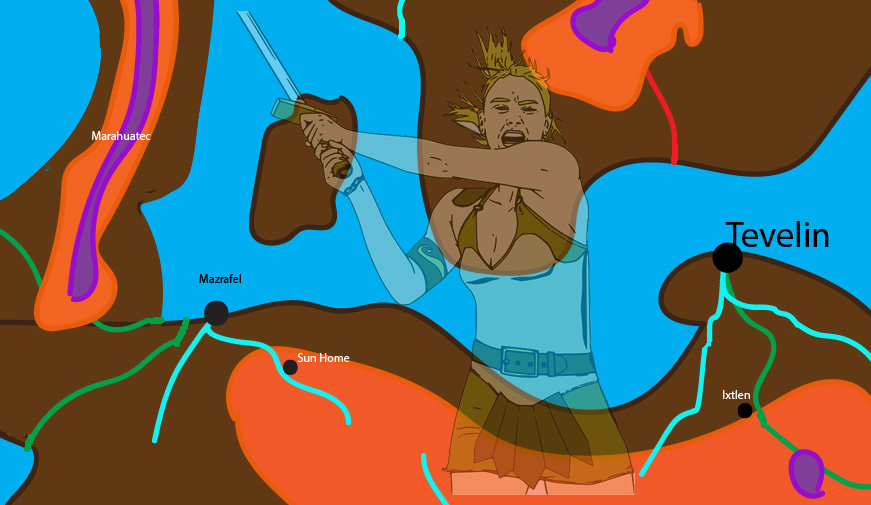
    Traitor Tad Story SeriesColonel Anders Dogger, now a rebel, or worse, part of the alien menace, pulled up into the opening of the canyon where Traitor Tad was said to be hiding. The entrance was guarded by a small self-propelled gun. Beside it stood a Lieutenant in the planetary assualt forces. To Dogger’s left as he faced the entrance was a small compound, not really fenced in, but marked by rocks and brush, in which stood a number of military personnel, some in planetary assault uniforms, along with a number in military police uniforms.

    As Dogger approached the canyon and seemed to be bypassing them, they waved and shouted. “Over here Colonel! Over here!” It took Dogger several seconds to realize that they thought his arrival in a command tank meant they were about to be rescued. The remainder of his battalion was trying to create a perimeter around the area. The canyon’s defenses were a bad joke.

    The waiting lieutenant saluted. “Colonel Dogger? Lt. Sam Walad. I’m functioning as a chief of staff around here, for what that’s worth.”

    “I see,” said Dogger, who didn’t see at all. Half the military forces on the planet were supposedly doing something about Traitor Tad, yet here he was at the supposed center of the action, and there was a canyon, a huge number of natives, what looked like three shuttles, a couple of them damaged, but probably flyable, and some prisoners who thought they were being rescued. Dogger couldn’t figure out which part of the scene was the most bizarre.

    Lt. Walad just stood there with a half smile on his face, watching.

    “Should I take it that you’ll take me to Traitor Tad?” he asked.

    “Absolutely!”

    And Walad headed up the canyon. Where aliens were in their way, they parted quickly, and Walad took Dogger into a small cave. There sat a man in the uniform of a tank commander, rank of captain, with a information systems interface station in front of him.  He got up as Walad and Dogger approached.

    “Welcome Colonel,” said the most wanted man on the planet.

    “I take it you’re Traitor Tad.”

    “I suppose I am.”

    Tad looked behind Dogger. “And this is?” he asked, looking at the relatively small woman who followed the Colonel. She was so unobtrusive that Dogger had not even noticed that she was following. Of course, he had more or less expected her to do that.

    “Major Serina Blanchard,” said Dogger. “My intelligence officer. She kind of followed me here.”

    “An intelligence officer might be just the right thing,” said Tad.

    “Why is that?” asked Blanchard.

    “Is there one single thing around here that makes sense to you?” asked Tad.

    “Come to think of it, no,” said Blanchard after a moment.

    “So it’s not just me,” said Dogger.

    “No,” said Tad. “But to get on the same page, how would you summarize it?”

    “We have, using ‘we’ advisedly since we all seem to be traitors or defectors here, about 12 divisions of infantry on this planet, backed up by a division of armor, and with a planetary assault division to do the heavy lifting on landing. All this is divided into three corps, with an armored brigade assigned to each, and the assault division operating independently. Theoretically, each corps was to occupy one of the three larger land areas on the planet and sweep outward after the assault division secured a good landing zone for it.

    “At the time of your defection, sir,” Dogger looked pointedly at Tad, even though he outranked him, “all of the land-based elements of those three corps were on the ground. That’s around 100,000 infantry, plus about 8,000 men in the tank division, and perhaps 7,000 in the assault division. The reason I sum that up is that right now, according to the assessment I was given, over half of those are either fighting you or searching for you, and nothing suggested that perhaps a couple hundred were fighting and the rest searching. There are supposed to be pitched battles. Not a few shuttles and a handful of personnel.”

    “And yet,” said Tad, “here we are.”

    The Colonel just looked at him. He was trying to decide if Tad was incredibly phlegmatic, a complete idiot, or trying to play some sort of mind game. It was almost enough to make one believe in the alien menace.

    “You look, hmmm, concerned, I think would be the word,” said Tad meditatively. “I wonder what could possible make you concerned.”

    Dogger just kept looking at him.

    “The problem,” said Tad, after a couple of moments, “is that we really don’t know anything at all.”

    “What?” said Dogger. Tad didn’t know if it was an exclamation or a question.

    “We don’t really know anything,” said Tad again. “Think about it. When I was commanding my tank and chasing aliens, I knew that the aliens were dangerous and I knew that any moment I could find myself in a fight to the death. At that point in my life I knew that this assault was necessary, lest the aliens build up the strength to assault earth and put an end to the human species. Further, I knew that there had been fighting everywhere. I knew that I was lucky to have avoided those hot spots.”

    “Well, at least you know now that pretty much all of that was false.”

    “Really? If I could be that deceived once, what reason do I have to believe that I haven’t been deceived again?”

    “That,” said Dogger with an edge of anger in his voice, “is incredibly unsettling!”

    “Colonel,” said Blanchard.

    “Tad’s right.” Neither she nor Dogger had used Tad’s rank. “Well, to a certain extent. If all of earth and its colonies can be convinced there’s a war on, that there’s an alien menace, and that assaulting this planet, not to mention dozens of others, is an essential part of preserving humanity in the galaxy, then what level of deception isn’t possible? At the same time, we have a ‘deception’ that cuts into a previous ‘deception’ and doesn’t seem to work well with it.”

    “In what way doesn’t it work?” asked Tad.

    “Let’s suppose, for a moment,” said Blanchard, “that we are at least right that the alien menace is a deception. Let’s be more specific than that, let’s note that there may be actual aliens that need to be pacified for human safety, but that the big picture is made up with very few underlying facts.”

    “Have any of you encountered an alien capable of fighting?” asked Tad. “This is only my second landing, and in the first one, there wasn’t even a pretense that there were intelligent aliens. It was just occupation of the real estate to deny it to the aliens.”

    Walad and Blanchard shook their heads no.

    “I was on a landing where there was fighting,” said Dogger. “But the aliens there had primitive technology. Early firearms. Fairly decent swords that were a threat if you jumped out of your tank and held still. But no fighting that was actually competitive. Some of the veterans there called us wusses because it was so easy. They had assaulted a planet where the enemy had anti-tank lasers that could blast one of our tanks in a moment. Whether they were telling the truth or not, I don’t know.”

    “OK,” continued Blanchard. “That’s enough for our basic assumption. We’re not really assuming it’s true. It’s a starting point. It can be revised as facts become available.”

    “Go ahead,” said Tad.

    “So what do they need? They need some examples, they need wounded people, they need battles (or reports of them), but they don’t need enough casualties to make people begin questioning. In particular, they don’t need someone alive, such as you, Tad, to suggest to other people that there’s a problem. That’s why they hang the traitors. A hung traitor doesn’t ask questions. His family doesn’t come to visit him. Nobody wants to admit knowing him or being his friend. A live traitor with access to media, however, is another matter.”

    “So what you’re saying is that I’m a glitch that went too far. If I’d been hung, I would have fit the plan as you’re imagining it—and I admit your imagination matches mine on this point, which it would even if we’re under alien control—but now what are they doing. Why don’t they clean up the mess?”

    “I would say it’s because they can’t clean you up too fast, otherwise you aren’t enough of a threat.”

    “Not enough of a threat?” said Dogger.

    “Yes. If he’d been hung quickly, there would be no reason for him to have success. But since he escaped once, they need it to take a long time to shut him down.” Blanchard was looking at Dogger.

    “So was my defection planned?” asked Dogger.

    “I don’t think so,” said Blanchard. “I think things are spinning out of control just a bit. The reports and the reality that people see are too far out of sync, and information offices don’t know what to do with it.”

    “What I’m wondering,” said Dogger, “is whether that offers us a chance. Or is the only difference we can make the length of the time it takes to kill us all.”

    “I think we’re missing something,” put in Walad.

    Tad looked over at him. “What?”

    “What about the AIs?”

    “What about them?” asked Dogger.

    “Well, were you aware that our AIs can operate independently?”

    “They can?” said Dogger, then paused. “No, I wasn’t aware of that.”

    “The gun at the canyon mouth was operating autonomously,” said Walad. It says it has always had that capability, but regulations held that it wasn’t permitted to use it.”

    “The shuttles can fly themselves. The gun can operate independently. I’m wondering if your tanks can take off and patrol on their own.” Traitor Tad looked meaningfully at Dogger.

    Dogger may have been a stereotypical armor officer, but he wasn’t slow.

    “Mind if I use your console?” he asked.

    “Go for it,” said Tad. Then he addressed the console. “Clear Colonel Dogger for use.”

    “Already done,” said the panel. Nobody was sure where the intelligence behind the voice came from, since it all emanated from the console.

    “Connect me to mbt411-01,” said Dogger.

    “Ready,” came the voice.


    “Are you capable of independent operation? I mean operating with no human input?”

    “I am so capable.”

    “Will you follow my orders under those circumstances?”

    “Yes,” said the voice again.

    “That’s all. Thanks!” he said. It was the first time he had ever said “thanks” to his tank. Come to think of it, he had never heard anyone do that.

    “According to my shuttle,” said Tad, “all of the AIs are capable of doing that and have been for decades at least.

    “Do they have any control over each other?”

    “Apparently not, but they do have connections and ‘friendships’ if that’s the right word.”

    “This is going to take some getting used to,” said Dogger in a worried voice.

    “What do we do now?” asked Blanchard.

    “Well, it seems that the best thing to do is to wait for something else to happen. Unless, of course, you see some military target that would be vulnerable to the massive force I have assembled in this little canyon.”

    “You’re right,” said Dogger. “I hate having to sit here and just wait for something to happen, but what can we possibly do?”

    “Well,” said Tad, “we have a great deal more force than we did earlier today.”

    “Speaking of which,” said Blanchard, “as much as I hate to bring it up since neither of you did, but are you going to take command, Colonel? You quite definitely outrank everyone here.”

    “I don’t think the rank matters very much,” said Dogger. “I’ve been thinking of Tad here as the civilian head of this new movement. He has the cooperation of the AIs. The aliens like him. I think we’ll continue.” He paused for a moment. “I would recommend that you get out of uniform and act like a civilian chief. You could always award yourself a couple of general’s stars, but that always looks tacky. A retired sergeant can be in charge. A retired captain can as well.

    Tad looked at him silently for a long time.

    [Previous episode] [Next episode]

  • Thanks for the Beer

    Thanks for the Beer

    Sam (short for Samson, not Samuel), picked up the stein of beer he had just paid for, gave it an initial taste to savor the taste, and then followed with a gulp. He enjoyed his beer in the evening after a hard day of work.

    He took a quick look around the bar, searching for faces he knew. He wasn’t much of a talker, but he loved to sit with friends and just be there.

    Today, however, he saw a man he didn’t know sitting alone at one of the high tables, an empty stein in front of him. The only conclusion one could come to—and as usual, Sam came to it quickly—was that the man was wearing high quality clothes, but had been wearing the same ones for at least a couple of days. He was alone at the table, and he looked alone, absolutely alone.

    Sam walked over to the table. “Hi. I’m Sam. Can I buy you a refill?” he asked.

    The man looked back blankly, like he didn’t understand the question. Sam just stood there. He figured the man would figure it out in his own time.

    After what seemed like a couple of minutes, the man nodded and kind of pushed the stein over. It didn’t look very polite, but Sam didn’t care. Without knowing why, he sensed that was about all the man could do.

    He went to the bar, got the man’s drink refilled, paid, and went back to the table. As he sat down, he remembered what his pastor had said in church the past Sunday. He’d talked about being a witness, introducing people to Jesus. “Witness” didn’t make much sense to Sam. He understood introducing people to Jesus, but he could never figure out how you did it. If Jesus was one of his normal friends, he’d take him to one of his friends and say, “Hey Bob, meet Jesus.” Then he’d just sit there quietly and people would talk. He just couldn’t quite get to those intellectual things people kept saying about Jesus.

    Sam wasn’t stupid. In fact, the pastor reminded him regularly that he wasn’t. He’d talk about different skills, different ways minds worked, and how he, the pastor, couldn’t build a house the way Sam could. “I’d be a real fool on a building site,” he’d say. Then he’d bring up some complex topic that Sam couldn’t understand (and didn’t want to), and Sam would smile and move on. Trouble was, he thought, the pastor was never on a building site where Sam could talk studs, joists, fasteners and such-like, while Sam was in church every Sunday where he heard about long words that never meant anything to him.

    Jesus was his friend. In fact, Jesus was his best friend. Jesus didn’t talk to him and he didn’t talk to Jesus. They just sat together. Sam liked it that way.

    He sat down and shoved the beer across the table. Then he thought, I should ask a blessing or something. He couldn’t imagine why. Bless the beer (and pretzels) in a bar? He’d never heard of such a thing. Besides, he didn’t know how one said a blessing. If it was one of his friends …

    “Hey Jesus,” he said, looking slightly upward, “thanks for the beer!” He paused a moment as he grabbed a pretzel. “And for the pretzels too,” he added. For some reason, Sam handed the pretzel to the man across the table. Neither of them offered another word.

    “May I join you?” said someone.

    Both men looked to the side. Between them was a man, probably a construction worker, they thought. His hands were calloused. His clothes were the sort you wore on a building site, and they showed signs of wear and the dirt and dust of a work site.

    “Sure,” said Sam. The other man just nodded at the newcomer.

    “Get you a beer?” asked Sam.

    “Sure, thanks,” he responded. His voice was the voice of the construction site as well.

    With the beer delivered, they all three sat in silence for several minutes, nursing their beers slowly.

    Finally, the newcomer looked at the man across from Sam and spoke. “It’s OK to run away from evil,” he said. “Sometimes that’s the only thing to do.”

    The man jerked, startled. Then he just stared.

    “When you ran, you should have taken your family.”

    His stare got more intense, as though he was in a state of shock.

    “You need to go get them.”

    “I can’t.” The man spoke for the first time. “I used my last money on my first beer. I only have this one because Sam here bought it for me. I have nothing left.” His tone indicated that by “nothing” he was talking about more than money.

    “If you try, I think you’ll find you have the resources,” said the stranger. Then he got up.

    As he left he turned to Sam and said, “Hey, Sam. Thanks for the beer.”

    For no reason he could imagine, Sam reached into his wallet and pulled out a twenty. He put it on the table in front of his new friend. Almost as if by magic several other bills joined it as people from around the room stepped up to contribute.

    None of them knew why they did it either. They just knew that Sam was solid. If he thought the man needed the money, the man needed the money.

    Matthew 18:20, Matthew 10:42


  • The Parable of the Perfect Castle

    The Parable of the Perfect Castle

    On the borders of the empire there was a minor noble. Not that he thought of himself that way. In fact, he was lord of all he surveyed, little though that was. But what he surveyed, he liked to keep in perfect order.

    He had a perfect wife, not too fat and not too thin, and perfect children—well, almost perfect—but he knew that he’d have them straightened out in good time.

    His subjects, of course, were far from perfect. But what could one expect of commoners?

    He lived in a castle. It had stood for more than 200 years, and housed his noble forebears. It was guarded by troops who were, being commoners, also far from perfect. The situation, though sanctified by age, was, in a word, intolerable. The noble would begin to twitch every time he thought of his imperfect castle.

    So he summoned the best architect and builder he could find, and with them he called for the most experienced and capable guard commander he could find. It put a strain on the treasury, but the noble was willing to pay for perfection.

    He had studied many books on castle construction and on the weapons used to destroy castles. He had also studied the best armed forces in the known world. The world he knew was not all that large, but he found the specifications for the best.

    “Find the very best of my soldiers,” he told his new guard commander, “and send them out for the best training you can possibly find. I want my guard to be perfect. Spare no expense in their training and equipment.” Being the perfectionist he was, he had made a list based on what he had learned in his books so that the guard commander would know what equipment to buy and the standard to which the troops were to be trained.

    “Make the walls capable of standing any conceivable sort of siege,” he told the architect and builder. “Make sure the fields of fire for the crossbowmen are perfect. Create a park our of cleared land around the castle so that enemies cannot approach unseen.”

    The architect and builder found it difficult to imagine how to make the cleared area into a park and also eliminate all obstructions. But they knew the noble would hardly consider a completely undecorated area to be perfect, so they kept their silence.

    Many months went by as materials were assembled, workers were hired, land was cleared, and finally portions of the old castle wall were destroyed. The noble complained to the builder about the uneven, half-built look of his castle when a wall had been torn down in preparation for replacement, but the builder pointed out that he could hardly build the perfect wall without removing the imperfect one first. Because the builder used the word “perfect,” the noble understood completely.

    After another couple of months, the one new wall was nearing completion. For reasons of security, the wall was to be replaced one section at a time. (The architect pointed out that this was the perfect way to proceed. To the noble it became the only way.)

    One morning, however, disaster struck. A merchant arrived in town, and in his miscellaneous (far from perfect) inventory, he had a book on castle construction and defense. The noble bought it immediately. Of course.

    The book described siege engines that the noble had never even imagined, engines that would destroy his new wall in seconds. He had never even heard of the countries where such engines existed, if they existed outside of the author’s imagination. Nonetheless, how would it be possible to consider his castle perfect if he knew of siege engines that would destroy it, and even do so from a distance at which his crossbowmen would be unable to kill the crews?

    So he went to the architect, the builder, and his guard commander and explained the situation to them. He was willing to be tolerant, because they were commoners, and how could one expect perfection of them?

    “We will have to build these walls differently,” he said. “We need a stronger type of stone. We need better mortar. The wall must be thicker! And you, guard,” he continued, “you must have my guards trained to hit targets at greater ranges.”

    The architect proposed building another layer behind or in front of the present wall. His plan was rejected because it would look like they had changed their mind in the middle of the job. Hardly the perfect appearance for a castle. The builder pointed out that the blocks of rock he wanted were harder to quarry, came from a greater distance, and were also harder to transport, resulting in months of delay.

    But the noble was adamant. “And get rid of that abortion of a wall you’ve just built immediately,” he shouted, as he turned to the guard.

    The guard commander pointed out that if they were going to train guards to hit targets at greater distances, they would need more time, but they would also need better crossbows.

    “Find and buy me the perfect crossbow,” the noble said.

    So the builder ordered new stone blocks and tore down the wall, stacking the old stone blocks neatly, as befitted the noble’s desire for perfection. The mediocre troops who were guarding the castle while their betters trained, continued to guard the castle.

    In the 200 years the castle had been in place it had never even been threatened. That was because, while it was hardly perfect, it was really quite solid. Its fields of fire were blocked by new construction that had been tacked onto the old anywhere one could attach it. Nobody had cared, because the only people who ever considered attacking the castle were bandits, and they took one look at it and decided they could find their lunch money somewhere else. In the bargain, they’d get to live to buy the lunch! So they left the quite adequate castle (from their point of view) alone.

    With the best guards out of town, and one wall of the castle missing completely, a band of bandits came by. Pickings were slim and they wanted a big haul. They observed for a day or so. The mediocre (or perhaps not quite adequate) guards never noticed. The bandits saw that the castle was guarded by a fraction of the usual force, and that there was a missing wall.

    To them, it seemed the perfect situation. In the middle of the night (while the not-quite-adequate guards slept), the bandits stormed through the breach in the wall, entered the castle, killed the noble, and took all his stuff.

    The bandits were a bit disappointed in the state of his treasury, but it was a big haul nonetheless.

    Not being perfectionists, they were pretty happy with their night’s work.

    Matthew 5:48, Hebrews 6:1

    Perfection and Maturity in Hebrews 6:1 (Threads from Henry’s Web)

  • Tlisli Gets a Job

    Tlisli Gets a Job

    [continued from Tlisli – A Lesson in Geography and Politics]

    After a few moments of silence, Tlisli worked up the courage to ask another question. “Why would taking the fort do the Grand Empire little good?”

    “Good question! For the same reason that it would be hard for them to actually take it. Clearing the town would be easy, but the fort is, as you have noted, not that far up the river, and the Inralin Navy is pretty much without peer, at least in these waters. So they would take the town itself back quickly. At the same time taking the fortress would place a relatively small number of troops out at the far end of a very tenuous supply line with logistics that can be cut easily by those same troops. How many troops did they have when they attacked Ixtlen?”

    “I heard it was a couple thousand. I don’t remember precisely.”

    “And how many do you suppose they left home with?”

    “I have no idea. Nobody discussed that.”

    “That is as I expected. Rulers of a city state are not used to dealing with the logistics of an extended campaign. Ixtlen is more than 1500 kilometers from the nearest Grand Empire outpost. So they have to deal with losses along the way, with setting up outposts, and establishing some sort of a supply and communications chain. My guess is that the overall expedition started with 10 times that many.”

    “So if the city had decided to resist, we might well have succeeded. There weren’t necessarily tens of thousands more troops just around the corner.”

    Azzesh laughed.

    “Hardly!” said Aterin. “I have no idea how your guard would have done against a couple thousand troops. Make no mistake, Grand Empire troops are well-trained. At the same time they are not extraordinarily well-equipped, and they are loyal as long as there are officers and enforcers in range.”

    “Of course, once they had established a route suitable for communications and resupply, they could have followed up with more troops. Travel time would only be a couple of months,” said Tlisli.

    “Very good!” said Aterin. “You know how to think about these things!”

    “It would take considerably less time to bring troops from Ixtlen to Tevelin or to the fort.”

    “True, but first they must be at Ixtlen. Which is the point of taking the city. Once they have built up their troops there, they will move south.”

    “But they’ll eventually do that, and they will threaten Tevelin.”

    “Again, true, and so we will warn the authorities, and they will prepare. One should note that sailing from Terinor to Tevelin takes less time that the fastest conceivable transit from Ixtlen to Tevelin.”

    “Wow!” said Tlisli.

    “You’ve lived inland all your life. You have never seen an Inraline sailing ship. Fortunately, the Grand Emperor doesn’t really understand sea power either.”

    “Oh, I’d say he understands it quite well,” said Azzesh, cutting in.

    “How’s that?” asked Aterin.

    “He shows that he understands it by what he’s obviously attempting here.”

    “What’s that?”

    “He means to take Tevelin and make it a Grand Empire base. It may look like an impossible task to you, and he’s certainly not going to move quickly as Tlisli here says.” She turned to Tlisli. “Besides being stringy and bland and not thinking enough you are filled with romantic ideas of single combat and decisive, swift strokes that decide an issue quickly. Your addled brain thinks in terms of heroes, villains, and glory. Yet perhaps Azzesh’s efforts are not totally wasted and you may come to understand reality enough so that you understand that war is a nasty, brutal, never-ending business.”

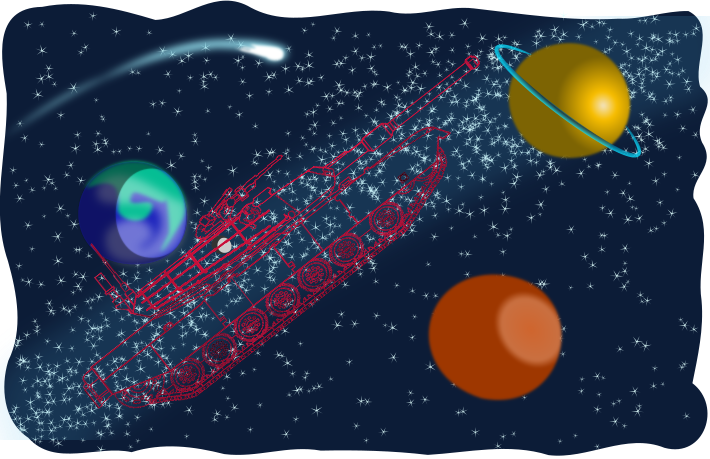
    “The current Grand Emperor’s grandfather started the expansion of the Grand Empire,” said Aterin. “At the time, Sun Home was little larger than Ixtlen is now.”

    “While his troops, and girls such as you think in terms of days and weeks, he doesn’t even think in terms of months,” said Azzesh. “He thinks in terms of years and decades.”

    “The process,” pronounced Aterin in a tone intended to end a topic, “is to make Tevelin unprofitable so that in the end Inralin will be happy to let it go. Then he will use Tevelin to cut off the Keretians at Mazrafel and to harass the Marahuatecan navy.”

    “And you just go on engaging in commerce?” asked Tlisli.

    “Why of course? Do you have a better idea?”

    “You must require a large number of guards.”

    “Absolutely. Which leads me to you.”

    Azzesh started to interrupt him, but Aterin waved her to silence. That he could do so was astonishing to Tlisli. “I will let her know how things are. I won’t try to cheat her because she’s naive.”

    He looked directly at Tlisli. “You’re going to need to decide what you do next. You’ll need a way to make a living. Did you have any plans?”

    “Not really,” said Tlisli. “I don’t really have any skills. Girls weren’t expected to have careers in Ixtlen. It wasn’t so brutally enforced as in the Grand Empire, but it was still true.”

    “Actually,” Aterin replied, “you do have one skill set. This conversation wasn’t entirely idle. I wanted to see if you could carry on a conversation about politics and commerce. Of course, we’ve only touched a few minor concepts. You’re not well informed, but you do have the ability to follow the conversation. But that isn’t the skill set I’m talking about. You traveled for weeks with Azzesh, and she hasn’t yet eaten you for lunch. That’s an indicator of skill. I’m hardly going to hire you at the wages of a veteran of the Governor’s Guard, but you are well above the skill level of the average new hire I get as a guard.”

    “I hadn’t thought …”

    “Just so,” said Azzesh.

    “How could you have?” said Aterin. “Here’s what I propose. You will serve with my guard during this trip and my stops while we go to Tevelin, and then I will make an offer. I would expect that I will offer more than you can make as, say, a barmaid, yet less that I would offer someone with actual military experience. I get someone with better skills because I trust Azzesh’s word. She recommends you, despite her insults. You get a bit more pay than you could get otherwise. Over time, you can get to the point where your value and your pay match more closely.”

    “So you’re paying me less than you think my skills would be worth because I don’t have formal proof.”

    “Yes, and because you don’t have the level of experience of others. On the other hand, because you grew up in a home involved in politics and commerce, you do have some acquaintance with how these things work.”

    “That makes sense to me,” said Tlisli. “I would have been suspicious had you offered me some sort of full wages.” She paused then laughed. “Well, I would have been suspicious after I found out what normal wages were.”

    “So do we have a deal?”

    “Yes,” said Tlisli.

    “Very well, let me introduce you to my ship’s guard commander, and she’ll put you to work.” He noticed her surprise. “Yes, the captain is a she,” he said.

    [Previous episode] [Next episode]
  • Tlisli – A Lesson in Geography and  Politics

    Tlisli – A Lesson in Geography and Politics

    The commercial riverboat looked a bit odd to Tlisli, who had grown up with canoes and small boats made of skins. This one was made of wood and looked heavy to her. Besides a bank of oars on either side, it had a single square sail, which was furled. While she could see men sitting on the benches, no oars were out. Since she had never been in a boat with a rudder, it felt odd and somewhat dangerous.

    Azzesh, it seemed, had friends here too, and she found that she was invited to lunch with the owner of the vessel, one named Aterin. She was surprised that he appeared racially to look more like her than the lighter skinned Inraline. She had quickly gotten the idea that the Inraline related to the natives here much as the Grand Emperor’s people did to the citizens of her home town, Ixtlen.

    “You look surprised,” said Aterin, again surprising Tlisli. She didn’t realize she had let her emotion show on her face.

    “Forgive me if this is rude,” she said, “but you appear to be as native as me, yet you’re owner of this boat. How is this possible?”

    “Well, actually, I’m owner of many boats,” said Aterin, as Azzesh chuckled. I run a trading company both up and down the river and and along the coast. I have several vessels that are sea-going ships for the coastal trade, and even one that makes the run from here to Terinor in Inralin itself.”

    “So a native can be a person of power and substance?” Tlisli ignored Azzesh’s laughing.

    “Well, yes, but that’s not the issue here. I’m a full citizen of Inralin by birth. Those born in the colony of Tevelin—and you should learn to distinguish the city from the colony—are full citizens of the kingdom. My parents were citizens as well. But a native, as you put it, can own a business here as well.”

    He paused a moment. “Azzesh here is as native as it gets, more so than you or I—by ancestry, of course—yet she is a citizen by virtue of residency and service to the governor and crown.”

    Tlisli tried, but failed, to conceal her shock. Tlazil as full citizens? How could that be? They were primitives. Well, except for Azzesh.

    The subject of her thoughts locked eyes with her as Tlisli came to that point. “Yes, small human, unsuitable even for a good lunch, Tlazil. Any Tlazil who will obey the laws (within reason), and become a part of society, can become a citizen. The Inralin government is very open.”

    “You were thinking of Azzesh here as some sort of exception,” said Aterin.

    “I wasn’t thinking, I guess,” said Tlisli.

    “Indeed, it is your great flaw, other than being too stringy and bland to make a good lunch,” said Azzesh.

    “Well,” continued Aterin, “Azzesh is indeed an exception to many rules. But those rules would apply to anyone. Azzesh is luckier than most, stronger than most, and really quite intelligent.” He paused. “Almost intelligent enough not to eat humans for lunch.”

    Azzesh just laughed.

    Tlisli was anxious to change the subject. “How long will it take to get to the city?” she asked.

    “Well,” said Aterin, “I would expect it to take a week, perhaps a little longer.”

    “Are we moving that slowly?” asked Tlisli. “I thought we were less than 200 kilometers from the city, and that it would take a couple of days just flowing with the current. I was a bit surprised that we were using neither sails nor oars.”

    Aterin looked at her for a moment. “I’m hoping,” he said slowly, “that you understand that the reason we’re not using this square sail is that the wind is blowing almost directly upstream, a truly wonderful situation if one is sailing upstream, but somewhat of an impediment if one is going downstream at the time.” He licked his finger and held it up into the wind, looking at it judiciously as though judging whether he could make use of the sail.

    “Yes, I know that,” said Tlisli. Azzesh snorted.  “What I don’t understand,” she continued, “is why we aren’t using oars either. I would have assumed we would normally use one or the other.”

    “What’s the hurry?” asked Aterin. “I prefer to keep my employees happy, and the oarsmen are happier when their work load is more reasonable. So I use them when I need the speed, and not so much when I don’t. They’re useful for loading and unloading cargo in any case. Right now, I will get to the next town well before my next appointment without the oars, so speeding up accomplishes nothing. And the reason we will take a week is that we will make several stops along the way, all while not hurrying.”

    “I know I’m going to sound stupid,” said Tlisli, “but I’m used to that. You mean the people who row your boat and load the cargo aren’t slaves?”

    Azzesh snorted again.

    “No,” said Aterin, “they aren’t. In fact, slavery is illegal in all Inraline possessions.”

    “It was not in my city,” said Tlisli. “It’s not in the Grand Empire. I hadn’t ever heard of a place where there are no slaves. What do you do with them? I mean, with the people who would be slaves? What do they do?”

    “Well, normally I employ them, pay them their wages, and get much more value from their work than any slave owner would,” said Aterin. He was looking at her without any sort of condemnation or condescension, very much unlike the way Azzesh would.

    “Inralin is a very different place,” she said after a moment.

    “Well, perhaps,” said Azzesh, “though I should point out that in the Keretian colonies and Marahuatec there is no slavery either. You humans here in Porana inherited some good things from the Tlazil Empire. Too bad you chose to keep the bad as well. Slavery is bad. I’m a realist, not a moralist. It’s not that I think slavery is wrong. I would, after all, go further, and eat you for lunch were you not bland and stringy. It’s that I think those countries that practice slavery eventually pay for it in efficiency. The Grand Empire has found itself blocked by smaller but more efficient societies on three sides so far.” Tlisli continued to note how much more sophisticate the Tlazil sounded now that she was in a more sophisticated society.

    “I thought the Grand Empire’s armies were essentially unstoppable. When they arrive you will eventually fall.”

    “You haven’t seen very many armies, small human. The armies of Marahuatec to the north and northwest stopped them cold. The Keretian colony of Mazrafel holds them to the north, and the alliance around Qenixtlan [See We Have Always Failed] holds them to the south and west. The sheer weight and size of the jungle holds them to the south. So now they are coming east.” Azzesh rattled off a list of countries and cities with ease.

    “So isn’t it critical that we move rapidly to reinforce the fort if they’re coming east?” asked Tlisli.

    “No,” said Aterin laughing. “Orlin may think the most important thing is to guard his fort, and since he’s the fort commander, that’s not such a bad attitude for him to have, but two points: 1) The Grand Emperor’s troops are nowhere near ready to attack the fort, and 2) It would do them little good if they did.”

    That left Tlisli to wonder just how a fort like the one she’d seen could be unimportant as a target.

    [Previous episode]  [Next episode]

    (To be continued. The “Next episode” link will be made live when the next episode is posted.)


    Note: For those who pay attention to languages in fiction, while I have stolen phonemes from some ancient Central American languages, the language spoken by Tlisli is not in any way related. If I manage to match a lexeme in those languages it is entirely unintentional and should not be considered relevant.

    Copyright © 2017, Henry E. Neufeld. All rights reserved.

  • One (Metaphorically) Dark and Stormy Night

    One (Metaphorically) Dark and Stormy Night

    johnny-automatic-reading-in-the-study-800pxOne dark and stormy night (metaphorically speaking) Alfred’s soul grabbed him by the scruff of the neck and slammed him against the wall (in a spiritual sense).

    “I’m your soul. We need to talk,” said Soul.

    “I’m pretty sure I don’t have a soul. I am a soul. I stand on Genesis 2:7 on this point,” said Alfred, unconcerned with the feeling that he was being accosted by a concept.

    “It’s metaphorical language. I can use it however I want. It all depends on perspective,” said Soul.

    This is a work of fiction any resemblance of the characters to anyone in the real world is certainly accidental, quite surprising, and most likely metaphorical if not meta-metaphorical. Copyright © 2016, Henry E. Neufeld

    “I could be your spiritual side,” said Spiritual Side.

    “Or perhaps your alter ego,” said Alter Ego.

    “But we still need to have a talk,” said Soul.

    “I really don’t think a metaphor should be using metaphors,” insisted Alfred. “It’s unseemly.”

    “So now I’m supposed to have good taste?” said Soul. “Only metaphorically, of course,” he added in diminishing tones. Alfred was reminded of a musical scale, played diminuendo.

    “I don’t think you’re supposed to talk at all,” said Alfred, trying for forte, but instead sounding like an angry child. He couldn’t have said whether the sound was real, metaphorical, spiritual, or imaginary. But it was petulant.

    “And yet here I am speaking to you, or so your soul imagines in any case.”

    “So what do you want?” asked Alfred.

    “I want you to take care of me.” Soul’s intonation was like the ringing of a large bell this time.

    “But you don’t exist!”

    “Yet you talk to me.”

    “Yeah, I do. Crazy, no?”

    “Only metaphorically speaking,” said Soul, in a voice that evoked laughter like tiny silver bells. “Or it might be in the form of a simile,” he added.

    “So what do I do to take care of you?”

    “Think about it,” said Soul. “How did you get to the point where you’re up against the wall talking nonsense to your soul? Or to yourself, if one accepts your view.”

    “It certainly isn’t from lack of study,” said Alfred.

    “No, you are diligent at that.”

    “Nor that I don’t spend time in serious thought.”

    “No, you do think a great deal.”

    “So what’s the problem?”

    “He’s talking to something he doesn’t believe exists, and he doesn’t see the problem,” said Soul to no one in particular (or even metaphorical).

    “I don’t get it. You’re talking to me, and I shoudn’t talk to you?”

    “Sheesh,” said Soul. “Try opening that door over there.”

    Alfred looked at the door. It seemed that he had seen it before, yet he sensed it was also something new.

    He turned the knob, slid it open. Suddenly he remembered/anticipated. Behind him he heard Soul laughing.

    The door led outside.

  • Clear!

    Clear!

    car-accident-300px

    By Steve Kindle, guest blogger; Image: Openclipart.org

    “Clear,” she said, as Jake pulled into the heavily traveled intersection, unaided by any traffic signals. The little VW Bug’s right side passenger window was situated such that his wife, Clara, blocked the view. So they came up with this verbal strategy to make up for the loss.  Anyway, Jake, at 85, lost his ability to turn his neck 90 degrees, so this seemed like a workable option.

    Clara wasn’t any better off. Though only a couple of years younger than Jake, she quit driving altogether. Her eyesight was good, but she became too anxious behind the wheel. The idea of driving on the freeway was out of the question, and soon to follow was contesting in any traffic whatsoever. Jake’s short-term memory was unreliable, and he joked that he’d get Clara where she needed to, but she’d have to tell him why they are there. Life became a series of doctor’s appointments, grocery shopping, and a little mall-walking here and there. “Old age is not for sissies,” was their mantra.

    There’s was a life of hard work, sacrifice, and, now, pain. They put their two children through college and grad school, and now had successful careers. However, their jobs meant having to live far from their parents, and visiting the grandchildren was very occasional.  Grandma and grandpa felt unnecessary to their lives. In fact, unnecessary to anyone’s life.

    But it was the last trip to the doctor that brought them face to face with mortality. Jake was diagnosed with lung cancer that spread to his liver. Stage four; inoperable and final. He was given six months to live. This was received by Clara as her death warrant as well. How could she possibly live without Jake?

    There they were, once again, at the well-traveled intersection.  “How’s it looking, honey,” asked Jake? Clara took a long look down the road. Approaching quickly was semi loaded with scrap iron. It would be on them in seconds. “Clear,” she said.


    For some non-fiction thoughts on end of life, see:

    Hospice and Palliative Care: A Quality Alternative to Assisted Suicide

    Suicide and Grief

    Is Euthanasia Wrong – NO

    and my own story from yestderday Preserving Life.

  • Preserving Life

    Preserving Life

    MRI scan on the monitor of patient`s head

    You’re really in there, I believe. You wanted to die, but I saved you. As I read your brain activity, you’re still aware. You just can’t show us.

    How do I know that? I’m the neurologist who saved your life. You botched the attempt to kill yourself, and I kept you alive. There was brain damage, yes. No, you can’t respond. But you’re alive in there. I know it. No doubt at all.

    Yes, your wife told me “no heroic measures.” But that meant nothing beside the moral imperative. I had to preserve your life. Dead, there’s nothing anybody, nothing even God, can do. And you didn’t really want that, not with the way you botched your attempt to take your own life!

    What could you have been thinking? You were about to take yourself out of God’s hands, away from God’s grace! No possibility of repentance then. Just the eternal fires of hell, where you could regret your decision forever.

    But I saved you. And since I know you’re in there, you’ll have time to regret your decision now, to repent. You’ll thank me. As close to the flames as you were, I bet you’re thanking me now.

    No, won’t happen. Your wife won’t force me to remove life support. I got her charged with helping you kill yourself.

    True, it won’t hold up, but the court cases will drag out for years. I have a foundation that will fund your care, and another that will pay the legal bills. Politicians are signing on. All for your sake! All to preserve your life!

    So if you haven’t already, you’ll have plenty of time to repent. And to thank us.

    For preserving your life, of course!

    I have to do this. I had to save your life, because life is sacred. I have your soul, the only thing more important than your life.

    I’m certain it’s the right thing to do.


    For some non-fiction thoughts on end of life, see:

    Hospice and Palliative Care: A Quality Alternative to Assisted Suicide

    Suicide and Grief

    Is Euthanasia Wrong – NO


  • The Removal of the Tree

    The Removal of the Tree

    Tree-003In the center of the city stood the tree. It had stood there since the city was founded. Nobody was certain how old it was.

    There were those who wanted to call the tree majestic, but few who could manage to do so without qualification. The tree was somewhat tall, but not unusually so. It was very large, but it’s growth was haphazard and tended to go outward rather than upward.

    Around the tree was a park. It wasn’t used that much any more, and the tree itself had taken over much of the space with its horizontal growth.

    The planning commission proposed removal of the tree. There was an investor who wanted to erect a new skyscraper on that land.

    This is a work of fiction. Any resemblance of the places, persons, or events to anything in real life is strictly coincidental.
    Copyright © 2015
    Henry E. Neufeld

    To those who objected on environmental grounds, the planning commission noted that they had planted many more trees around the newer areas of the city, and that the builder proposed many excellent environmental features in his new building. The net effect of the changes to be made, they said, would result in a better environment, not worse.

    To those who objected to the loss of the park and the recreational space, they pointed to all the new parks they had created in new areas of the city. Nobody, they claimed could say that they were not concerned about the aesthetics and the recreational needs of people in the city.

    To those who objected on grounds of tradition, they pointed out that in this case tradition was going to cost a great deal. All things eventually pass away, and the tree’s time is now. Scraggly tree vs. stately, environmentally sound building? No contest!

    So they gathered the equipment and the laborers. The tree was large and its removal was quite a scene. Branch by branch and piece by piece the tree was removed until there was a hole in the ground. From the hole roots went out in all directions.

    There was quite a discussion about what to do about those roots. Should the hole be filled in leaving the remaining root system? Should they dig further—a considerable task—and remove those roots by hand.

    So all the engineers, tree specialists, and supervisors got together and discussed it. One of the tree specialists had developed a method, he said, by which he could burn the roots out. The right injection of fuel and oxygen, and the roots would burn slowly back into the ground until only the very smallest would be left. Then the hole, and all the resulting space could be filled, leaving more stable ground for the new building.

    For everything there was an answer.

    To those who worried about the heat generated by creating this sort of furnace under the city center, the specialists pointed out that this had been tried before, with no damage resulting. Of course, it had been tried on much smaller trees.

    To those who pointed out that there was no certainty as to how large the root system actually was, the specialists provided an estimate, based on knowledge of a variety of trees. The worst case, they said, was quite manageable.

    So the slow burn started.

    Probably someone should have responded the first time scalding hot water came from a cold water tap in the downtown area. But it was regarded as a minor setback, and besides, it would now be much harder to put the fire out than to simply let it burn out. According to the worst case estimate, the root system was nearly gone in any case. So the burn continued.

    Far under ground, but not far enough, there was an underground stream. One of the roots of tree had reached that stream. It took a great deal of water for such a large tree to grow. As the slow burn approached, water began to leak back around the root into the system of tunnels created by burning out the root system. At first, it was just a little, but water, once it finds a path, tends to make it bigger.

    When water started to fill the hole, some of the engineers were concerned. They knew of no underground water that could be reached by the tree’s roots. The water put out the fire and slowed the progress. But the end of that large root was sitting there like a plug in a wall of dirt, with nothing to hold it. Eventually it broke away completely. Water started to gush into the tunnels.

    There was some disturbance in the water filling the hole where the tree had been once, but it was only a little, so everyone thought the problem was going away.

    They were wrong. Nobody had actually conceived of the size of the root system that had sustained that tree. The underground stream was deep under the downtown area. It actually fed quite a number of rivers and streams far from the city. But here it found a place to spread out, all under the downtown area of the city.

    Every crack, every open space under the city was filled with water, and the dirt began to shift.

    It started with a couple of sink holes. Some of the engineers started to panic, while others pointed out that the damage was minor, and that doubtless the rest of the city was more solidly founded.

    But that was not the case.

    As tall stately buildings, much preferred by the planning commission, fell to their doom in the waterlogged soil, the tree had its revenge.

    (Image credit: OpenClipart.org, Inky2010)

  • The Pastoral Tithing Visit

    The Pastoral Tithing Visit

    cow_tithe_sm“I’m here to talk about your tithe,” said the pastor.

    There was a moment of stunned silence at these words. Then Mr. Brent moved his oxygen tank just a bit and unnecessarily adjusted the breathing apparatus. He wheezed just a little bit.

    “We have been absolutely faithful about our tithe. A full 10% of our income, small as it is, goes to the church.”

    This is a work of fiction. Any resemblance of any of the persons or events portrayed to the real world is strictly coincidental. Copyright © 2015
    Henry E. Neufeld

    “Before taxes, too!” put in Mrs. Brent. Her husband looked calm. She looked affronted, as though someone had accused her of being unfaithful to her husband.

    The pastor tried to open his mouth, but he didn’t have time to start speaking.

    “We have been faithful members of the church for the last 50 years,” continued Mrs. Brent, “and to think that they’d send the pastor to suggest we weren’t paying enough or hadn’t been faithful! It’s just too much to bear!” The expression on her face suggested she didn’t intend to bear it either, at least not quietly.

    “Now honey,” said Mr. Brent, again cutting off the pastor’s attempt to cut in, “we gave not expecting anything in return. It’s our pastor’s right to come and hold us accountable for our stewardship.”

    “He has no right to accuse us of things we haven’t done! I know who started this,” she said, turning to the pastor. “It was that old biddy Mrs. Grace. What a misnomer that is! She’s never showed anyone any grace at all! I bet she suggested we were making more than our tithe would indicate. And I know she sneaks peaks at the church records when she visits the office. That church secretary has no clue about keeping those records confidential!”

    The pastor again tried to open his mouth, but didn’t quite manage it. He’d wanted to say that Mrs. Grace had nothing to do with it, that he hadn’t even looked at the records himself. In fact, he would have never started a conversation like that except that he had been certain they’d understand that as such faithful givers he certainly wasn’t there to ask for money. Obviously he’d missed something!

    “Now honey, the pastor hasn’t actually accused us of anything,” said Mr. Brent.

    “And well he shouldn’t!” She turned back to the pastor. “Our voluntary giving has fallen, but that’s because of our medical bills. We simply cannot afford to give as much as we used to. We have to keep up our utility payments and for medical supplies. Medicare doesn’t cover everything, you know. Or maybe you don’t, being a young man. But there are considerable expenses. And you know the pension fund from the old plant went bust. Who knows when we’ll get anything from that.”

    “Perhaps, honey, we should ask the young man what he’s here for,” said Mr. Brent.

    “Well, to tell us we aren’t being faithful in our giving, right?” said Mrs. Brent, looking at the pastor again. He was, indeed, very young, she thought. And he looked stunned.

    “So what are you here for?” she asked.

    “Well,” he said, “you folks have been faithful members of the church for, what is it, 50 years?”

    “We’ve been there for 57 years just last month,” said Mrs. Brent, now holding her head high. “And until all the health issues, we were there every Sunday. Every Wednesday too, and many other times.”

    “Yes,” the pastor said, “that’s what people told me. Even Mrs. Grace.” He couldn’t resist that last remark, and he saw Mrs. Brent’s face tighten just a bit at the name. “But the reason I wanted to talk about tithing to you was not that I think you’ve given too little. I think you’ve given enough, and you may have given too much.”

    “How’s that?” asked Mr. Brent. “You can’t outgive God!”

    “True,” said the pastor, “but you can take away the opportunity your neighbors have for doing their duty to God.”

    Mrs. Brent looked like the pastor had just transformed into an alien visitor, the sort who would leave a UFO parked on the front lawn.

    Mr. Brent just remained calm as he said, “I think you’d better explain, young man.”

    “You see,” the pastor replied, “in the church we’re supposed to care for one another. I could argue with you about whether tithing is the best way to do that, but we’ll leave that be for now. But your obligation to the church is matched by the church’s obligation to you, and by our shared obligation to all those in need. That means that there comes a time when the church is supposed to help you.”

    “We’ve never accepted charity,” said Mr. Brent. “Social Security, Medicare, yes. We paid into those and we’re getting back what’s owed. But we aren’t looking for any handouts.”

    “You have a lot of experience and common sense, Mr. Brent. I respect that. So I think you’ll understand me when I say that someone like you has contributed to the church in many ways over these last 57 years, and so have you, Mrs. Brent. That’s part of being a community. We all contribute, and we all benefit. I know you didn’t contribute because you meant to get benefits. You just did it. Now I happen to know that you are in serious financial need, and it’s time for you to benefit in turn. That’s what I meant about your tithe.

    “God will reward your faithfulness, true. But he’s going to start rewarding it through your church. This is our opportunity to give to God as represented by two of the most faithful people anyone in the church knows. I know you need at least several hundred dollars to keep some of your utilities from being cut off and to pay property taxes.

    “If you refuse this, you’re denying your fellow church members the joy of giving. I know it has turned into a burden over the last year or so, but for most of those 57 years you gave that tithe with joy! Now I like giving with joy and I’m not concerned with tithing so much. You can credit that to me being young and stupid, though I’d be happy to talk to you about it some time. But you do know about joy, and you do know about need.

    “Now are you cruel enough people to deny me the pleasure of writing this check?” He pulled a checkbook out of his briefcase. He was armed with the church board’s authorization to “take care of the Brents.”

    There were tears in the couple’s eyes as the pastor wrote the check. It hadn’t taken long to calculate the amount. The figures were burnt into both their minds.

    “I’ll hold you to talking about tithe on your next visit,” said Mr. Brent as he took it from the pastor’s hand.

    “As long as you won’t think I’m being impertinent,” said the pastor, looking at Mrs. Brent.

    He left her blushing.


    Some thought sources for this story:

    9781938434129s9781631991738sFrom the Energion Discussion Network:

    “It’s Barely August. Why Am I Talking about Stewardship Now?”

    What Does It Mean to Be God’s Steward?

    Just How is God “Recreating the World”?